

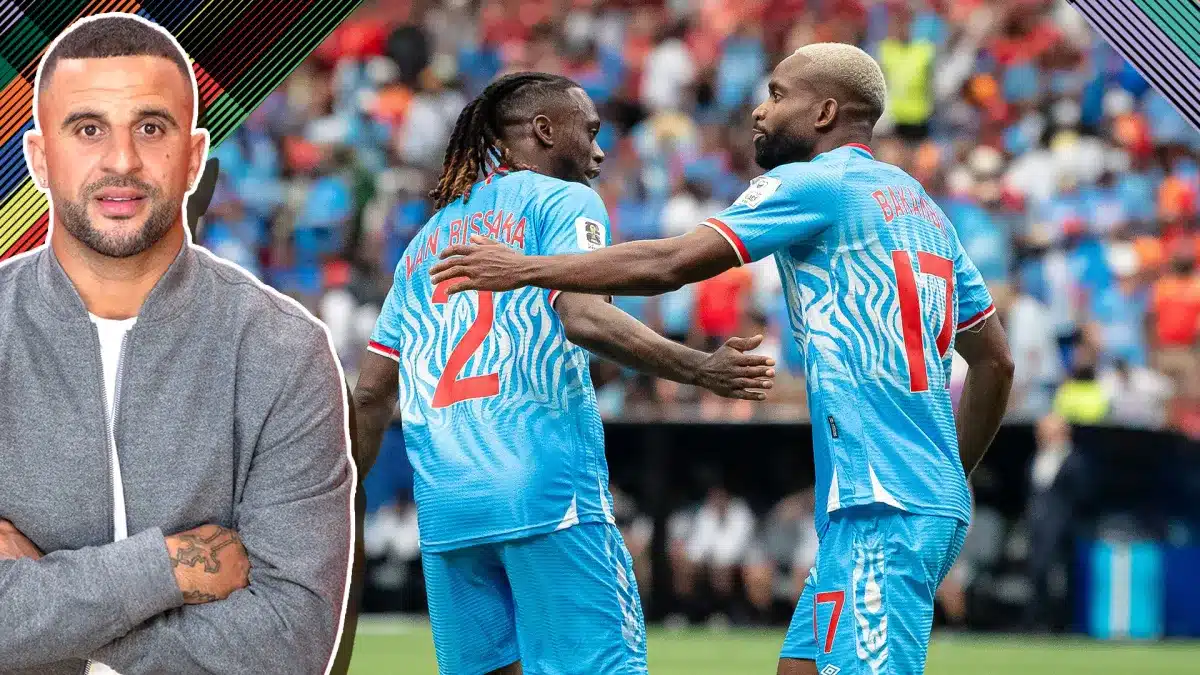
England faces a critical juncture in the World Cup knockout stages, with a need to adapt their tactical approach against the Democratic Republic of Congo. The debate surrounding the midfield pairing of Declan Rice and Elliot Anderson highlights a broader discussion about England’s offensive strategy and the importance of tactical flexibility, especially when facing a determined opponent like DR Congo.
Midfield Dynamics: Rice and Anderson Partnership
A key talking point for England’s midfield has been the potential pairing of Declan Rice and Elliot Anderson. While both players are recognized for their Premier League prowess, their typical roles for their clubs involve starting play deeper rather than driving forward to finish attacks. The strategic rationale behind deploying them together often centers on providing defensive security, allowing fullbacks to advance and contribute to the offensive buildup. This setup offers a safety net, but it raises questions about England’s attacking impetus.
The suggestion is that one of these midfielders should adopt a more advanced role. Rice, known for his exceptional stamina and defensive capabilities, and Anderson, praised for his diverse passing range, both possess the qualities to influence the game further up the pitch. The challenge lies in shifting their ingrained club habits to a more attacking mindset for the national team, particularly in crucial knockout matches where breaking down a resolute defense is paramount.
Tactical Adjustments and Substitution Strategy
The importance of timely and effective substitutions cannot be overstated in high-stakes tournament football. While managers are often lauded for making game-changing alterations, the risk of disrupting team cohesion or leaving the side exposed to counter-attacks is significant. If a particular strategy isn’t yielding results around the 60-minute mark, making proactive substitutions becomes essential. However, an over-commitment to attacking can leave a team vulnerable, potentially turning a controlled match into a losing one due to a lack of defensive cover.
England must be particularly wary of the counter-attacking threat posed by DR Congo. Unlike previous opponents such as Panama, DR Congo has demonstrated their capability and earned their place in the knockout rounds, suggesting a more potent and organized threat on the break.
The Knockout Stage Reality
The World Cup knockout stages present a starkly different environment. The ‘win or go home’ mentality intensifies pressure, demanding a heightened level of concentration and mental fortitude. England, on paper, are expected to progress against DR Congo, but history offers cautionary tales. The 2016 European Championship exit against Iceland serves as a potent reminder that perceived weaker opponents can cause significant upsets when underestimation or a lack of focus creeps in.
A different mental approach is required for these high-stakes encounters. The pressure of representing England, amplified by the World Cup stage and the expectation of victory, can be immense. Maintaining full concentration and executing the game plan meticulously are crucial for avoiding an early exit.
Assessing the DR Congo Threat
DR Congo’s performance in the Africa Cup of Nations, where they reached the latter stages, indicates their quality. The squad features several players from the Premier League, including Yoane Wissa, who has emerged as a standout attacking force. Wissa’s ability to work defenders and maintain pressure on the opposition backline makes him a key player for his national team. While his club form at Newcastle United may not have fully ignited, his World Cup performances suggest he is a player England must closely monitor.
Another player of note is Axel Tuanzebe, formerly of Manchester United and currently playing with the author’s former club, Burnley. Tuanzebe is recognized for his physical attributes, including significant pace that allows him to recover from difficult situations and support his team’s attacking endeavors. Despite potential injury setbacks, his professionalism and dedication to preparation are highlighted. His leadership qualities and communication in defense are also seen as valuable assets.
Individual Brilliance and Defensive Prowess
The presence of players like Aaron Wan-Bissaka in the DR Congo squad adds another layer of challenge for England. Wan-Bissaka, known for his exceptional one-on-one defending, is a formidable obstacle for opposing wingers. His defensive tenacity and ability to make crucial tackles, often described as appearing from nowhere, make him a difficult opponent to bypass. This defensive strength is a hallmark of his game, and he takes pride in testing himself against top attackers.
A potential matchup between England’s Marcus Rashford and Wan-Bissaka could be particularly intriguing, given their shared history at Manchester United. Such individual duels can often influence the flow of a game.
England’s Path Forward
To navigate the knockout stages successfully, England may need to evolve its approach. This could involve encouraging more adventurous play from midfielders, taking more shots from distance, and being less hesitant in making incisive passes. While the team is expected to dominate possession against DR Congo, a low defensive block from the opposition is anticipated. England’s ability to break down such defenses, coupled with their own defensive solidity against counter-attacks, will be key.
Ultimately, while optimism for an England victory remains, the match is unlikely to be a straightforward affair. A combination of tactical adaptability, mental resilience, and respect for the opponent’s strengths will be crucial for England’s progression in the tournament.
