

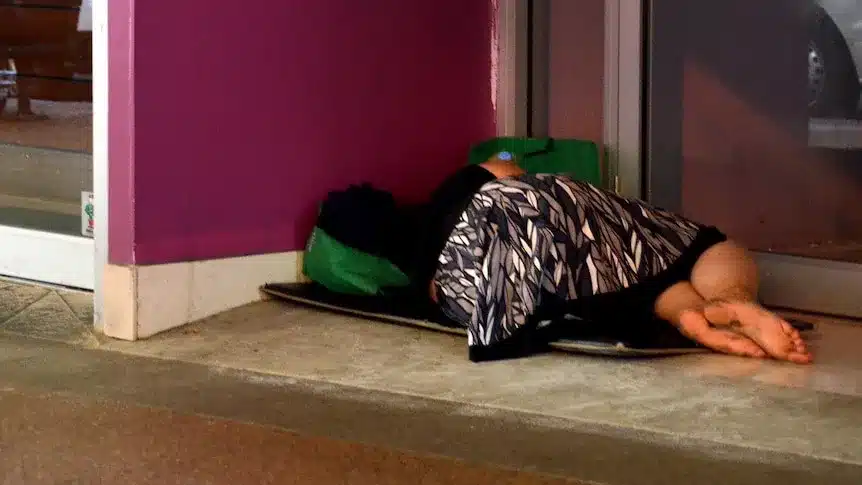
An exhibition titled “Walk in Her Shoes” is shedding light on the often-overlooked crisis of homelessness among Australian women, particularly those over the age of 55. The exhibition, organized by the Council to Homeless Persons, aims to humanize the statistics and draw attention to the profound challenges faced by women experiencing housing insecurity. Personal stories, including those of Vanessa Heart and Diana Connell, illustrate the devastating impact of domestic violence and economic hardship on women’s lives, highlighting the urgent need for greater support and more social housing.
The Scope of Women’s Homelessness in Australia
New data from the Australian Institute of Health and Welfare reveals a stark reality: women and girls constitute 60 percent of individuals seeking assistance from homelessness services across the nation. This figure represents a significant portion of the estimated 289,000 people who turn to these services for help. The statistics underscore that homelessness is not a predominantly male issue, but one that disproportionately affects women and girls.
Compounding this issue is a dramatic rise in homelessness among older women. Census data from the past decade indicates an approximate 40 percent increase in the number of homeless women aged over 55. This demographic faces unique challenges, often stemming from long-term impacts of domestic violence, insufficient superannuation, and a lack of savings accumulated over years of prioritizing family needs.
Personal Journeys from Violence to the Streets
The exhibition “Walk in Her Shoes” features compelling narratives that bring these statistics to life. Vanessa Heart, a woman who experienced homelessness at 60, recounted harrowing nights spent hiding in the hedges of suburban homes to escape predators and the harsh winter elements. Her escape from an abusive marriage left her with no alternative but to sleep rough, enduring physical pain and extreme cold without basic necessities like blankets or proper coats.
“If the predators got a hold of you, they’d beat the crap out of you and they’d take whatever little you had,” Ms. Heart shared, describing the constant threat to her safety and meager possessions. “It was very hard because at 60 years old, you’re old and your bones are really hurting and it’s cold. I didn’t have any blankets, I didn’t even have proper coats or anything.” Her situation, she explained, was a direct result of fleeing a violent domestic situation where her life was at risk.
Diana Connell, another woman featured in the exhibition, endured living in her car while battling lung cancer, all while her teenage son studied for his final exams in the back seat. Fleeing an abusive husband, she faced the immense challenge of managing a serious illness without stable housing. She relied on public facilities like McDonald’s car parks for essential medical equipment, highlighting the extreme measures individuals are forced to take when lacking basic shelter.
“I parked in the McDonald’s car park and used their power points to charge up my feeding machine, so I could hang it up to get my feeds overnight in my car because my stomach had stopped working,” Ms. Connell stated. “It was terrible, but what gets me is that my situation is not unique.” She advocates for increased compassion and government funding, urging people to consider the plight of their own mothers or sisters.
The Driving Force: Family and Domestic Violence
The statistics confirm that family and domestic violence is a primary catalyst for women’s homelessness in Australia. According to the Australian Institute of Health and Welfare, over 40 percent of individuals accessing specialist homelessness services do so as a direct result of family and domestic violence. This highlights a critical failure in providing safety and security for victims fleeing abusive situations.
Ms. Connell’s own experience has led her to co-design “Safe at Home,” a program aimed at keeping victim survivors of family violence securely housed. However, she acknowledges the pervasive insecurity that plagues those in rental accommodation. The act of packing to move, a necessity in the unstable rental market, triggers panic attacks, a constant reminder of the potential to become homeless again at any moment.
“Every time I pack up to shift to a different rental because it’s so insecure, I get panic attacks because packing boxes is a sign we could be homeless again any day,” Ms. Connell explained. She further elaborated on the financial precarity faced by women in her age group: “When you turn 55… I’m in that cohort now of women who’ve come through domestic violence and ended up with no superannuation, no savings, everything’s been spent on the children.”
“Walk in Her Shoes” Exhibition and the Call for Action
The “Walk in Her Shoes” exhibition, hosted at the Box Hill Community Arts Centre, presents the stories of women like Ms. Heart and Ms. Connell to foster empathy and understanding. Deborah Di Natale, CEO of the Council to Homeless Persons, emphasized that homelessness affects women across different life stages – from young women escaping violence to mothers protecting their children, and older women who have exhausted their options.
Ms. Di Natale pointed out the significant shortfall in social housing, stating that Victoria is approximately 80,000 properties short of the national average. While acknowledging the Victorian government’s recent commitment to build 7,000 new social housing properties over the next decade with an initial $860 million investment, she stressed that this is merely a starting point.
“This will deliver even more social homes sooner, giving people in need a secure foundation,” the Treasurer had stated upon the announcement. However, Ms. Di Natale urged for a more substantial and accelerated building program to adequately address the safety and security needs of women experiencing or at risk of homelessness.
Finding Hope and Resilience
Despite the profound challenges, stories of resilience and hope emerge. Vanessa Heart, now housed, volunteers with the Housing for the Aged Action Group, assisting others navigating similar paths. Her home is adorned with two Christmas trees, displayed year-round as a symbol of joy and celebration she missed in her youth. “When I finally got the keys to my place, it felt like heaven,” she said. “I know that I’m one of the lucky ones.” Her sentiment underscores the immense value of secure housing and the ongoing need to extend this security to more women across Australia.
The exhibition serves as a powerful reminder that behind the statistics are individuals with unique stories, deserving of dignity, safety, and a place to call home. The call for increased government investment and community awareness is clear: the crisis of women’s homelessness requires urgent and sustained attention.
