

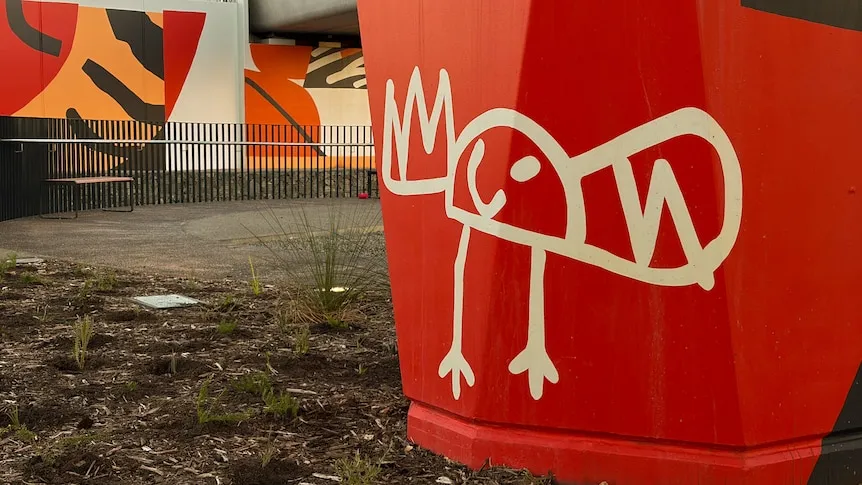
A vibrant, seven-kilometre public art installation, known as the Linewide Graphic Trail, is transforming the urban landscape beneath Perth’s raised Armadale railway line. This ambitious project, brought to life by local artists Chris Nixon and Kyle Hughes-Odgers, spans the concrete piers, abutments, and surrounding public spaces from Carlisle to Beckenham. The artwork required approximately 2,000 litres of paint and took five months to complete, adding a significant splash of color to an area previously defined by infrastructure.
Transforming Urban Corridors
The Armadale Railway line was elevated to eliminate dangerous level crossings, a significant infrastructure upgrade that also created new public areas. These newly accessible spaces have been revitalized with amenities such as lawns, gardens, playgrounds, and skate parks, alongside essential car parking. The Linewide Graphic Trail is a key component of this urban renewal, weaving art into the everyday experience of commuters and residents.
While train passengers are unable to view the full scope of the artwork, and station visitors typically only see a portion, the artists designed the trail as a cohesive narrative. Chris Nixon explained that the goal was to imbue each section of the line with a distinct identity, acknowledging that many people would only experience fragments of the entire piece.
A Site-Specific Color Journey
“The task we set ourselves was to create an identity for each section of the line because people are going to experience it either in just a little section or maybe in its entirety,” Nixon shared in an interview. “We wanted each space to feel completely unique to that location.”
The artistic approach was deeply rooted in site specificity, with the color palettes, forms, and patterns directly inspired by the characteristics of each suburb along the route. Nixon described the creative process as treating color as a traveler, collecting elements from each location to carry forward into the next. This method ensures a fluid transition and a sense of continuity throughout the extensive artwork.
The color progression begins with greens in the Carlisle section, gradually shifting to teals as the trail moves towards Oats Street. Further along, vibrant oranges and reds define the Queens Park and Cannington areas, culminating in a sunny yellow at Beckenham. Across the entire seven-kilometre stretch, approximately 20 distinct colors are employed, with each section featuring a maximum of five or six hues. Strategic color crossovers between adjacent sections create a cohesive and unified visual experience.
Embracing Scale and Collaboration
The sheer scale of the project, encompassing 120 concrete pylons and additional structures, might seem daunting. However, Nixon expressed that the artists found the expansive canvas liberating, offering an unparalleled opportunity for impactful and large-scale artistic expression. “It’s quite liberating. It’s actually just an opportunity to create with impact and scale, and it’s not necessarily difficult to install them,” he noted.
To manage the considerable undertaking, Nixon and Hughes-Odgers assembled a dedicated team for the installation. Their guiding principle throughout the process was to ensure enjoyment and avoid the project becoming a burdensome task. “Kyle and I built a team to help us install it, and our mantra from the beginning was we just wanted to really enjoy the process and not let it be a big kind of machine and a big grind,” Nixon stated. He emphasized that designing for such a grand scale inherently involves considering the audience and their immersive experience.
Recognition and Durability
A year after its completion, the Linewide Graphic Trail has not only enhanced the visual appeal of the area but has also demonstrated remarkable resilience, remaining free from graffiti. The project’s artistic merit has garnered significant attention, leading to nominations for several prestigious awards. These include the Dulux Colour Award and a place among the top 100 entries for the Coda Award, an international prize administered by a U.S.-based art directory. The artists hope that such accolades will further elevate the profile of public art and potentially attract international recognition for their work.
Conclusion
The Linewide Graphic Trail stands as a testament to the power of public art to transform urban environments. By integrating color, form, and narrative into the fabric of the city, Chris Nixon and Kyle Hughes-Odgers have created a dynamic and engaging experience for the Perth community. The project successfully blends artistic vision with urban development, demonstrating how infrastructure can be a canvas for creativity, enriching the daily lives of those who traverse its path.
