

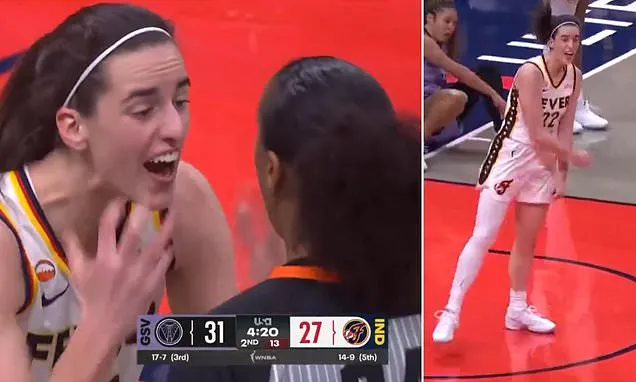
Indiana Fever star Caitlin Clark was visibly incensed during a recent game against the Golden State Valkyries, leading to a heated exchange with a WNBA referee over a controversial non-call. The incident occurred Wednesday night when a foul was called on Clark’s teammate, Aliyah Boston, for contact with Golden State’s Veronica Burton. This penalty came shortly after Clark herself was not awarded a foul call following a play where she was challenged by Kiah Stokes while attempting a layup.
Caitlin Clark’s Frustration Boils Over
The sequence that triggered Clark’s outburst began minutes earlier. While driving for a layup, Clark was knocked off balance by Kiah Stokes of the Golden State Valkyries. Despite the apparent contact, the referee did not signal a foul. Moments later, when Veronica Burton was whistled for a foul on Aliyah Boston, Clark’s frustration reached a boiling point. She reacted animatedly, waving her arms and approaching the official to voice her displeasure directly. Following the intense interaction, Clark briefly left the court to receive attention before returning to the Indiana bench.
Broader Context: Protection and Aggressive Play in the WNBA
Clark’s emotional reaction has brought renewed attention to the physical nature of play in the WNBA and discussions surrounding player safety. Since being drafted by the Indiana Fever in 2024, Clark has been the subject of numerous aggressive plays from opposing players. This has led to widespread debate among fans and analysts about whether she is receiving adequate protection from officials.
Recent Incidents Fueling the Debate
Several recent games have highlighted these concerns:
- Phoenix Mercury Clash: In a game against the Phoenix Mercury, Clark was struck in the throat by veteran player Alyssa Thomas. This incident sparked significant outrage, with many arguing it was another example of overly aggressive play directed at the Fever star.
- Las Vegas Aces Encounter: During a matchup with the Las Vegas Aces, Clark was involved in a play with Chelsea Gray. As Clark attempted to defend Gray’s shot, Gray appeared to make contact with Clark’s midsection. The referees initiated a review for a potential “hostile act,” a decision that drew strong protests from Gray and her coach, Becky Hammon.
The play involving Gray was eventually ruled a common foul, but the review process and the subsequent ruling left Clark visibly frustrated, especially given she had been holding her back, an area where she had recently dealt with injury issues.
Player Reactions and Online Abuse
The heightened physicality and controversial calls have also brought to light the intense scrutiny and online abuse directed at WNBA players. Following the game against the Las Vegas Aces, Chelsea Gray shared a racist message she had received on social media, condemning the hateful comments and the pressure on athletes to remain silent.
Alyssa Thomas also spoke out about experiencing racial abuse and threats towards herself and her family in the aftermath of her incident with Clark. Thomas emphasized the distinction between online trolling and genuine hatred, expressing disappointment with the league’s response and the silence from Commissioner Cathy Engelbert on such serious matters. She stated, “The league has to do better in this instance.” Thomas recounted the distress caused by threats to her children and the racial slurs she encountered, highlighting the emotional toll these incidents take on players and their families.
Conclusion: A Call for Consistency and Player Safety
Caitlin Clark’s animated reaction to the referee’s call underscores the ongoing conversation about officiating consistency and player safety in the WNBA. As the league continues to grow in popularity, addressing these concerns—from on-court physicality to the online harassment of players—remains a critical challenge for league officials and stakeholders. The desire for fair play, consistent calls, and a secure environment for all athletes is paramount as the season progresses.
