

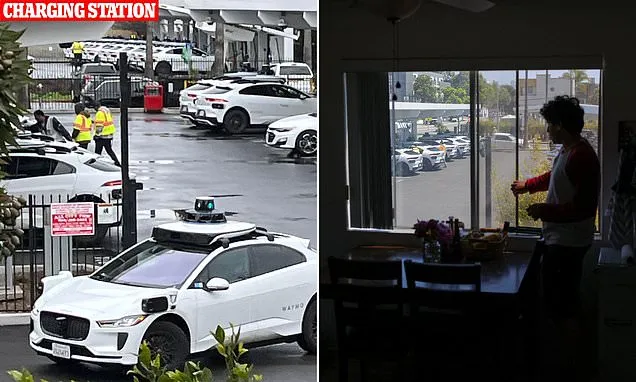
Residents of the iconic California beach town of Santa Monica have secured a significant legal victory in their ongoing battle against a noisy Waymo charging station. A Los Angeles Superior Court judge has granted a preliminary injunction, ordering the autonomous vehicle company to cease operations at two of its charging facilities between the hours of 11 p.m. and 6 a.m. The ruling, issued by Judge Bradley S. Phillips on Monday, addresses long-standing complaints from locals who alleged that the station’s persistent noise and light pollution were severely disrupting their sleep and quality of life.
Court Orders Waymo to Limit Overnight Operations
The injunction specifically targets Waymo’s charging stations located at 1222 and 1310 Broadway in Santa Monica. These facilities, situated across from residential apartment buildings and a private school, have been the subject of a public nuisance lawsuit filed by the City of Santa Monica. For over a year, residents have reported disturbances, including the incessant “beep–beep–beep” sounds associated with the charging process, which they claim have transformed their once peaceful neighborhood into a “hub for noise pollution.”
Christopher Potter, a local resident who spearheaded a petition against the charging stations, expressed his frustration with the situation. He described his home as being adjacent to a source of significant noise, lamenting the loss of tranquility. The court’s order acknowledges these grievances, stating that the “continual noise, lights, and traffic generated” by the Waymo stations were “offensive” to residents and interfered with their “peace, quiet and comfort.”
Waymo’s Defense Rejected by Court
Waymo, which is reportedly appealing the ruling, began utilizing these charging facilities in January 2025. The company had argued that the injunction would hinder its ability to provide rideshare services during overnight hours, suggesting that its autonomous vehicles offer a safer alternative to other transportation options during that period. However, the court was unpersuaded by Waymo’s claims.
A declaration submitted by Sean Bugee, Waymo’s Los Angeles operations site lead, asserting that he observed “minimal activity or noise” during overnight checks of the lots, was largely dismissed by the court. The filing characterized Bugee’s statement as “inadmissible hearsay” and a “self-serving assertion,” noting that he failed to specify his location during these checks or confirm if he was attempting to sleep. The court pointed out that Waymo’s own counsel cited the frequent use of its vehicles for pickups along the beach and Broadway, questioning whether such activity predominantly occurred between 11 p.m. and 6 a.m.
The court did acknowledge that Waymo could continue to use vehicles that were already charged and cleaned but not actively deployed during the restricted hours. This provision allows for some operational flexibility while still addressing the core noise concerns.
Residents Express Relief and Hope for Peace
The ruling has been met with widespread relief among Santa Monica residents. Those living near the Broadway charging stations have described the noise as overwhelming, with one resident comparing the sound to being “on life support” when opening a window. Another resident, who identified as elderly, expressed the critical need for good rest, stating she was “nuts with rage” due to the constant disturbances.
Dylan Moore, another resident and founder of the website WaymoProblems, reported noticing an immediate positive change after the injunction. He described the night as “amazing” and a stark contrast to the previous “fleet of locusts descending on the neighborhood,” indicating a return to a more peaceful environment.
City Officials Welcome Ruling, Emphasize Coexistence
Santa Monica Mayor Caroline Torosis lauded the court’s decision, emphasizing that the “residents’ ability to sleep peacefully in their own homes [was] not negotiable.” She stated that the ruling validates the concerns residents have voiced for over a year and provides much-needed relief as the legal case progresses. Mayor Torosis reiterated the city’s embrace of future transportation technologies, including autonomous vehicles and their supporting infrastructure. However, she stressed the city’s commitment to finding solutions that allow Waymo’s operations and the residents’ quality of life to coexist harmoniously.
The legal proceedings are set to continue, with a status conference scheduled for October 23. This conference will address potential remediation measures and the status of curb cut modifications related to the charging stations. The city and Waymo are expected to engage further on finding a long-term resolution that balances technological advancement with community well-being.
The case highlights the growing challenges cities face in integrating new technologies like autonomous vehicle infrastructure while mitigating potential impacts on existing residential areas. The Santa Monica ruling sets a precedent for how local governments can address public nuisance claims related to such developments, prioritizing resident comfort and peace.
