

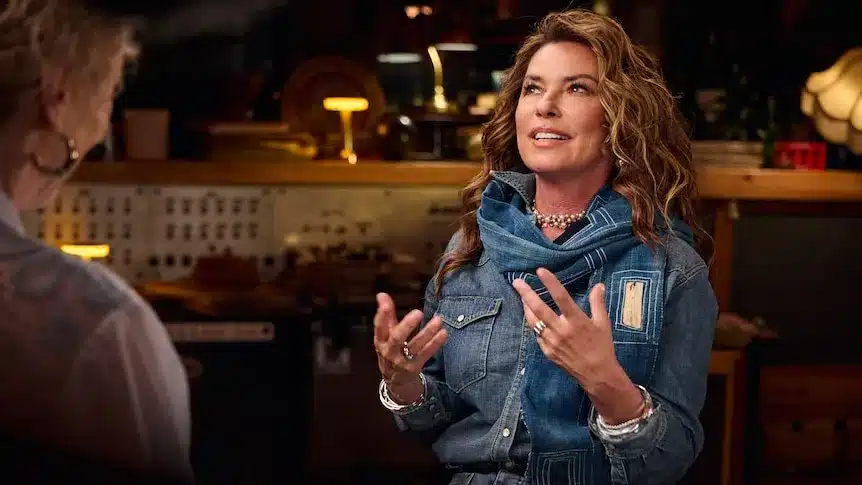
Before she became the global music phenomenon known as Shania Twain, Eileen Regina Twain was a young girl in Timmins, Ontario, singing for her family’s supper. Her journey from scarcity to superstardom is a testament to resilience, talent, and a mother’s unwavering belief. Twain, who has sold over 100 million albums worldwide, recently reflected on her early life and the path that led her to become one of music’s most recognizable figures.
From Timmins to the Tavern: An Early Start
Growing up in the mining town of Timmins, life was often a struggle for Eileen and her family. Food was scarce, and opportunities were limited. Music became an early escape and, crucially, a source of income. Her mother, Sharon, recognized her daughter’s exceptional vocal talent and actively encouraged her to perform. This wasn’t about fame initially; it was about survival.
Eileen, often referred to as “Little Miss Twain” in her youth, would sing in local cafes and, more notably, in beer and whiskey bars. Her mother would pass a hat around to collect donations, with the modest sums of $25 or $50 helping to cover essential expenses like gasoline for the week. These early performances, often singing covers of country hits like Tammy Wynette’s “D-I-V-O-R-C-E,” were formative experiences. Despite her young age, Eileen possessed an uncanny ability to convey emotion and connect with the audience, even when faced with skepticism or heckling from patrons who questioned a child’s understanding of adult themes.
A Mother’s Dream, A Daughter’s Resilience
Sharon Twain was instrumental in nurturing her daughter’s musical gift, envisioning a successful career that Eileen herself might not have initially imagined. While Eileen dreamed of horses and childhood adventures, her mother saw a star in the making. “My mother realised that I had this gift, so she was dreaming about the career success,” Twain recalled. “I was dreaming about riding horses… I was dreaming about things that little kids dream about.”
The path was far from smooth. Tragedy struck when Eileen was 22. Both her parents died in a car accident, leaving her to raise her four younger siblings. She moved back to her hometown and took on the immense responsibility of being a guardian. To support the family, she secured a gig performing Vegas-style cabaret at a resort several hours away. This demanding schedule involved working every night, honing her performance skills across various genres, and further solidifying her resolve.
Developing Conviction and Vision
By her late twenties, Twain had navigated significant personal hardship. This period of her life, marked by loss and responsibility, forged a strong sense of conviction and clarity about her goals. “By the time I was in my late 20s, I had been through so much,” she explained. “So, I already had quite a bit of conviction. I was already quite certain about my ideals. And I had a vision.” This inner strength would prove crucial as she pursued her music career more seriously.
The Birth of Shania Twain
Her journey eventually led her to Nashville, the heart of the country music industry. Upon signing her first record deal, the label suggested she change her surname, believing “Eileen” might not be commercially viable with “Twain.” However, Twain felt a deep connection to her family name and was unwilling to discard it. “I felt like I would be abandoning my family by changing my last name for my career,” she stated. “And I’m like, ‘It’s just not worth it. There’s got to be another way.'”
The solution came unexpectedly. She encountered the name “Shania,” a name she found beautiful and fitting. Embracing it, she officially became Shania Twain, a decision that allowed her to honor her roots while forging a new identity.
Global Acclaim and Crossover Success
The transformation into Shania Twain marked the beginning of an unprecedented era of success. Her third studio album, 1997’s Come On Over, propelled her to global superstardom. Featuring iconic hits like “You’re Still The One,” “Man! I Feel Like A Woman!,” and “That Don’t Impress Me Much,” the album became the best-selling studio album by a female artist, with sales exceeding 40 million copies. This monumental success solidified her status as a trailblazer, bridging the gap between country and pop music.
Twain’s approach to country music was distinctive. She infused it with a powerful, attitude-driven sound that resonated with a broad audience. “The type of country that I wanted to make was definitely more of a stomp. There was more might in it. I wanted to give it attitude. I wanted to be part of that attitude, and I wanted to say it like it was and be frank,” she explained. “What I proved was that the audience also wanted that.”
Reflecting on the Past, Embracing the Future
Decades later, with an enduring legacy and millions of albums sold, Twain continues to explore her musical identity. Her latest album, Little Miss Twain, delves into her past, with the title track referencing her mother’s early belief in her potential. The lyrics paint a vivid picture of her childhood aspirations and the encouragement she received: “According to my mother, I’m the next Tanya Tucker / She drives me to sing in the bar / Push-start the Chevy, it’s old, and it’s heavy / And I’m still smaller than my guitar…”
Reflecting on her incredible journey, Twain expressed a sense of detachment from the accolades, not out of ingratitude, but due to a grounded perspective. “I don’t really feel connected to the accolades,” she shared. “Not because I don’t feel good about earning them, and the reward of conquering some of the challenges or reaching the top of so many of the climbs. I recognise all that… But I just don’t feel like a star.”
When asked what she would say to her younger self, Eileen Regina Twain, she offered a message of affirmation and destiny. “I would say you made it, and I would tell her you can make it. Your mother is right. Except you won’t be the next Tanya Tucker. You’re going to be Shania Twain.” This sentiment encapsulates a life lived with purpose, transforming humble beginnings into an unparalleled musical legacy.
