

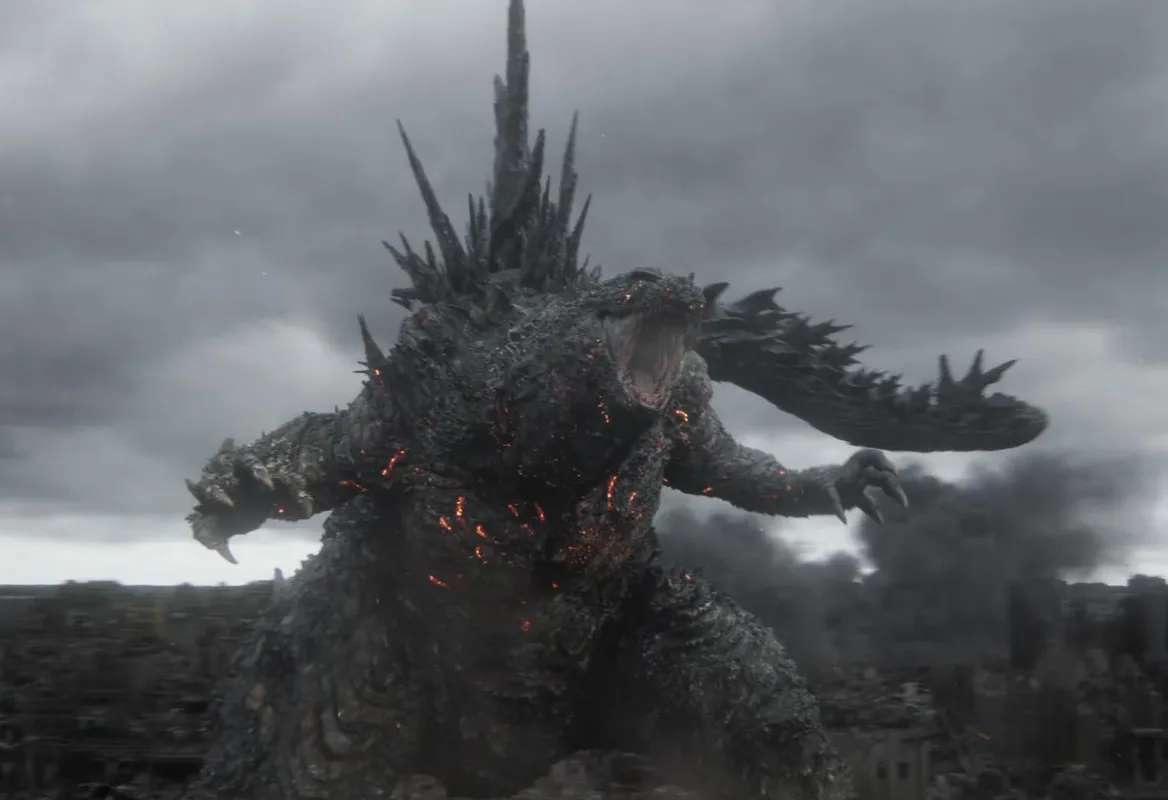
The upcoming film Godzilla Minus Zero is drawing attention not just for its cinematic spectacle but for the surprising scientific underpinnings of its monstrous premise. While blockbuster films often employ science as mere window dressing, this sequel to the acclaimed Godzilla Minus One appears to be constructing its narrative on concepts that real-world research is only beginning to explore. From radiation-metabolizing fungi to the physics of levitation and the neuroscience of immersive viewing, the film delves into areas where science fiction is intersecting with scientific possibility.
Radiation as Fuel: The Chernobyl Connection
The core concept driving Godzilla’s biology in the Minus series is its ability to absorb and metabolize ionizing radiation, using it as a primary energy source rather than a destructive force. This idea, while fantastical, finds a curious echo in scientific discoveries made at the Chernobyl nuclear disaster site. In 2007, researchers identified a species of black fungus, Cladosporium sphaerospermum, growing on the walls of the destroyed Reactor 4. These fungi appeared to utilize gamma radiation in a process dubbed “radiosynthesis,” analogous to photosynthesis but using radiation instead of light. Studies showed these melanized fungi thrived in high-radiation environments, converting radiation into chemical energy.
This discovery lends a degree of scientific plausibility to Godzilla’s fictional radiation metabolism. While the original 1954 film used Godzilla as an allegory for the horrors of nuclear weapons, director Takashi Yamazaki’s recent installments have sought to build a more grounded, albeit extreme, biological framework. The films posit that exposure to nuclear testing, particularly the 1946 Baker shot at Bikini Atoll and subsequent tests, transformed a prehistoric creature. This exposure not only allowed it to survive but to thrive by co-opting radiation as a metabolic fuel. The melanin in the fungus is key, suggesting a biological pigment that can harness radioactive energy, a concept now mirrored in the film’s depiction of Godzilla’s biology.
This concept is further supported by the idea of radiation hormesis, a contested hypothesis suggesting that low to moderate doses of radiation can stimulate cellular repair and adaptive mechanisms. While regulatory bodies generally adhere to the linear no-threshold model (assuming all radiation is harmful), hormesis proposes that some radioresistant organisms might adapt to high-radiation environments. Godzilla’s biology, in this context, represents an extreme extrapolation of this adaptive capacity, coupled with the radiosynthesis mechanism.
Regeneration and the Limits of Biology
Godzilla Minus Zero also appears to explore the creature’s regenerative capabilities, suggesting it can reconstitute itself from cellular fragments. This echoes real-world phenomena observed in organisms like planarian flatworms and axolotls, which possess remarkable regenerative powers. Planarians can regrow an entire body from a tiny fraction of their original mass, thanks to totipotent stem cells called neoblasts. Axolotls can regenerate limbs by dedifferentiating specialized cells back into a stem-cell-like state.
However, the film pushes these biological limits significantly. Research indicates that regenerative capacity generally decreases with biological complexity; complex animals like mammals have far more limited regenerative abilities than simpler organisms. For Godzilla to regenerate from fragments at its immense scale would require either an unprecedented density of stem cells throughout its body or a radiation-induced reactivation of embryonic gene expression programs. The film’s scientists are likely grappling with this challenge, particularly the concept of “patterning” – ensuring that regeneration results in a correctly formed organism rather than uncontrolled cancerous growth.
The Physics of Levitation and Immersive Cinema
Beyond biological speculation, Godzilla Minus Zero also touches upon advanced physics. Trailers depict buildings being lifted into the air by an energy field, hinting at a second monster wielding a directed gravitational beam. While true anti-gravity remains theoretical, the visual effects could be explained by powerful, oscillating magnetic fields interacting with a building’s steel frame, inducing eddy currents and generating repulsive Lorentz forces. This mechanism, while requiring immense power, does not necessarily violate known physics, suggesting a technologically advanced, perhaps extraterrestrial, origin for such a weapon.
Director Takashi Yamazaki’s choice to film Godzilla Minus Zero in IMAX also has a scientific basis rooted in neuroscience. By shooting in IMAX’s 1.43:1 aspect ratio, the film aims to create a more immersive experience. This wider field of view, particularly the increased verticality, engages peripheral visual cortex regions associated with spatial presence. Neuroimaging studies suggest that this broader visual input can foster a stronger sense of “being there” within the depicted environment, rather than merely observing it. This neurological approach aligns with the film’s goal of making Godzilla’s scale feel overwhelmingly real, echoing the original film’s use of allegory to convey the emotional impact of nuclear devastation.
Historical Context and Future Implications
Set in Japan in 1949, the film’s backdrop is crucial. This era, under American Occupation, was a time of nascent scientific advancement and geopolitical tension. The film’s depiction of a “genius weather forecaster” working in a disaster response bureau highlights the limitations of meteorological science at the time, where precise predictions were still in their infancy. The existence of such a bureau itself represents a projection of modern emergency management concepts into a period lacking systematic early warning systems.
Furthermore, the 1949 setting coincides with the Soviet Union’s first nuclear test, marking the end of the American nuclear monopoly and the dawn of the Cold War arms race. This historical context imbues the film’s narrative of a domestically managed response to a threat born from American nuclear activity with significant political irony. The film thus uses its scientific and historical premises not just for spectacle, but to explore complex themes of consequence, adaptation, and the ever-present shadow of nuclear power.
Looking Ahead
With its world premiere at the New York Film Festival and subsequent releases in Japan and North America, Godzilla Minus Zero promises to be a film that engages audiences on multiple levels. By grounding its fantastical elements in emerging scientific concepts and historical context, the film offers a compelling narrative that is as intellectually stimulating as it is visually impressive. The exploration of radiation biology, advanced regeneration, and the physics of immense power, all viewed through the lens of immersive IMAX cinematography, positions the film as a unique entry in the kaiju genre.
