

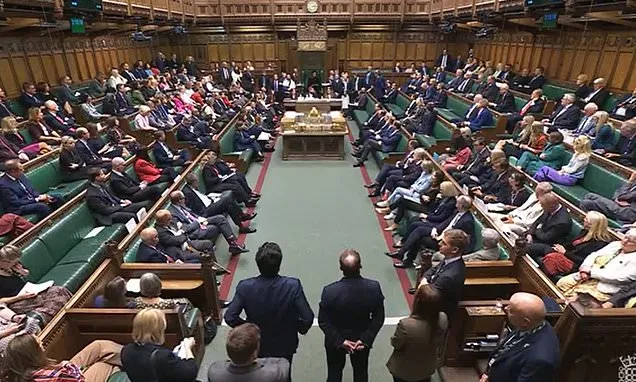
Lawmakers in the House of Commons have voted against a proposal to legalize assisted dying for terminally ill adults in England and Wales. The Terminally Ill Adults (End of Life) Bill was defeated at its Second Reading by a margin of 16 votes, with 286 MPs voting against it and 270 in favour. The outcome followed a debate lasting over four hours, during which a range of views were expressed by parliamentarians.
Assisted Dying Bill Defeated in Commons Vote
The proposed legislation, reintroduced by Labour MP Lauren Edwards, sought to permit terminally ill adults with a prognosis of less than six months to live to apply for assistance in ending their lives. This marks the second time a similar bill has failed to progress in Parliament, having previously fallen in the House of Lords despite passing initial votes in the Commons during the last parliamentary session. Today’s vote saw a significant number of MPs shift their stance, with some who had previously supported the bill now voting against its advancement.
The rejection of the bill was met with audible reactions in the chamber, including cheers and expressions of relief from some MPs. The debate highlighted the deeply divided opinions on the sensitive issue of end-of-life choices.
Key Figures and Their Stances
Several prominent political figures were noted for their positions or absences during the vote. Prime Minister Andy Burnham and Reform UK leader Nigel Farage did not cast a vote. Conservative leader Kemi Badenoch and Liberal Democrat leader Sir Ed Davey both voted against the bill. Labour former minister Janet Daby explained her change of heart, stating that while she had supported the bill previously, subsequent reflection led her to conclude she could not conscientiously vote for it again. She shared that she had experienced distress and sleepless nights after her prior vote, indicating a significant personal struggle with the decision.
Arguments For and Against the Bill
During the debate, proponents of the bill, including Ms. Edwards, urged MPs to allow the legislation to proceed to the House of Lords for further scrutiny, emphasizing that it was nearly identical to the previous iteration. She argued for the opportunity to ‘finish what they started’ in the Lords.
Conversely, opponents described the bill as ‘flawed’ and ‘unsafe,’ cautioning against its return to the Lords without substantial amendments. Concerns were raised about the potential for the legislation to be ‘rammed’ through without adequate consideration, as articulated by Mrs. Badenoch, who characterized the bill as ‘badly drafted’.
Opposition from Religious and Medical Bodies
The bill faced significant opposition from religious leaders and medical organizations. Archbishop Richard Moth, representing Catholics in England and Wales, declared the bill ‘wrong in principle’ and ‘deeply flawed.’ Similarly, Archbishop Dame Sarah Mullally of the Church of England also voiced opposition. The Royal College of Psychiatrists (RCPsych) articulated ‘serious concerns,’ highlighting insufficient safeguards for individuals with mental health conditions and numerous unresolved questions regarding their protection within the proposed framework.
Campaigner Reactions and Future Outlook
Following the vote, campaigners who opposed the bill expressed their satisfaction, with some suggesting that the Commons’ decision effectively settles the assisted dying debate ‘for a generation.’ The defeat signifies a setback for advocates of legalizing assisted dying in England and Wales, indicating that the path forward for such legislation remains challenging.
The Terminally Ill Adults (End of Life) Bill aimed to establish a legal framework for assisted dying, allowing eligible individuals to make an informed choice about the end of their lives under specific, stringent conditions. The debate underscored the complex ethical, moral, and practical considerations involved in legislating on end-of-life care and personal autonomy.
The close vote and the passionate arguments presented by both sides reflect the ongoing societal discussion surrounding assisted dying. While this particular bill did not pass, the issue is likely to remain a subject of public and parliamentary debate in the future.
