

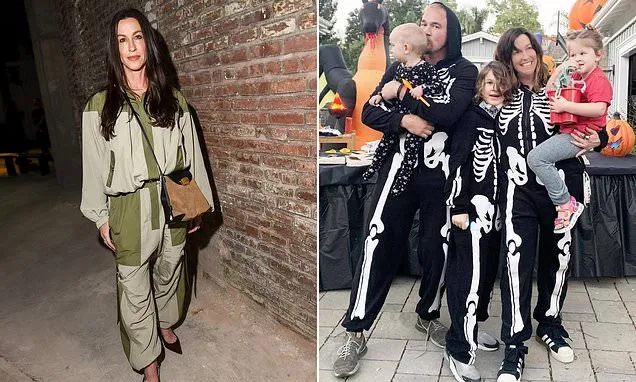
Singer Alanis Morissette has shared deeply personal details about her struggles with postpartum depression (PPD), revealing that she experienced psychotic episodes and intrusive thoughts of death following the birth of her third child. The Grammy-winning artist, 52, discussed her experiences during an interview on the podcast Call Her Daddy with host Alex Cooper.
Understanding Postpartum Depression and Anxiety
Morissette, who is mother to Ever, 14, Onyx, 10, and Winter, 7, with her husband Mario ‘Souleye’ Treadaway, explained that while she was familiar with depression, the postpartum period brought a different, more terrifying set of challenges. She described the experience as involving “invasive thoughts and the terror,” with persistent imagery of “death and terrible things.”
According to medical resources like the Mayo Clinic, postpartum depression is part of a broader category of perinatal mood and anxiety disorders. These conditions can manifest in various ways, including difficulties bonding with a newborn, a loss of enjoyment in motherhood, heightened anger or irritability, profound sadness, and frequent crying. Other common symptoms include feeling constantly overwhelmed, thoughts of harming oneself, or an urge to escape the situation.
The Impact of ‘Postpartum Activity’
Morissette noted that she prefers the term ‘postpartum activity’ to describe her experience, suggesting that it encompasses more than just depression. She elaborated on the profound disorientation she felt, stating, “Basically, I became another person.” She described a state where “all the hormones are all over the place,” combined with what felt like “menopausal flux, combined with depression, invasive thoughts that are so harrowing, terrible, ceaseless.”
This altered state led to a loss of trust from those around her. Morissette recalled how people began to look at her differently, with concern that she might not be stable or could “fly off the handle.” She found this perception difficult, as it was far from her true nature.
Escalating Difficulty with Each Pregnancy
The singer revealed that her experience with PPD has intensified with each subsequent child. Her first child was born in 2010, her second in 2016, and her youngest in August 2019. While she has faced postpartum challenges after each birth, she stated that it “doesn’t get easier.”
Morissette admitted, “From my experience, each postpartum depression gets increasingly harder.” Despite the severity of her symptoms, her deep desire to connect with her children motivated her to persevere. “I just wanted to meet my kids, though, so badly, so I kept going,” she shared.
Seeking Help: A Shorter Timeline
A significant indicator of the escalating severity was the decreasing time it took for Morissette to seek help. “First time, I waited a year and two months,” she recounted. “Second time I waited eight months. And third time, I think I waited three days. I was just like, ‘Oh no, I’m not doing this again.’ And I did it again.” This rapid progression highlights the urgency she felt to address her condition after her third child’s birth.
Pushing Through During the Pandemic
Morissette recounted continuing with her tour dates during the COVID-19 pandemic, managing professional responsibilities and finances while secretly battling her mental health crisis. She described this period as a “wild ride,” admitting, “I still showed up. I dipped into psychosis.” The feeling of being “completely out of control” contrasted sharply with the outward appearance of stability she maintained.
A Journey of Resilience
Despite the profound challenges, Morissette expressed that she is now in a better place. Her candid conversation on Call Her Daddy aims to destigmatize postpartum mental health issues and encourage others to seek support. By sharing her story, she hopes to offer understanding and validation to those experiencing similar struggles, emphasizing that recovery is possible and that seeking help is a sign of strength.
Morissette married Mario Treadaway in 2010. She was previously engaged to actor Ryan Reynolds for three years before their separation in 2007.
