

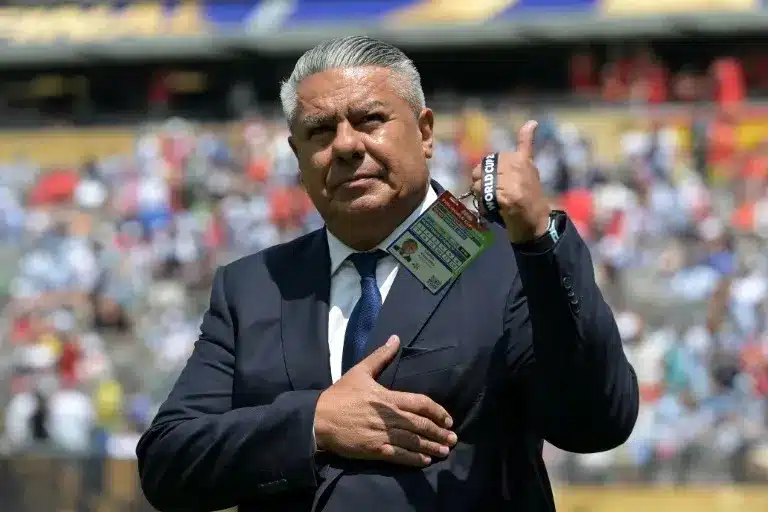
The Argentine Football Association (AFA) has strongly refuted claims that its president, Claudio Tapia, and treasurer, Pablo Toviggino, were detained or questioned by U.S. authorities following the World Cup final. Reports had circulated suggesting the officials were held at New York’s John F. Kennedy International Airport as they prepared to depart with the national squad after their loss to Spain.
AFA Statement Addresses Detention Rumors
Following widespread media speculation, the AFA issued a statement on Wednesday to clarify the situation. The organization categorically denied that Tapia and Toviggino were detained, questioned, or had their electronic devices seized by U.S. authorities. These reports, which alleged the officials were summoned to court regarding the AFA’s international contracts, were labeled as “absolutely false” by the association. A source within the AFA described the rumors as “All lies” to Agence France-Presse, while the Federal Bureau of Investigation (FBI) declined to comment on the matter.
U.S. Investigation into a Third Party
While denying the detention of its top officials, the AFA did acknowledge that a U.S. investigation is underway, targeting a third party with connections to the association. According to the AFA’s statement, a district court in Florida has issued a summons for an individual who is “being asked to appear before a grand jury and present any documents and communications that may be related to various individuals, including officials” of the federation. The AFA did not identify the individual or elaborate further on the nature of the investigation beyond its acknowledgment of the summons.
Background on AFA and Claudio Tapia’s Leadership
Claudio Tapia has led the Argentine Football Association since 2017. Under his tenure, the AFA has been involved in several domestic investigations within Argentina. These probes reportedly include inquiries into alleged money laundering and tax evasion. The AFA’s operational and financial dealings have come under scrutiny in its home country.
Strained Relations with Government
Tapia’s leadership has also been marked by increasingly strained relations with the administration of Argentina’s current President, Javier Milei. A significant point of contention is Tapia’s strong opposition to President Milei’s proposed policies, particularly the push to privatize football clubs across the nation. This policy difference highlights a broader ideological divide regarding the future structure and ownership of Argentine football.
The Significance of the World Cup Final
The reports of detention emerged shortly after Argentina’s national team participated in the World Cup final. While the team ultimately lost the match to Spain, their participation and the subsequent travel arrangements for the squad and officials were the backdrop against which these allegations surfaced. The AFA’s swift denial aimed to quell speculation and assure stakeholders of the safety and unimpeded travel of its leadership.
Official Statements and Lack of Comment
The AFA’s official statement served as its primary response to the circulating rumors. The firm denial of any detention or questioning of Tapia and Toviggino was unequivocal. The FBI’s standard practice of declining to comment on ongoing investigations or specific individuals means that official confirmation or denial from U.S. law enforcement regarding the third-party investigation is unlikely. This leaves the AFA’s statement as the most direct information available concerning its officials’ status during their departure from the United States.
Conclusion
In summary, the Argentine Football Association has officially denied reports of its president and treasurer being detained in the United States after the World Cup final. While acknowledging a U.S. investigation into a third party linked to the AFA, the association maintains that its top officials, Claudio Tapia and Pablo Toviggino, were not subjected to any detention or questioning. The situation remains under observation, with the AFA focused on addressing domestic investigations and navigating its relationship with the national government.
