

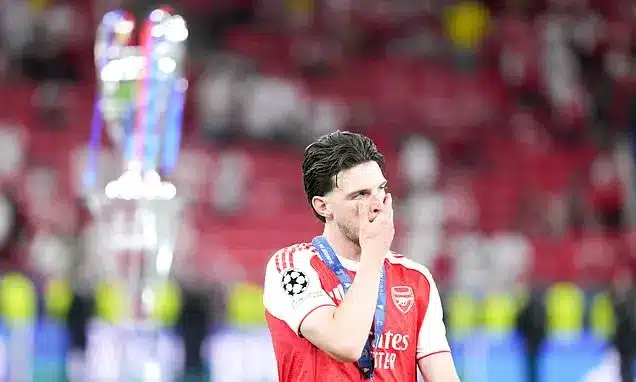
Arsenal’s Champions League aspirations were extinguished in a dramatic penalty shootout in Budapest, leaving Mikel Arteta and his squad to reflect on what went wrong. Despite an early goal from Kai Havertz and a resilient performance that pushed the reigning champions to the brink, Gabriel’s missed penalty ultimately sealed their fate. The club will now focus on their Premier League triumph, with no European and domestic double to celebrate this season.
Is It Time for Arsenal to Evolve?
Mikel Arteta’s tactical approach in the final was designed to frustrate PSG, aiming to leverage Arsenal’s characteristic discipline and defensive solidity. This strategy, which proved effective throughout their Premier League title-winning campaign, aimed to present the French champions with an unfamiliar challenge. The fact that Arsenal forced a penalty shootout suggests the plan had merit against a formidable attacking force. However, the narrow defeat, while agonizing, inevitably raises questions about the next phase of Arsenal’s development.
Arteta has cultivated a reputation for achieving results through efficiency, emphasizing clean sheets, set-piece prowess, and winning crucial moments. This approach brought Arsenal to the cusp of European glory. Yet, a question lingers: does a team need to adopt a different approach to reach the absolute elite level? Can a team truly be considered outstanding if it relies on less than a quarter of possession in a Champions League final, a statistic more akin to a Premier League clash between a top side and a relegation battler?
While Arsenal is expected to strengthen their squad this summer with further attacking talent, consideration may need to be given to providing these gifted players with a more expansive platform to showcase their abilities.
Arsenal’s Strength in Depth Provides a Foundation
Despite the disappointment, Arsenal possesses a strong foundation for future growth. Evidence of their resilience was apparent when PSG equalized, dominating possession with 78 percent of the ball. In that moment, the Arsenal defense was tested, but the team’s ability to withstand pressure and regain momentum, partly through astute substitutions, was notable. Arteta’s willingness to utilize his squad depth, including replacing his entire forward line, injected fresh energy and allowed the team to experience its most progressive period of the match.
The manager’s confidence in generational talents like Bukayo Saka is clear, yet he doesn’t over-rely on them, understanding the value of squad rotation. This tactical flexibility created momentum that PSG struggled to contain.
Questions Surround Player Development and Future Prospects
The penalty incident itself saw Arsenal defender Cristhian Mosquera narrowly avoid a second yellow card. There is also an ongoing debate about the appropriateness of sanctions when a foul results in a penalty.
The season’s conclusion, while ending in heartbreak, has seen the resurgence of players like Myles Lewis-Skelly. The young midfielder demonstrated remarkable emotional maturity and seamless integration into Arteta’s system, delivering an excellent 90-minute performance. His late-season surge in form and opportunity has led to hypothetical discussions about his potential inclusion in previous international squads, with some suggesting he could have been a viable alternative to other emerging talents.
Havertz: A Story of Redemption and Crucial Contribution
Kai Havertz’s journey at Arsenal has been remarkable. Initially facing criticism and ridicule after his move from Chelsea, he has undergone a significant transformation under Mikel Arteta. Despite past injury concerns, Havertz has become an integral part of Arsenal’s playing style, contributing goals – including his second in a Champions League final – and demonstrating an ability to hold up play and exploit space effectively, attributes not always seen at his previous club.
While Viktor Gyokeres was a significant signing last summer and impressed in the semi-finals, Havertz proved fundamental to Arteta’s game plan in the final and is expected to remain a crucial player next season.
PSG’s Defensive Struggle and European Defense
Paris Saint-Germain has now joined an exclusive group of clubs to successfully defend their Champions League title, a feat achieved by only ten clubs in the competition’s history and by just two since 1990. Despite this historic achievement, PSG’s performance suggested moments of uncharacteristic panic. Upon conceding early, the French champions appeared flustered, chasing the ball with an urgency that belied the vast amount of time remaining.
Faced with an unfamiliar tactical puzzle, PSG struggled to find their rhythm in the first half. It is suggested that had Mosquera not committed the penalty foul on Khvicha Kvaratskhelia, Arsenal might have secured the victory.
