

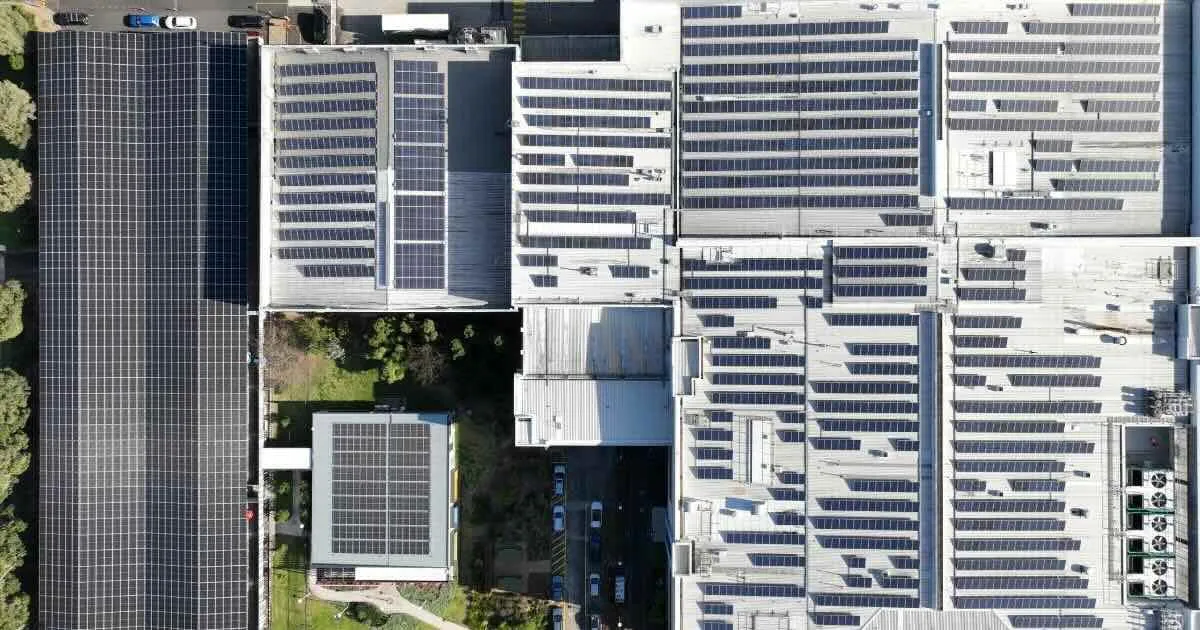
Significant policy shifts in Australia are poised to dramatically improve the financial viability of commercial and industrial (C&I) solar power and battery storage systems. Two key government initiatives, implemented in close succession, are set to lower upfront costs and shorten payback periods, potentially accelerating the adoption of renewable energy solutions for businesses.
Federal Rebate Expansion for Solar Projects
Effective October 1st, the Australian federal government’s Small-scale Renewable Energy Scheme (SRES) is undergoing a substantial change. The eligibility cap for Small-scale Technology Certificates (STCs), a crucial component of the rebate system, will increase from 100 kilowatts (kW) to 1 megawatt (MW). This expansion is anticipated to significantly reduce the initial investment required for C&I solar installations within this expanded capacity range.
Impact on Upfront Solar Costs
Analysis of 14,000 commercial solar projects modelled over the past three years suggests that this SRES cap increase could lead to a reduction in median upfront costs for C&I solar projects. For systems approaching the 1000kWp (kilowatt peak) threshold, costs are projected to fall by as much as 20.5%, potentially bringing the median installed cost down to around $900 per kWp. While prices will vary across the market, this change is expected to make solar power more accessible.
Long-Term Cost Reductions
The SRES expansion is not just a short-term fix; it contributes to a broader trend of decreasing costs. When combined with existing market reductions, the federal policy change is expected to result in a total decrease of approximately 34% in C&I solar project costs over a three-year period, from an estimated $1,500/kWp down to around $1,000/kWp by late 2026. This sustained price decline is a testament to the maturing solar industry and supportive government policies.
Shorter Payback Periods
A key metric for businesses considering solar investment is the payback period. With the enhanced SRES rebates, the median payback period for commercial solar projects is projected to fall below five years across all size categories from 100kWp to 1000kWp. This sub-five-year payback is often considered a critical threshold for financial decision-makers, suggesting a significant increase in project approval rates and overall installation volumes.
Addressing the 100kWp ‘Cliff’
Historically, the 100kWp mark has acted as an artificial barrier in the C&I solar market, with many projects clustering around this size. Data indicates that 100kWp systems represent a substantial portion of modelled projects. The SRES expansion is expected to dismantle this ‘cliff,’ encouraging a surge in installations between 100kWp and 200kWp. Furthermore, it may prompt businesses with existing 100kWp systems to consider expanding their capacity.
Australia’s Competitive Edge in Solar Pricing
The updated SRES scheme is set to enhance Australia’s already competitive position in the global C&I solar market. Projections for 2025/26 indicate that Australian commercial solar installations could be up to 32% cheaper than those in Germany and 29% cheaper than in the UK. This cost advantage, coupled with abundant sunshine, positions Australia for significant growth in C&I solar adoption, potentially becoming a global leader by 2030.
New South Wales Battery Rebate Expansion
In parallel with the federal solar changes, New South Wales (NSW) has introduced significant enhancements to its Peak Demand Reduction Scheme (PDRS), specifically targeting commercial-scale batteries. Starting September 1st, the scheme now includes provisions for batteries in apartment buildings, small to medium enterprises (SMEs), and C&I sectors, offering substantial upfront discounts.
Substantial Discounts for NSW Batteries
The PDRS, operating on a certificate-based system (Peak Reduction Certificates or PRCs), will provide upfront subsidies for batteries ranging from 200 kilowatt-hours (kWh) up to 30 megawatt-hours (MWh) in capacity. For batteries between 200kWh and 1MW, prices are expected to decrease by approximately one-third. Larger systems, such as a 5MWh battery, could see their upfront costs slashed by nearly 50% due to an eligible incentive of $1.066 million, bringing the cost down to around $249/kWh.
Price Trends in the Battery Market
The NSW PDRS expansion builds upon a strong downward trend in battery prices. Over the past three years, median modelled upfront costs for C&I battery projects have already fallen from over $1,050/kWh to approximately $700/kWh. The new NSW scheme is projected to drive prices down by an additional 31% for eligible systems, meaning a total reduction of over 50% in three years for those in NSW.
Synergy of Solar and Battery Incentives
A notable aspect of the new policies is the potential to stack incentives. In NSW, businesses can potentially benefit from both SRES rebates for solar installations and PDRS subsidies for battery storage. This dual incentive structure can further improve the economics of combined solar and battery systems, making them an increasingly attractive proposition.
Key Takeaways for the Industry
These policy changes offer several practical implications for the commercial solar and battery sector:
- System Sizing: Many existing 100kWp solar projects may now be considered undersized. Businesses with available roof space could be prime candidates for system upgrades. The focus is shifting from arbitrary size limits to determining the ‘optimum size’ based on load requirements.
- Increased Battery Demand: Lower solar prices and improved battery economics are expected to boost demand for energy storage. Larger solar arrays, when oversized for immediate use, can be effectively paired with batteries for self-consumption, mirroring trends seen in the residential sector.
- Financial Modelling Remains Crucial: Despite the attractive incentives, accurate financial modelling for savings and revenue is paramount. Commercial buyers remain financially driven, and bankable projections are essential for securing investment.
- Batteries as Standard Offering (NSW): In NSW, the significant cost reduction for batteries, particularly for larger systems, could lead to them becoming a standard offering for commercial installations, much like in the residential market.
- Monitoring Certificate Prices: For NSW-based projects, the price of PRCs is a critical factor. Fluctuations in PRC values can significantly impact battery costs, and past volatility relative to STCs warrants careful consideration during quoting.
- Navigating Compliance (NSW): The PDRS involves various compliance requirements, which can increase with battery size. Engaging with reputable, accredited certificate providers is essential to ensure adherence to regulations.
In conclusion, the combined impact of the federal SRES expansion and the NSW PDRS enhancements is set to create a more favorable economic landscape for C&I solar and battery storage in Australia, driving greater adoption and potentially positioning the nation as a leader in commercial renewable energy solutions.
