

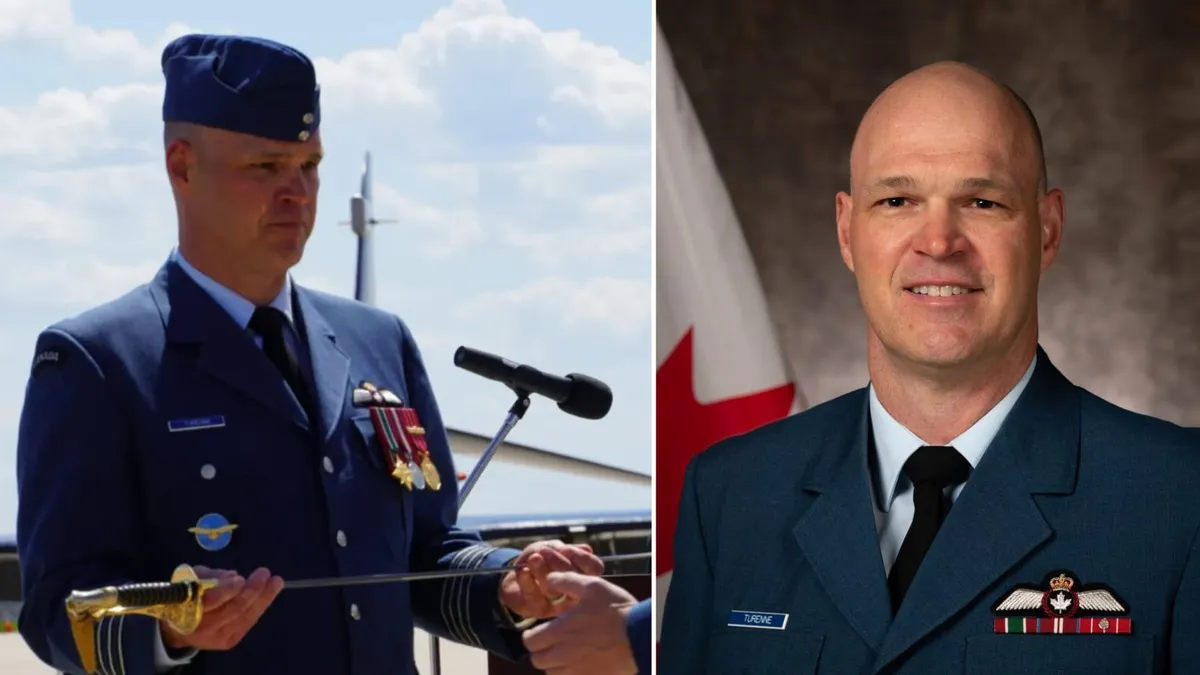
A high-level military honor awarded to Colonel David Turenne has brought to light significant Canadian involvement in the recent “Twelve-Day War” against Iran, exceeding previous government disclosures. Colonel Turenne, a former CF-18 fighter pilot and currently the deputy commander of 1 Canadian Air Division, received the Meritorious Service Cross on July 26, 2025, for his critical role in orchestrating the evacuation of 10,000 personnel from Al Udeid Air Base in Doha, Qatar. The base, the largest in the Middle East, was under threat following Israel’s surprise attack on Iran on June 13, 2025.
Canadian Military’s Role in the Twelve-Day War
The Canadian Armed Forces (CAF) stated that the medal recognized Turenne’s “exceptional leadership in enabling the safe evacuation of 10,000 personnel.” This operation occurred more than a year before the award was officially announced, with the details emerging through Canadian Forces General Messages on Canada.ca. The delayed revelation has intensified concerns regarding the transparency of Canada’s military operations in the strategically sensitive Gulf region.
When questioned, the CAF clarified that Colonel Turenne’s commendation stemmed from his work as director of the Combined Air Operations Center (CAOC) at Al Udeid. This multinational command hub, comprising personnel from 17 nations, was Turenne’s responsibility for force protection during his tenure. The conflict, dubbed the “Twelve-Day War,” commenced on June 13, 2025, with an Israeli strike on Iran. The United States subsequently joined the conflict by targeting Iranian nuclear facilities, prompting Iran to launch missile attacks, including strikes directed at Al Udeid Air Base.
Concerns Over Transparency and Political Motivations
Former Conservative defence minister Peter MacKay expressed strong criticism regarding the subdued announcement of Turenne’s award. “I think it’s quite ludicrous that we wouldn’t be celebrating this in an open way — transparent way,” MacKay stated. He argued that the federal government’s announcement failed to adequately convey the perilous conditions under which Colonel Turenne operated. “Turenne’s role was deemed pivotal…. War had broken out. There were bombs, missiles, drones, cruise missiles that were flying, and so there was urgency,” MacKay emphasized.
Al Udeid Air Base, while a multinational command center, also serves as the largest U.S. military installation in the Middle East, with a predominantly American workforce. MacKay suggested that the downplaying of Turenne’s achievement might be linked to “domestic political calculus,” potentially related to ongoing trade relations. “The narrative that has been created for some time since the last election is that we are playing hardball with the United States and a story such as this, I guess, kind of undermines that narrative,” he commented.
Logistical Challenges and Operational Security
Retired Major-General Scott Clancy, former director of operations for NORAD (North American Aerospace Defence Command), highlighted the immense logistical hurdles involved in relocating soldiers and equipment away from Iranian ballistic missile range. He noted that Shaw Air Force Base in South Carolina served as the backup support base for Al Udeid. “It’s about removing your people away from the potential threats, but there’s also an aspect of not drawing fire onto allies’ territory,” Clancy explained.
Having previously served with Turenne in the Royal Canadian Air Force, Clancy acknowledged the delicate balance military officials and the government must strike between operational security and the personal safety of deployed personnel when deciding what information to release. However, he also expressed surprise at the lack of transparency surrounding Turenne’s significant role in the operation. “There would have been a better way to approach it, but all of this has political ramifications,” Clancy observed.
Missed Opportunity for Public Recognition
The repercussions of the Iran conflict continue to unfold. The war was reignited in February 2025 by the U.S. and Israel without prior consultation with the United Nations or NATO allies. Six months later, the Strait of Hormuz remains a critical chokepoint. Prime Minister Mark Carney has navigated a complex diplomatic path, shifting from initial support for the U.S.-led war to criticizing unilateral American actions, while also terming Donald Trump’s ceasefire proposal a “game-changer.” This diplomatic framework, however, remains in a state of uncertainty.
While the government has maintained that Canada did not engage in “offensive actions” against Iran, it was initially reluctant to disclose the presence of approximately 200 Canadian troops attached to allied operations in the Middle East. Furthermore, Prime Minister Carney and Defence Minister David McGuinty faced criticism for not revealing that a Canadian military hub in Kuwait sustained damage during a retaliatory attack by Iran. The Prime Minister only acknowledged this incident after being presented with media reports and satellite imagery.
Peter MacKay believes that disclosing information, provided it does not compromise operational security, can foster patriotism and bolster public support for the military. He views the handling of Colonel Turenne’s accomplishments as a missed opportunity. “He had a distinguished career as a CF-18 pilot. He was given a high military honour. Why aren’t we talking about it?” MacKay questioned, underscoring the public’s potential interest in recognizing the contributions of its service members.
Conclusion
The award of the Meritorious Service Cross to Colonel David Turenne highlights a critical, yet previously understated, Canadian contribution during a significant international conflict. The delayed and limited disclosure surrounding his pivotal role in evacuating thousands of personnel from a high-threat zone raises important questions about transparency in military operations. While operational security is paramount, former officials and military experts suggest that a more open approach could have served to better inform the public and acknowledge the bravery and expertise of Canadian Armed Forces members, ultimately strengthening public support and understanding of their vital roles in global security.
