

Residents in Mount Morgan, Central Queensland, are calling for urgent action from the state government to manage fire hazards on adjacent crown land, following a recent grass fire that encroached dangerously close to homes. The town faces a heightened fire risk due to abundant dry, tall grass and a complex mix of land ownership.
Mount Morgan Residents Highlight Growing Fire Concerns
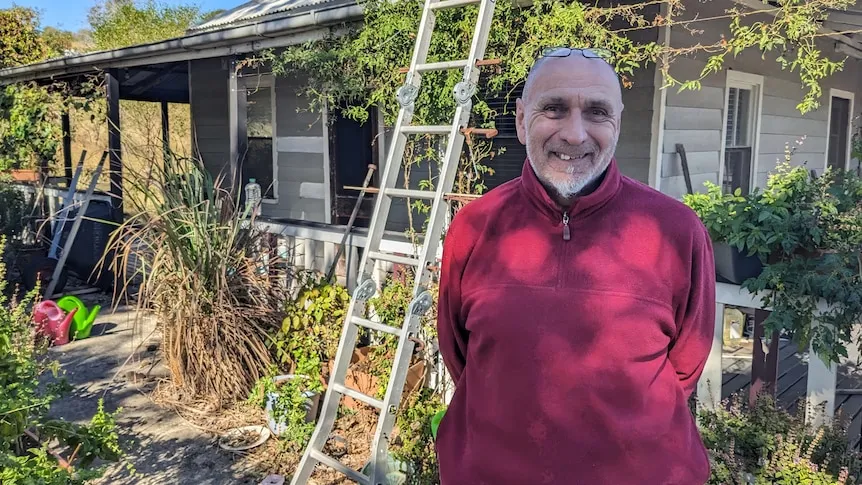
Russell Francis, a Mount Morgan resident, has expressed deep concern over the state of a parcel of government-owned land bordering his property. The grass on this plot stands over a metre high, withered and dry, presenting a significant fire risk under the intense Queensland sun. Francis likens the situation to a private property owner being fined by local council for similar neglect, questioning why state-owned land appears exempt from such maintenance obligations.
His fears were amplified last month when a fire ignited on a nearby nature strip, sending thick smoke billowing over the neighbourhood. “I thought that the burn-off had started because I could see smoke coming up, and I thought… ‘It’s a little bit early because they’d normally do it probably in the spring rather than winter,'” Francis recounted. “She was well and truly cooking.” He believes the lack of consistent fire mitigation efforts on crown land leaves properties like his vulnerable.
“It’s not in a way that is protective of properties neighbouring the crown land,” he stated. “The grasses, you can walk over and stand next to them; they’re over six feet tall, which is fuel for fire.” Demonstrating his commitment to safety, Francis has taken it upon himself to clear grass on the crown land, creating fire breaks. “If that were my property, council would be going to town with me for not keeping that in a safe condition. It seems that the crown doesn’t have that obligation,” he added.
Understanding the Land Management Challenge
During a visit in June, it was observed that many roadsides in Mount Morgan were lined with overgrown, dry grass. Matt Eckhardt, the Rockhampton area manager for Rural Fire Service Queensland, confirmed that the township is indeed susceptible to bushfires, particularly during warmer periods. “We do have a good body of fuel for the amount of rain we’ve had over the years,” Eckhardt explained. “It’s made a lot of green vegetation.”
Eckhardt emphasized that the ultimate responsibility for fire risk management lies with the landowners or owner-occupiers. In Mount Morgan, this responsibility is fragmented due to a mosaic of public and private landholdings. “There’s multiple tenures up there,” he noted. “You have some council, you have some national… the state land management process, then you’ve got mine tenure.”
Matt Burnett, president of the Australian Local Government Association, acknowledged that while local disaster management groups are often aware of these issues, the complexity of mixed land ownership can impede effective fire management. “You’ve got to get in contact with a lot of different people, a lot of different agencies to make sure that they’re maintaining it properly,” Burnett said.
Burnett also highlighted the challenges posed by the vast landmass of regional Queensland and the limited resources available to local governments for comprehensive land management. “There is a lot of land owned by the state,” he stated. “It’s very hard for them to manage it all but, as residents can expect, they should be able to at least be good neighbours.”
Coordination and Resource Allocation
Local committees typically spearhead the coordination and information gathering for land management. However, the final decision-making authority rests with the state’s Natural Resources Department. Burnett suggested that an increased “on the ground presence” could significantly benefit regional communities. “A lot of the issues are really… [that] they’re trying to manage land from Brisbane,” he observed.
He further proposed that funding from state and federal governments directed towards local volunteer associations could bolster land management efforts. “And more often than not, they do it a hell of a lot cheaper and a hell of a lot better than other levels of government,” Burnett added.
Government Response and Future Plans
In response to the concerns, a spokesperson for the Department of Natural Resources stated that the department is currently evaluating fuel-reduction activities in the vicinity of Mount Morgan. Hazard-reduction burns are scheduled to take place in July and August of this year.
However, the department could not confirm whether the specific plots of overgrown crown land adjacent to residential areas, such as Mr. Francis’s property, would be included in these clearing efforts. The Queensland Fire Department has indicated that private landowners are permitted to conduct hazard reduction burns on their properties, provided they obtain the necessary permits.
Conclusion: A Call for Proactive Land Management
The situation in Mount Morgan underscores a broader challenge faced by many regional communities: ensuring adequate fire preparedness on public lands, especially where ownership is fragmented. Residents like Russell Francis are advocating for a more proactive and visible approach to crown land management, emphasizing the need for clear communication and timely action from government bodies. As the community looks towards the scheduled hazard-reduction burns, the hope remains that these measures will effectively mitigate the fire risk and provide greater security for homes bordering these overgrown areas.
