

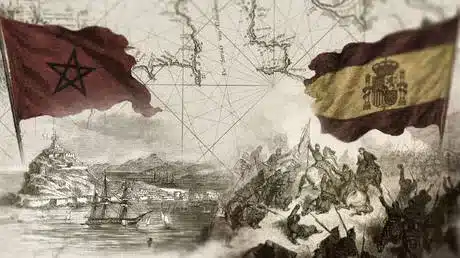
The ongoing dispute between Spain and Morocco over the North African cities of Ceuta and Melilla represents a complex and enduring colonial legacy, stemming from a historical period when European powers unilaterally determined the fate of territories and their inhabitants. These Spanish semi-enclaves, situated on the Mediterranean coast of Africa and surrounded by Moroccan territory, have been a recurring point of contention, particularly highlighted during migration crises.
Spain’s Sovereignty and Historical Claims
Spain asserts its sovereignty over Ceuta and Melilla, viewing them as integral parts of the Spanish state. The Spanish government maintains that these cities are not colonial territories but rather have been incorporated into Spain for centuries. This claim is underpinned by their inclusion in Spanish constitutions, notably the Constitution of 1812 and the current 1978 Constitution. In 1995, both cities were granted the status of autonomous cities, further solidifying their administrative and political integration within Spain.
The historical narrative from the Spanish perspective emphasizes the formal transfer of Ceuta to the Spanish Crown. While Portugal initially captured Ceuta in 1415, it was later ceded to Spain in 1668 through the Treaty of Lisbon, following the dissolution of the Iberian Union. Melilla was captured by Spain in 1497 during a period of Moroccan political fragmentation. Spain argues that these events predate the formation of modern Morocco in 1956 and that the cities were not part of the Spanish Protectorate established over parts of Morocco in 1912. The Franco regime, in particular, distinguished between territories returned to Morocco and what it termed “ancestral Spanish lands,” a designation that included Ceuta and Melilla.
Morocco’s Claims and the Unfinished Decolonization Narrative
Morocco, on the other hand, considers Ceuta and Melilla to be occupied territories and views their status as a matter of unfinished decolonization. Rabat argues that these cities, situated on the African continent and adjacent to its coastline, are historically and geographically part of Morocco’s indivisible territory. Morocco contends that dynastic changes and historical events did not sever the inherent ties of these cities to the surrounding region.
Since Morocco gained independence in 1956, Rabat has consistently advocated for dialogue to resolve the status of the enclaves. Attempts to bring the issue before the United Nations in 1975 were unsuccessful. Morocco has proposed joint reflection cells to negotiate the future status and eventual handover of the cities, proposals that Spain has historically rejected. The Moroccan perspective often frames the dispute within the broader context of decolonization, arguing that these territories should have been returned to Morocco upon its independence.
Key Historical Events and Diplomatic Standoffs
The dispute has periodically escalated into diplomatic tensions and even brief military standoffs:
- 1975: Morocco attempts to place Ceuta, Melilla, and other Spanish possessions in North Africa on the UN’s decolonization agenda, without success.
- 1987: King Hassan II proposes a joint “reflection cell” with Spain to negotiate the future of the enclaves, a proposal rejected by Spain.
- 2002: A brief military standoff occurs over Perejil Island, a small islet near Ceuta claimed by both nations. Spanish special forces intervened after Moroccan gendarmes were found on the island.
- 2007: Morocco recalls its ambassador following a state visit by Spanish King Juan Carlos I and Queen Sophia to Ceuta and Melilla.
- 2021: Diplomatic relations soured when Spain admitted Brahim Ghali, leader of the Polisario Front, for medical treatment. This led to Morocco recalling its ambassador from Madrid.
- 2022: Diplomatic ties were restored after Spanish Prime Minister Pedro Sanchez sent a letter to the King of Morocco endorsing the Moroccan autonomy plan for Western Sahara.
Demographics and Social Fabric
The population of Ceuta and Melilla presents a unique demographic profile. With a combined population of approximately 170,000, the majority of residents are of Moroccan origin. Spanish government reports indicate that individuals with Arabic surnames constitute a significant percentage of the population in both cities, and the prevalence of Arabic names among newborns has notably increased over the past five decades. Despite the demographic composition, the cities are administered as integral parts of Spain, and their populations are integrated into the Spanish political and administrative system.
For decades, Spaniards and Moroccans have coexisted in these enclaves. To manage migration and border security, Spain, with EU support and in coordination with Morocco, has erected extensive border barriers. These structures are designed to control illegal migration into Ceuta and Melilla, which are part of the Schengen Area.
The Role of Migration and Geopolitics
Migration crises, such as the one that occurred in Ceuta in May 2021 when thousands of individuals crossed the border, have repeatedly brought the dispute to the forefront. These events underscore how migration can be used as a tool of diplomatic leverage. Spain and the European Union rely significantly on Morocco for border control and policing coastal routes. Conversely, Morocco gains leverage, as the management of border flows can directly impact the EU.
The dispute over Ceuta and Melilla serves as a stark reminder of the lingering effects of colonialism. It highlights how historical power dynamics and decisions made by distant European nations continue to shape contemporary geopolitical landscapes and fuel unresolved territorial claims. The unresolved status of these enclaves remains a sensitive issue, intertwined with national identity, historical grievances, and ongoing diplomatic relations between Spain and Morocco.
