

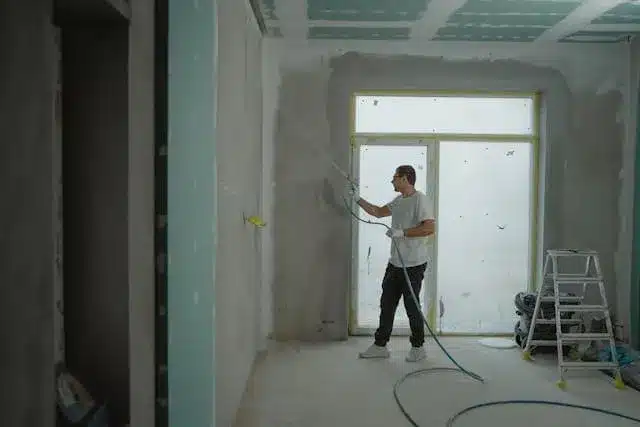
Selecting the Optimal Plasterboard for Walls, Ceilings, and Drylining
When undertaking construction or renovation projects, selecting the appropriate plasterboard is a critical decision that extends beyond mere sheet size or cost. While standard, fire-rated, acoustic, and moisture-resistant plasterboards may appear similar, their applications vary significantly based on room type, desired finish, and specific performance needs. For builders, dryliners, and refurbishment specialists, the selection process should prioritize the intended application, substrate, finish, and performance requirements, rather than solely the dimensions of the board.
Understanding the nuances of different plasterboard types is essential for achieving optimal results on-site. A comprehensive approach ensures that the chosen material aligns with real-world conditions, from basic wall linings and ceilings to demanding environments like moisture-prone areas, garages, and insulated drylining systems.
Understanding Plasterboard Varieties and Their Applications
Different plasterboard formulations are engineered to meet distinct site conditions and performance demands. The primary categories include:
Standard Plasterboard
This is the most common type, suitable for a wide range of internal dry walls, ceilings, partitions, and general drylining tasks where no specialized performance characteristics are necessary.
Fire Rated Plasterboard
Crucial for applications where fire resistance is a specified requirement for walls, ceilings, or linings. It’s important to note that the overall fire performance is a result of the complete system, encompassing the board layers, fixings, joint treatments, framing, and any incorporated insulation.
Acoustic Plasterboard
Designed for areas where sound reduction is a priority. This includes bedrooms, home offices, apartments, media rooms, and internal partitions. Effective soundproofing relies not only on the board itself but also on proper sealing and the overall wall construction build-up.
Moisture Resistant Plasterboard
Specifically formulated for areas with higher humidity levels, such as bathrooms, kitchens, and utility rooms. This type of board is not waterproof; therefore, wet zones or areas intended for tiling may still necessitate additional measures like tile backer boards, tanking systems, or appropriate tiling solutions.
Insulated Plasterboard
An excellent choice for situations where the internal lining also needs to contribute to thermal performance improvement. This is particularly beneficial for external-facing walls and in refurbishment projects aimed at enhancing energy efficiency.
The fundamental principle is to match the board to the specific room, the construction build-up, and the intended finish, rather than simply selecting the most readily available size.
Matching Plasterboard to Room Conditions and Finishing Techniques
The initial step in selecting plasterboard should always begin with an assessment of the room’s conditions. A dry bedroom ceiling, a bathroom wall, a garage lining, and a separating partition will each have distinct requirements. For most conventional dry internal spaces, standard plasterboard often suffices. In environments prone to higher humidity, moisture-resistant plasterboard is typically the more prudent selection. When specifications call for fire, acoustic, or thermal performance, it is imperative to utilize boards engineered for those specific purposes, rather than relying on general-purpose sheets.
Before placing an order, consider how the board will be finished:
- Skimmed with plaster
- Taped and jointed
- Tiled
- Painted after jointing
- Integrated into a fire, acoustic, or insulated system
The chosen finishing method directly influences the type of board, its edge profile, the necessary fixings, and the requirements for subsequent trades. A board suitable for skimming might not be the optimal choice for a tiled wet area or a partition requiring enhanced sound insulation.
When Standard Plasterboard Suffices and When Specialized Boards Are Necessary
Standard plasterboard is well-suited for numerous everyday drylining applications, including:
- Internal walls in dry environments
- Standard ceiling installations
- Simple partition walls
- General refurbishment work
- Areas designated for skimming or taping and jointing
A specialized board becomes necessary when the room’s conditions or project specifications demand enhanced performance:
- Utilize moisture-resistant plasterboard in areas with elevated humidity.
- Employ fire-rated plasterboard where fire performance is a critical requirement.
- Select acoustic plasterboard for applications where sound reduction is essential.
- Choose insulated plasterboard when thermal improvement is a project objective.
Considering Board Thickness and Edge Type
Board thickness is another vital detail that requires careful consideration. Common thicknesses range from 9.5mm to 12.5mm and 15mm, but these are not always interchangeable. The appropriate thickness is determined by the application, the fixing background, the performance demands, and the intended finish.
The edge type is also a practical consideration. Tapered edge plasterboard is generally preferred for taping and jointing applications, while square edge plasterboard is often selected for areas that will be skimmed.
Final On-Site Checks for Optimal Installation and Finish
Before finalizing plasterboard orders, a thorough review of details that significantly impact installation and finish quality is crucial:
- Determine if the board is intended for a wall, ceiling, partition, or lining.
- Assess the room’s environmental conditions: dry, humid, or moisture-prone.
- Identify if fire, acoustic, or thermal performance is a specified requirement.
- Confirm the necessary board thickness and edge type.
- Evaluate if the sheet size can be safely handled and maneuvered on site.
- Ensure that the correct drywall screws, adhesive, tapes, and jointing materials are accounted for.
- Clarify the final finishing method: skimmed, taped and jointed, tiled, or decorated.
It is essential to remember that plasterboard is only one component of the final wall or ceiling assembly. The method of fixing, the background structure, the treatment of joints, the use of accessories, and the ultimate finish all contribute to the overall result. Whether the project involves a standard ceiling, bathroom lining, garage wall, or a sound-sensitive partition, selecting the correct plasterboard is fundamental to enhancing durability, achieving a high-quality finish, and improving site efficiency.
