

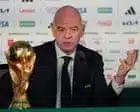
The Confederation of North, Central America and Caribbean Association Football (Concacaf) has voiced significant opposition to FIFA’s proposed plan to sell stakes in the World Cup to private investors. This criticism follows a similar stance taken by UEFA, highlighting growing concerns among football’s governing bodies regarding FIFA’s governance and transparency in the matter. Concacaf expressed deep reservations, stating they were unaware of the proposal until it was reported in the media.
Concacaf’s Concerns Over Governance and Due Process
In a strongly worded statement, Concacaf revealed that the proposal to sell stakes in a new commercial entity, reportedly valued at $20 billion, was not communicated through proper channels. The organization emphasized its commitment to good governance and robust processes, principles it expects all entities within the FIFA family to uphold. Victor Montagliani, the Concacaf president and a key figure in organizing the 2026 World Cup, was reportedly not consulted. Montagliani, who also serves as a FIFA vice-president, along with other FIFA vice-presidents including the FA chair Debbie Hewitt, appear to have been kept in the dark about these advanced plans.
The proposed deal involves a US company, Thrive Eternal, led by Joshua Kushner, the brother-in-law of former US President Donald Trump’s son-in-law, Jared Kushner. This entity is slated to lead the investor group. Concacaf’s statement underscored the disappointment felt by many within the football community regarding the public disclosure of such significant plans before any discussion with relevant governance bodies and stakeholders had occurred.
“As leaders within football, we are the custodians of the game,” Concacaf stated. “Collectively, FIFA, the Confederations and every Member Association have a responsibility to always act in the best interests of the sport. Every decision we make must be guided by good governance, robust processes and long-term stewardship. This is the framework within which Concacaf operates. We trust that all within the Fifa family will act in the same manner.””
Details of the FIFA Commercial Entity and Funding Plans
FIFA, in collaboration with the US investment bank JP Morgan, has reportedly established a new company named FIFA Forward Enterprise (FFE). This entity is intended to raise up to $4.2 billion through the sale of partial stakes. The capital generated is earmarked for funding global football development projects later this year. The move has reportedly stunned stakeholders and exacerbated existing divisions within the international football landscape.
Broader Implications and Opposition from UEFA
The proposed sale of World Cup stakes comes at a time when UEFA and the Asian Football Confederation were already preparing to challenge FIFA’s plans to expand the World Cup to 64 teams for the 2030 tournament. There are fears that the involvement of private investors could inevitably lead to further tournament expansions and increased pressure to host the World Cup more frequently, given its substantial commercial value.
UEFA has been particularly vocal in its criticism, accusing FIFA of attempting to “sell football’s soul.” The European governing body announced plans for emergency talks to formulate a coordinated response, which could include legal action. UEFA emphasized that the governance and essence of football are not commodities to be traded, especially without transparency regarding financial beneficiaries.
“This crosses a line that football’s governing institutions should never cross,” UEFA stated. “UEFA takes it extremely seriously. So should every National Football Association. So should every stakeholder: leagues, clubs, players, supporters, governments and everyone who cares about the future of the game. The soul and governance of football are not assets to trade – especially with zero transparency as to who gains financially. None of us are the owners of football. It is not Fifa’s to sell.”
Wider Criticism and Concerns for the Future of Football
The criticism has extended beyond football’s governing bodies. Andy Burnham, the Mayor of Greater Manchester (often referred to as Britain’s ‘new prime minister’ in some contexts due to his prominent role), also weighed in, asserting that the sport does not belong to investors. He articulated his view on social media, stating, “The World Cup is not a product. It is the greatest competition in world sport, and it was never anyone’s to sell. Dress the deal up however you like. Once you have sold a piece of it, you have sold out.”
The controversy surrounding FIFA’s plan to sell stakes in the World Cup highlights a fundamental tension between commercial interests and the stewardship of the sport. Critics argue that such a move could compromise the integrity and long-term interests of football, potentially prioritizing profit over the game’s development and accessibility. The lack of consultation with key stakeholders like Concacaf and UEFA further fuels concerns about FIFA’s decision-making processes and its commitment to inclusive governance.
Conclusion: A Call for Transparency and Responsible Stewardship
The strong reactions from Concacaf and UEFA underscore a significant pushback against FIFA’s commercial strategy. These organizations are calling for greater transparency, adherence to due process, and a reaffirmation of the principle that football’s core assets and governance structures should be protected for the benefit of the global game. The coming weeks are expected to be crucial as stakeholders assess the full implications of the proposed deal and determine a unified course of action to safeguard the future of world football.
