

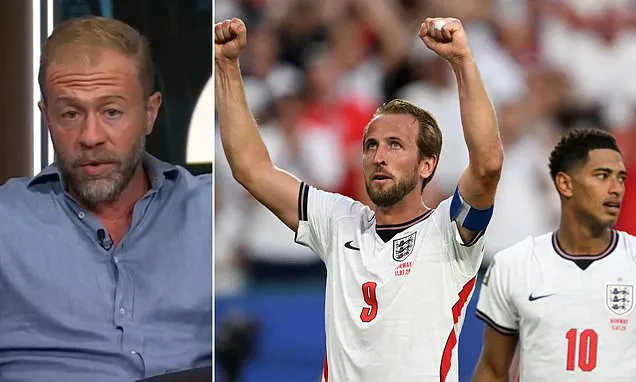
Despite securing a spot in the World Cup semifinals with a hard-fought extra-time victory over Norway, the England national team faced sharp criticism on American television for their performance. Pundits questioned the team’s quality and tactical execution, even as they advanced to within two games of potentially winning the tournament for the first time since 1966.
England’s Rocky Road to the Semifinals
The Three Lions clinched their semifinal berth on Saturday night with a dramatic 2-1 win against Norway in Miami. The match required extra time, with young star Jude Bellingham emerging as the decisive player, scoring both goals for England. Bellingham’s first goal equalized just before halftime, and his second in the early stages of extra time secured the crucial victory.
However, the narrow win and the perceived subpar performance did not sit well with some US-based football analysts. Mike Grella, a commentator on CBS Sports, delivered a particularly scathing assessment, drawing an analogy to describe his view of the team’s aesthetic quality versus their actual play.
“The World’s Ugliest Daughter” Analogy
Grella expressed a stark contrast between England’s current position in the tournament and the perceived quality of their football. “The good news is you have two games left, semifinal and final, and you can actually win a World Cup for the first time since 1966. The bad news is you’re not very good at football,” Grella stated on the broadcast. He elaborated on his critique, highlighting perceived weaknesses in the team’s technical ability and tactical shape.
“You’re not good with the ball, you’re not good at transitions, you leave unbelievable spaces in between the lines. By English standards, it was a really poor performance,” Grella continued. He then offered his striking metaphor: “The impressive part is how poor you are and you’re able to get away with the win. It’s like having the world’s ugliest daughter and saying, ‘You’re beautiful baby.'” This sentiment underscored a belief among some observers that England’s progression was more a product of luck or opponent’s shortcomings than superior play.
Managerial Perspective: Acknowledging Flaws Amidst Success
England manager Thomas Tuchel, while celebrating the vital win and semifinal qualification, echoed some of the critical sentiments regarding his team’s performance. He acknowledged that the team made their task more difficult than it needed to be.
“We made life very difficult for ourselves today. The result is amazing. But not happy with the performance,” Tuchel said in his post-match comments. He described the play as “sloppy, a lot of technical mistakes, not fast enough, not repetitive enough,” and admitted the team “were lucky today.”
Praise for Spirit, Demands for Improvement
Despite his reservations about the execution, Tuchel was quick to praise the team’s resilience and fighting spirit. He commended their ability to overcome adversity and secure a win when not playing at their best.
“No one suggests that I’m not impressed with the shift that they put in, the effort, the spirit, the belief,” he stated. “To overcome adversity and to dig in and to find ways to win is on the absolutely highest level. They cannot get enough praise for that.”
However, as a coach, Tuchel maintained high standards. “But I’m also a football coach and I think we can play better,” he asserted. He expressed pride and a strong connection to the team due to their determination to win, noting, “They just refuse to lose. They overcome obstacles and adversity.” Yet, he concluded, “But I also have demands. We want to bring out the best in us. In my head I am just not fully satisfied and I stand by that. I think we can play faster, we can play more clinical.”
Tuchel identified specific areas for improvement, including reducing “too many unforced errors and technical mistakes” and acknowledging fortunate moments in crucial junctures of the game. He indicated that despite the win, there were “a lot of things to do better, which is not a problem.”
Looking Ahead: Semifinals and Beyond
England now prepares for the World Cup semifinals, a stage they have not reached in decades. The team’s ability to navigate challenging matches and secure results, even when not performing at peak capacity, will be a key narrative as they move deeper into the tournament. The contrasting views from American media and the manager’s own critical self-assessment highlight the intense scrutiny that accompanies a team with high expectations on the global stage.
The journey to the final will undoubtedly test England’s resolve and tactical acumen. While the win against Norway proves their capacity to grind out results, the desire for a more convincing and dominant style of play remains evident, both from external commentators and within the team’s own leadership.
