

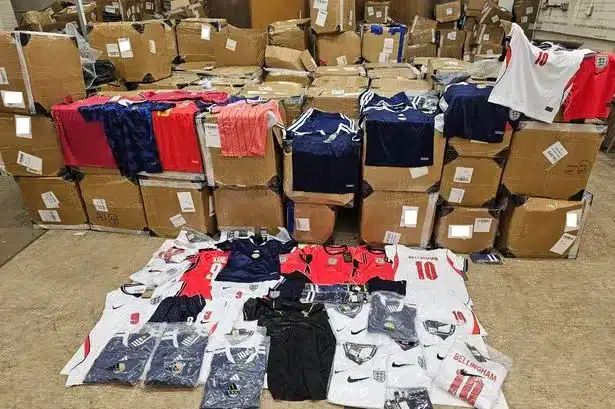
Authorities in the UK have confiscated counterfeit football shirts valued at over £18 million, with a stark warning issued regarding their flammability and potential health hazards. The surge in fake merchandise coincided with the recent World Cup, a period that typically sees increased demand for football kits. Investigations revealed that these imitation garments pose a significantly greater fire risk compared to authentic apparel, alongside concerns about harmful chemicals.
Massive Seizure Operation Uncovers Dangerous Fakes
The extensive operation, known as Operation Bloxwich, targeted the influx of counterfeit goods. The Police Intellectual Property Office, in collaboration with other agencies, recovered more than 220,000 pieces of fake football merchandise. Border Force officers were instrumental in this effort, working tirelessly to intercept thousands of items destined to flood the market. These seizures occurred across at least 23 separate enforcement actions, highlighting the widespread nature of the illicit trade.
Investigators discovered that the seized shirts contained banned chemicals, posing a particular danger to children. Some samples were found to contain alarmingly high levels of toxic substances, including arsenic and lead. These findings underscore the lack of quality control and safety assurances associated with counterfeit products.
Concerns Over Harmful Chemicals and Flammability
A spokesperson for Border Force emphasized the risks, stating, “Seized shirts have been found to contain harmful chemicals banned under UK safety law – a particular risk for children.” The absence of quality checks means there is no guarantee of safety, and no recourse for consumers if issues arise. Beyond immediate safety concerns, the trade in fake goods is linked to broader criminal activities, including child labor, forced labor, drug smuggling, and dangerous working conditions.
The Police Intellectual Property Crime Unit reported a significant number of seizures, confiscating over 4,000 fake shirts in April alone. One notable raid in Birmingham uncovered 1,618 counterfeit kits, including replicas of popular international stars like Kylian Mbappé and Erling Haaland. Detective Sergeant Jamie Kirk, who participated in the operation, acknowledged the appeal of lower prices but stressed the severe risks. “I understand why people want to buy these shirts, people love football and the incentive is the lower price – but these shirts, they’re not regulated and could be highly flammable,” Kirk stated. “They have dyes in them which could be harmful to skin, particularly children’s skin. While the cost is lower – and that’s the attractive part – potential damages to you and the people making them is just far too high.”
Fire Service Tests Confirm Extreme Flammability
To quantify the fire risk, Cheshire Fire and Rescue Service conducted tests comparing the flammability of counterfeit shirts against genuine ones. The results were stark: the fake kits ignited and melted significantly faster when exposed to a flame. Watch Manager Dave Jackson described the difference, noting, “It’s quite clear that the counterfeit one melted as soon as the burner went on it.” In contrast, he had to actively try to ignite the genuine shirt. This dramatic difference highlights the potential for severe burns and injuries if counterfeit clothing comes into contact with heat sources.
Jackson further warned about the consequences, stating, “It’s extremely dangerous. It’s something that can cause horrific injuries to your children. It’s just not worth the savings.” The price disparity is a major driver for consumers, with fake shirts often sold online for around £12, while official Premier League replica shirts can cost upwards of £85.
Broader Implications of Counterfeit Goods
Kate Caffrey, head of intelligence at the Intellectual Property Office, underscored that counterfeit strips are not subject to any health and safety regulations, including British Standards or EU standards. “We’ve got evidence that counterfeit goods are made in appalling conditions,” she explained. “So you just don’t know what’s in them, how they’re being made and there’s no way of providing any safety reassurances.” Caffrey emphasized that counterfeiting is a criminal enterprise, often run by organized criminal networks and gangs who are adept at exploiting market demand, particularly during major sporting events like the World Cup and the lead-up to new football seasons.
Phil Douglas, director general of Border Force, commented on the criminal exploitation of fans’ passion. “Criminals are deliberately exploiting fans’ passion for the game. Our officers are working around the clock to stop them. We are protecting fans from being ripped off,” he said, reiterating the agency’s commitment to preventing illegal goods from entering the UK.
Conclusion: Prioritizing Safety Over Savings
The extensive seizures and subsequent warnings serve as a critical reminder to consumers about the hidden dangers associated with counterfeit football merchandise. While the allure of lower prices is understandable, the risks of toxic chemicals, extreme flammability, and the support of criminal networks far outweigh any potential savings. Authorities urge consumers to be vigilant and purchase merchandise only from reputable sources to ensure product safety and avoid inadvertently funding illicit activities.
