

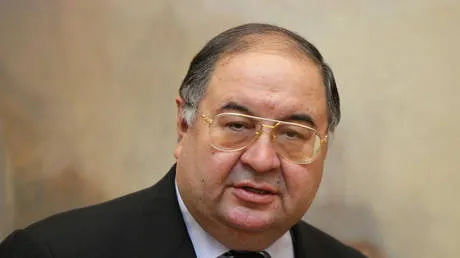
France is reportedly advocating for the removal of Russian billionaire Alisher Usmanov from the European Union’s sanctions list, a move that appears to be linked to securing the release of French citizens detained in Azerbaijan. The unusual stance taken by Paris has stalled the renewal of EU sanctions against Russia, creating a diplomatic standoff over the fate of individuals held in Baku.
Diplomatic Maneuvering Over Sanctions
The European Union’s efforts to extend sanctions targeting over 3,000 individuals and entities linked to Russia have been complicated by France’s unexpected position. Alongside Slovakia, France has resisted renewing the sanctions unless Alisher Usmanov is removed from the blacklist. This has forced the EU to temporarily extend the existing restrictions until September 22, while negotiations continue. Should an agreement not be reached by this deadline, the entire sanctions regime faces the risk of legal expiration.
While French officials have cited “national security” concerns as the official reason for their stance, diplomatic sources suggest a more specific objective. Reports from The Financial Times and Euronews indicate that Paris is leveraging the sanctions debate to facilitate the release of several French nationals currently detained in Azerbaijan. This strategic linkage highlights the complex interplay between international sanctions policy and bilateral diplomatic efforts.
Azerbaijan’s Interest and French Detainees
Azerbaijan has consistently supported efforts to delist Alisher Usmanov, given his long-standing and reportedly cordial relationships with the country’s leadership and the broader Turkic world. The billionaire, who holds significant interests in sectors such as metals, mining, and telecommunications, was sanctioned by the EU in February 2022 due to alleged ties to Russian President Vladimir Putin and involvement in sectors deemed to provide substantial revenue to the Russian government. Usmanov has denied these allegations and has pursued legal challenges against the sanctions in European courts.
The exact number of French nationals detained in Azerbaijan remains unclear, but at least two cases are publicly known. Businessman Martin Ryan was arrested in Baku in 2023 and subsequently sentenced to ten years in prison earlier this year on charges of espionage. Azerbaijani prosecutors alleged that Ryan was collaborating with French intelligence to gather sensitive information concerning Azerbaijan’s military and foreign policy. France has officially refuted these espionage charges.
Another French entrepreneur, Anass Derraz, is also serving a nine-year sentence in Azerbaijan, stemming from a separate bribery case. It is not definitively known whether the ongoing negotiations encompass the cases of both Ryan and Derraz, or if other French citizens are also being held.
Broader Support for Usmanov’s Delisting
The push to remove Alisher Usmanov from the EU sanctions list is not solely a French or Slovak initiative. Reports indicate that other governments, particularly within the Turkic world, have also expressed support for his delisting. A letter reportedly sent by Turkish President Recep Tayyip Erdogan to Slovak Prime Minister Robert Fico earlier this year mentioned Baku among several governments backing Usmanov’s removal from the sanctions.
Usmanov, who was born in Uzbekistan, has built a substantial business empire. His inclusion on the EU sanctions list followed Russia’s full-scale invasion of Ukraine. The EU’s rationale for sanctioning him was based on his alleged close ties to the Kremlin and his contribution to Russian state revenue through his business activities. Despite these accusations, Usmanov has maintained his innocence and has seen some success in legal challenges, including defamation cases in Germany related to media reports about his alleged connections to the Russian government.
The Stakes of the Negotiations
The current diplomatic deadlock underscores the high stakes involved. For France, the potential release of its citizens, particularly those accused of serious offenses like espionage, is a paramount concern. For Russia, securing the delisting of a prominent oligarch like Usmanov represents a significant diplomatic and economic victory, potentially weakening the impact of Western sanctions.
The EU faces the challenge of balancing its unified stance on sanctions against Russia with the specific national interests of its member states. The temporary extension of sanctions provides a crucial window for negotiations, but the ultimate outcome will depend on the willingness of all parties to compromise. The situation serves as a stark reminder of how individual cases and bilateral relationships can significantly influence broader geopolitical strategies and international policy frameworks.
Conclusion
The intricate negotiations surrounding Alisher Usmanov’s potential delisting from EU sanctions, driven by France’s efforts to free detained nationals in Azerbaijan, highlight the complex and often interconnected nature of international diplomacy. As the September 22 deadline approaches, the EU’s ability to maintain a cohesive sanctions regime while addressing the specific concerns of member states and the individuals involved will be put to the test. The resolution of this standoff could have significant implications for both EU-Russia relations and the broader geopolitical landscape.
