

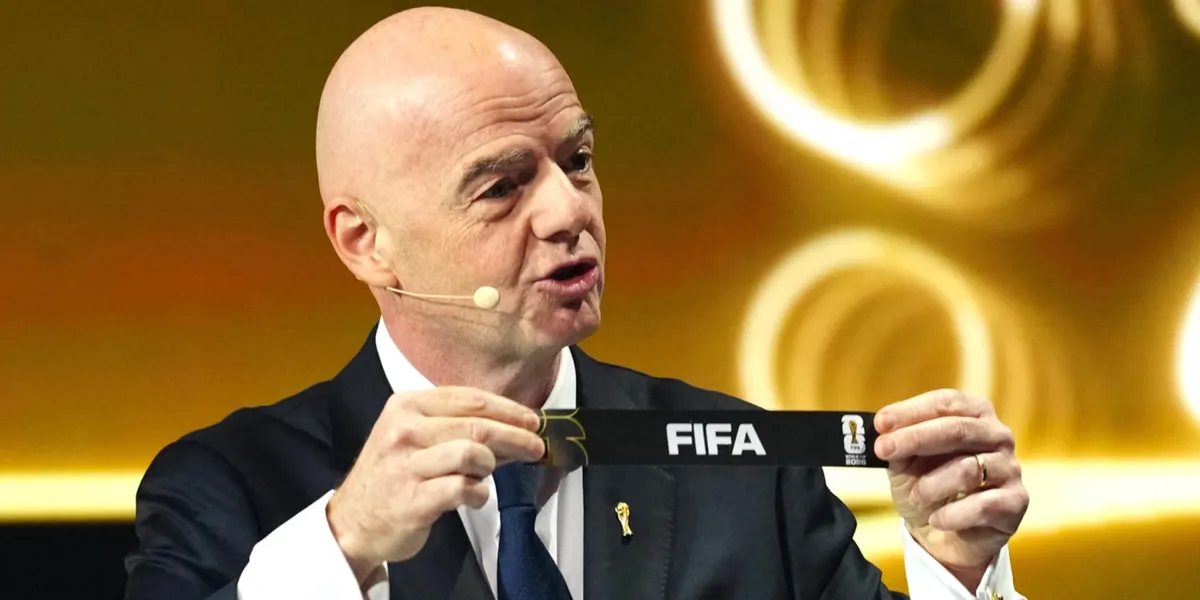
FIFA President Gianni Infantino has faced significant backlash following a proposed plan to sell stakes in the World Cup to private investors. Despite the controversy and a subsequent retraction of the plan, several national football associations have publicly declared their continued support for Infantino and his leadership.
Details of the Proposed World Cup Investment Plan
The controversial proposal, reportedly valued at approximately £15 billion, aimed to allow private investors a role in the planning of future World Cups. In exchange for their investment, FIFA’s 211 member associations were offered substantial financial incentives. Each association was slated to receive an immediate sum of £15 million (equivalent to $20 million USD). Furthermore, an additional £50 million (approximately $66 million USD) was promised to each member association before the year 2038, contingent on their approval of the plan.
Widespread Criticism and UEFA’s Stance
The plan quickly drew sharp criticism from various footballing bodies and stakeholders. UEFA, the governing body for European football, emerged as one of the most vocal opponents. UEFA President Aleksander Čeferin urged European nations to withdraw their support for Infantino, expressing hopes that he would either resign or be defeated in the upcoming presidential elections, which he was previously expected to win comfortably.
Other continental confederations, including CONMEBOL (South America), CONCACAF (North, Central America, and Caribbean), and the AFC (Asia), also issued statements condemning the proposal. The widespread opposition highlighted a significant rift within the global football community regarding FIFA’s strategic direction and financial dealings.
Nations Expressing Support for Infantino
Despite the mounting pressure and calls for his resignation or removal, a select group of nations have publicly affirmed their confidence in Gianni Infantino’s leadership. These nations believe in his vision for the growth and development of global football.
European Support
Within Europe, where opposition was strongest, one national association broke ranks with UEFA’s collective stance. David Trunda, president of the Czech Republic’s football association, expressed his belief that Infantino’s plans, even in their initial form, could provide crucial additional funding for grassroots football initiatives and infrastructure development within the country. This perspective suggested a potential divergence in priorities between continental bodies and individual member associations.
Support from Other Continents
Beyond Europe, several other nations have reiterated their support for Infantino. Notably, Qatar, the host nation of the 2022 FIFA World Cup, released a statement commending Infantino’s foresight. The statement applauded his “wisdom” and pledged full support for his “efforts to continue growing and strengthening the game globally.”
According to reports, Kuwait, Sri Lanka, and Lebanon have also publicly reaffirmed their confidence in Infantino’s leadership. These declarations of support, particularly from nations with diverse footballing backgrounds and interests, indicate that Infantino retains a core base of backing within FIFA’s membership.
The Political Landscape within FIFA
The dynamics of FIFA’s membership play a crucial role in its internal politics. UEFA and CONCACAF together represent 90 of FIFA’s 211 member associations. While this bloc is substantial enough to trigger a vote of no confidence, it falls short of the majority required to remove the president from office.
The AFC, comprising 40 member associations, has not publicly challenged Infantino’s presidency, suggesting a neutral or tacitly supportive stance among many of its members. Australia, an AFC member, welcomed the abandonment of the investment plan, stating that the focus should now shift to future endeavors.
Thresholds for Leadership Change
Currently, the public opposition, primarily led by UEFA and CONCACAF, accounts for approximately 43 percent of FIFA’s membership. This figure is below the majority threshold needed to unseat the president. However, the situation remains fluid. The undeclared member associations are not bound to vote in alignment with their confederations’ general positions. A shift in allegiance from just 16 of these nations could significantly alter the balance of power and place Infantino’s presidency in a precarious position ahead of the March elections.
Conclusion
The controversy surrounding Gianni Infantino’s World Cup investment plan has highlighted divisions within global football governance. While UEFA and other bodies have strongly opposed the proposals, a coalition of nations, including the Czech Republic, Qatar, Kuwait, Sri Lanka, and Lebanon, have publicly backed Infantino, emphasizing their belief in his leadership and vision for the sport’s global expansion and financial stability. The political landscape within FIFA remains complex, with the potential for shifts in support that could influence the outcome of future leadership challenges.
