

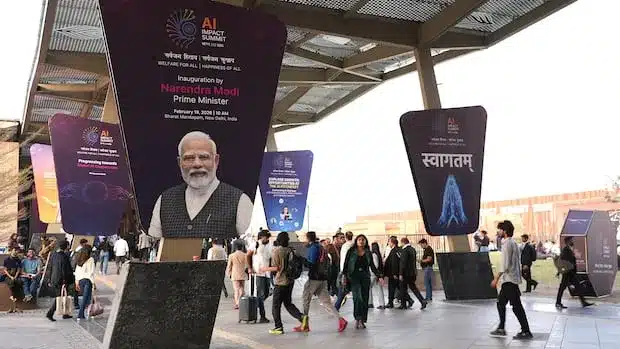
A massive crowd filled the expansive venue in central New Delhi for the global AI Impact Summit, drawing top tech executives like OpenAI’s Sam Altman and Google’s Sundar Pichai. Held for the first time in a developing nation, the event spotlighted business opportunities and investment strategies to boost AI growth in India. Around 300 local entrepreneurs showcased affordable AI solutions for common challenges, yet discussions largely overlooked the environmental toll of expanding AI infrastructure, particularly the strain from massive data centers on water and energy resources.
Data Centers Strain Scarce Resources
Data centers house servers and IT equipment essential for storing digital data, demanding vast quantities of water and electricity for cooling. Major expansions target India’s existing hubs in resource-stressed areas. In Hyderabad, southern India, Amazon advances its facility despite projections of a 909 million litre daily water deficit for homes and industry within two years. Microsoft targets Pune, southeast of Mumbai, where recent water shortages sparked public protests against authorities.
Investment Boom Overshadows Sustainability
India produces nearly 20 percent of global data but stores just three percent. Electronics and Information Technology Minister Ashwini Vaishnaw predicted over $200 billion US in investments across the AI ecosystem within two years. Prime Minister Narendra Modi emphasized India’s bold embrace of AI, stating, “India is not scared. India sees fortune and a future in AI.”
Tech giants have committed $68 billion US to AI projects, focusing on cloud services and data centers. Google invests $15 billion in a huge AI hub and data campus in Visakhapatnam, eastern Andhra Pradesh, partnering with Adani Group and Bharti Airtel—its largest such facility outside the US.
India ranks third globally in AI competitiveness, trailing only the US and China, per Stanford University data. Yet data center energy and water demands could double by 2030, analysts warn. No national policy mandates transparency on resource use, leaving regulation to states eager for investments and tax breaks.
Growing Calls for Disclosure and Oversight
Just five of 15 states with data center policies address sustainability. An S&P Global analysis forecasts high water stress for over 60 percent of facilities this decade. Research for NITI Aayog projects AI data centers could consume 1.7 trillion gallons of freshwater next year.
Shalu Agrawal, director of programs at the Delhi-based Council on Energy, Environment and Water (CEEW), highlighted the information gap: “We do not have full information on what technologies [the companies are proposing]. We need frameworks for disclosure.” She noted national incentives prioritize growth over restraint.
World leaders including French President Emmanuel Macron and Brazilian President Luiz Inácio Lula da Silva joined the summit. Canada’s AI Minister Evan Solomon addressed transparency issues, saying Canadians ask, “Is it water-intensive? Is it energy-intensive? Will this have an impact on my electricity rate?”
Community Backlash in Expansion Zones
Arpita Kanjilal, researcher at Delhi’s Digital Empowerment Foundation, observed limited focus on environmental risks. In Telangana, where Microsoft expands, residents question land acquisition amid fears of losing farmland. In August 2023, 56 farmers and villagers sued Microsoft India and others in Telangana High Court, alleging illegal land occupation and lake pollution.
Kanjilal stressed the need for accountability: discussions must cover “land, water, power and even the promise of giving jobs to people in the community.” Local awareness remains low on disruptions to water and electricity supplies.
