

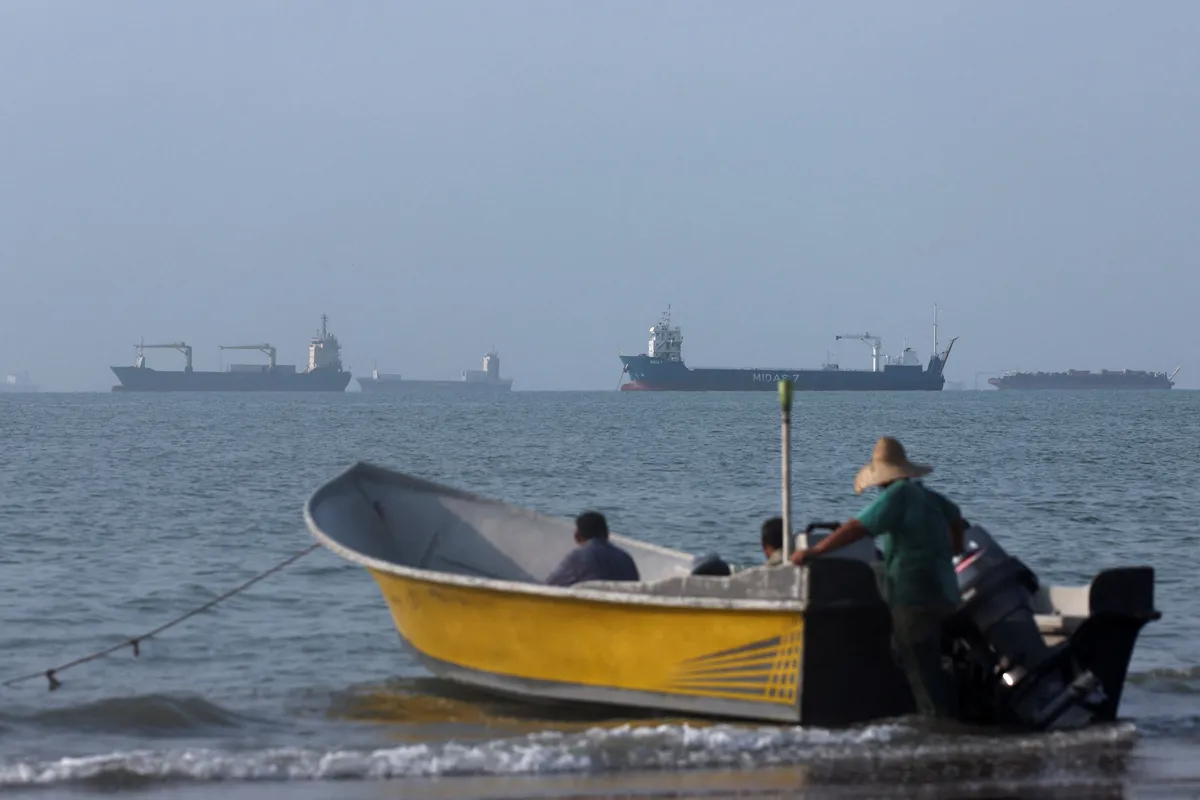
The Islamic Revolutionary Guard Corps (IRGC) of Iran has issued a stark warning, threatening to target oil tankers operating near the waters of Kuwait and Bahrain. This declaration comes as a direct response to recent United States strikes against Iranian vessels, according to reports from the state-run IRNA news agency. The IRGC’s statement explicitly cautioned vessels in Kuwaiti and Bahraini ports, labeling these nations as partners in alleged hostile actions.
Escalation of Tensions in the Persian Gulf
The IRGC’s announcement signals a significant escalation in regional tensions, particularly concerning maritime security in the vital Persian Gulf shipping lanes. The corps stated that any oil tankers, whether anchored or docked in ports belonging to Kuwait or Bahrain, would be considered legitimate targets. The warning urged crews to abandon their vessels, implying an imminent threat of attack.
This development raises serious concerns for international shipping and global energy markets, given the strategic importance of the region for oil transport. The IRGC’s rhetoric suggests a willingness to disrupt maritime traffic as a retaliatory measure, potentially impacting global supply chains and oil prices. The specific nature of the US strikes that prompted this warning has not been detailed, but the IRGC’s reaction indicates a perception of direct involvement or complicity by the host nations.
Background of IRGC and Regional Dynamics
The Islamic Revolutionary Guard Corps is a branch of the Iranian armed forces established after the 1979 revolution. It is tasked with protecting the country’s political system and acting as a counterweight to the regular army. The IRGC has a significant role in Iran’s military, political, and economic affairs, and its Quds Force, an elite special forces unit, is responsible for operations outside Iran’s borders.
Iran’s relationship with its Gulf neighbors, including Kuwait and Bahrain, has often been complex and strained. Both Kuwait and Bahrain maintain close ties with the United States, hosting significant American military bases. This alignment has frequently placed them at odds with Iran’s regional ambitions and policies. The IRGC’s targeting of vessels associated with these nations, or operating within their territorial waters, reflects a broader pattern of asserting influence and projecting power in the region.
International Maritime Law and Potential Consequences
The IRGC’s threat raises critical questions regarding international maritime law and the safety of navigation. Targeting civilian vessels, even in the context of retaliation, could have severe legal and diplomatic repercussions. International conventions, such as the United Nations Convention on the Law of the Sea (UNCLOS), govern maritime activities and the rights of passage. Any actions that contravene these principles could lead to international condemnation and potential sanctions.
The potential consequences of such attacks extend beyond immediate military or political ramifications. The disruption of oil tanker traffic could lead to significant volatility in global energy markets. Insurance costs for vessels operating in the region could skyrocket, and some shipping companies might reroute their fleets, adding time and expense to voyages. This could indirectly affect consumers worldwide through increased prices for fuel and other goods.
Diplomatic Responses and Regional Stability
The international community is likely to monitor the situation closely, with calls for de-escalation and adherence to international norms expected. Diplomatic channels will be crucial in managing the fallout from such threats. The United States, which has a significant military presence in the region and is a key security partner for Kuwait and Bahrain, will be particularly watchful. Its response could shape the immediate trajectory of the crisis.
Regional powers, including Saudi Arabia and the United Arab Emirates, which also share complex relationships with Iran, will be observing the developments with concern. Maintaining stability in the Persian Gulf is a shared interest, and any significant disruption to shipping could have ripple effects across the entire Middle East. The IRGC’s warning underscores the precarious security environment in the region and the potential for miscalculation to lead to broader conflict.
Conclusion: A Precarious Maritime Environment
The IRGC’s warning to oil tankers near Kuwait and Bahrain represents a serious development in the ongoing geopolitical tensions in the Persian Gulf. By threatening civilian maritime assets in retaliation for US actions, Iran, through its elite military corps, is signaling a willingness to employ aggressive tactics that could have far-reaching economic and security implications. The international community faces the challenge of navigating these heightened tensions, emphasizing the need for restraint and adherence to international maritime laws to prevent further escalation and ensure the safety of vital shipping lanes.
