

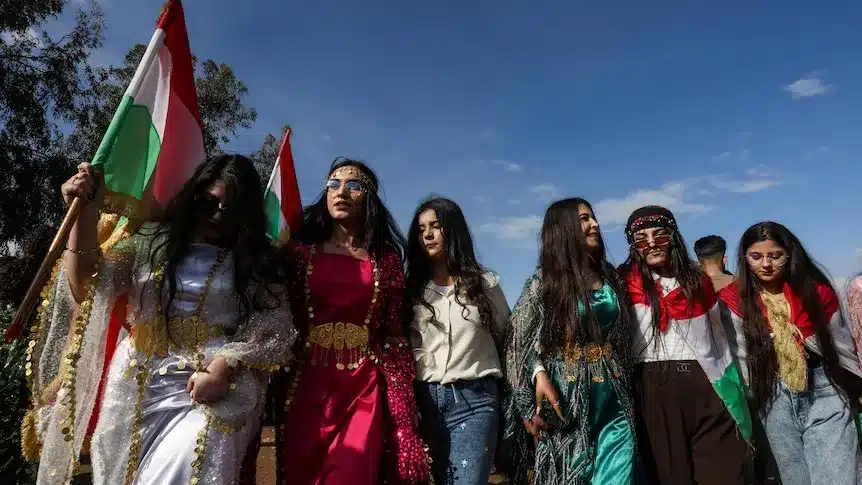
Amid ongoing airstrikes, resilient Iranians across the country light bonfires and set festive tables to mark Nowruz, the ancient “new day” festival heralding spring. Participants face heightened surveillance and arrest risks from authorities, yet they persist in honoring this pre-Islamic tradition despite decades of suppression.
Roots in Zoroastrian Fire Rituals
In the lead-up to Nowruz, celebrated for over 3,000 years since the Persian Empire, families ignite fires for Chaharshanbe Suri. Jumpers leap over flames to purify themselves, shedding illness and misfortune. Fire, a sacred Zoroastrian symbol predating Christianity and Islam, cleanses inner darkness as spring approaches.
Iranian Australian advocate Ali Beyk Zadeh notes the regime’s long effort to erase Nowruz. “Celebrating what came before Islam has always been about defiance and resistance,” he states.
Mediya Rangi, who fled Iran at age 14, describes the ritual: “Everything dark within me — the fire takes it.” She emphasizes its gravity amid mourning for lost loved ones, prisoners, and the missing. Families in Iran urge continuation, she adds.
Haft Seen Tables Symbolize Renewal
Central to Nowruz, the Haft Seen table features seven symbolic items: painted eggs for fertility, candles for light, mirrors for clarity, flowers for spring, sweets and nuts for joy, and goldfish for life. This year, photos of protest victims join the display, blending ritual with remembrance.
Farzaneh Ghadirian, an Iranian Australian, calls table-setting an act of hope and resilience. “Decorating the Haft Seen table wasn’t just about tradition — it felt like staying connected to our roots and identity,” she says. Celebrations remain subdued to show solidarity with the fallen.
Melody Nia views Nowruz as “bittersweet and powerful,” transcending religion and borders. She includes images of executed wrestler Saleh Mohammadi and others killed in protests or strikes. “They embody courage and rebirth,” Nia explains. “This is resilience; our spirit endures.”
Diaspora and Domestic Defiance
Sydney’s Iranian community gathers publicly, passing rituals to youth for joy amid grief. “Fire purifies all darkness — I give my sadness and it takes everything dark within my soul,” Beyk Zadeh shares.
In Tehran, shoppers buy sprouts and flowers amid rubble, sharing social media videos of songs and fires despite crackdown warnings. Pressure intensifies abroad too, as voices amplify the suppressed.
Targol Khorram in Melbourne holds Nowruz dear: “While my country endures unimaginable pain and war casts its shadow, years of poetry, beauty, and tending green things define Iran. May Iran be free and happy; may spring finally stay.”
Nowruz unites Central Asia, Iraq, and global diasporas, embodying unyielding cultural endurance.
