

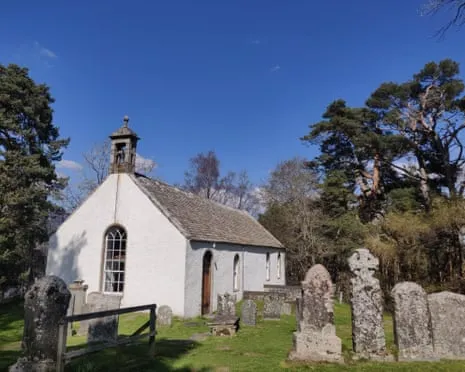
As snow recedes from the Cairngorms’ peaks and ice melts along Loch Insh’s shores, a quaint white church emerges on a knoll along the northern edge. This modest stone structure, featuring a bell tower and arched windows, dates back to 1792. Yet the site traces its roots to early monks from Iona, possibly as early as the seventh century.
Deep-Rooted Christian Heritage
Sources identify this location as Scotland’s site of the longest continuous Christian worship. Early monks constructed a stone cell here for living and spreading the faith. A subsequent chapel honored St. Adamnan, the ninth abbot of Iona and biographer of Columba. A rugged granite font from that era endures.
The site preserves a bronze bell from around AD 900—one of only five remaining in Scotland. Legends attribute healing powers to the bell, which reportedly vanished to Scone Palace but miraculously returned, ringing the chapel’s name across the Drumochter Pass.
Vibrant Wildlife Sanctuary
These relics tie the church to centuries of history, yet it thrives as a lively space with a dedicated congregation. Clear windows, including one etched with a Celtic cross reminiscent of Iona’s St. John’s Cross, flood the interior with light. Views extend to birch, larch, and Scots pine forests, alive with a rookery’s calls and red squirrels darting above snowdrops.
Loch Insh and its marshes shelter endangered species: otters, beavers, goldeneyes, curlews, and summer-returning ospreys. Bewick’s swans reside year-round, joined by whooper swans from Iceland in winter. Celtic traditions celebrated nature as divine revelation, with tales claiming monks rang the sacred bell to call swans to worship.
Community Rallies Against Closure
Despite threats of closure, locals mobilize to preserve the kirk, ensuring the enduring symphony of bells, birdsong, and worship continues.
