

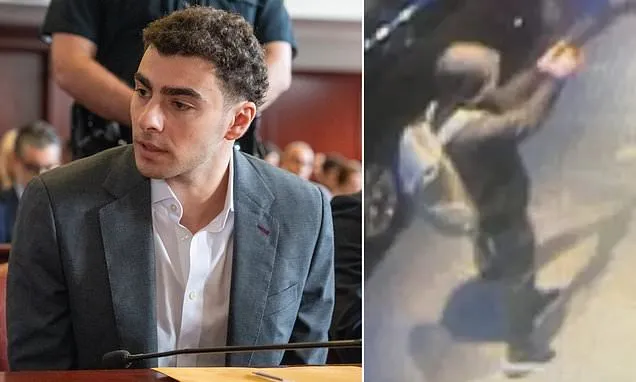
Luigi Mangione, accused of fatally shooting UnitedHealthcare CEO Brian Thompson, is reportedly poised to change his plea to guilty in a federal court hearing scheduled for Friday. This strategic maneuver, described by a former prosecutor as a high-stakes gamble, could significantly alter the trajectory of his legal battle and potentially prevent a life sentence. The change of plea, if it occurs, would mark a dramatic reversal from Mangione’s previous not guilty plea to federal charges of stalking resulting in death.
The Strategic Shift: A Plea for a Lighter Sentence
David Gelman, a former prosecutor now practicing criminal defense, suggested that the decision to plead guilty is a calculated move by Mangione’s legal team. “There’s a lot happening behind the scenes that none of us know about,” Gelman commented, likening the situation to rolling multiple dice simultaneously. He indicated that if he were representing Mangione, this plea change would likely be the most advantageous course of action.
Mangione, 28, faces accusations of shooting Brian Thompson on December 4, 2024, in Midtown Manhattan. His federal trial was initially slated to commence in January. By pleading guilty now, Mangione is likely seeking leniency from Judge Margaret Garnett, hoping for a sentence less severe than the maximum penalty of life imprisonment without parole. Gelman noted that such a plea could, under certain circumstances, lead to Mangione’s eventual release later in life, though he stopped short of saying the defendant deserved such an outcome.
Navigating Dual Prosecutions: Federal vs. State Charges
A key element of this legal strategy appears to be navigating the complex landscape of facing charges in both state and federal courts. Mangione is also scheduled for a state trial next month. His defense team’s plan, following a guilty plea in federal court, is to immediately file a motion to dismiss the state murder charges. They intend to argue that trying Mangione again for the same crime would constitute double jeopardy under New York law.
However, prosecutors are expected to contest this, asserting that the state murder charges are distinct from the federal stalking charges. The ultimate decision on whether the state prosecution can proceed would then rest with the judge in the state case, Justice Gregory Carro. This legal battle over double jeopardy is anticipated to involve appeals and counter-appeals, but Gelman confirmed that regardless of the outcome, the September 8 start date for the state trial would almost certainly be postponed.
An Unusual Legal Arena
Gelman described the competition between federal and state prosecutors to bring Mangione to trial as “unusual.” He attributed this to the high-profile nature of the offense, the significant public attention the case has garnered, and the substantial resources expended in apprehending Mangione. “They both want their shot at him. They both want to get justice,” he explained, adding that while such jockeying is uncommon, “this is not your normal case either.”
Mangione, originally from Baltimore, was apprehended after a five-day manhunt following the murder. He was located in a McDonald’s in Altoona, Pennsylvania, after a manager reported a man matching his description. His arrest occurred as he was finishing a meal.
The Double Jeopardy Defense and Jury Selection
Gelman elaborated on the intricacies of the double jeopardy defense, explaining that it would be less straightforward to claim if the federal case had proceeded first, given that double jeopardy is primarily a state law concept governing state trials. It is worth noting that Judge Garnett had previously dismissed federal murder and weapons charges that carried the possibility of the death penalty. However, Gelman cautioned that the intense public interest in the case means Judge Garnett is not obligated to show leniency and could still impose a life sentence.
Should the state case proceed, and Justice Carro rule against the double jeopardy claim, Mangione’s defense has another potential strategy: attempting to seat a jury composed of younger individuals who might be more sympathetic to his cause. Gelman stated, “He’s got a cult following. His defense fund has raised hundreds of thousands of dollars, presumably from younger individuals.”
The defense theory, according to Gelman, would be to select jurors who might “hate the healthcare industry” and potentially “want to justify his actions.” This approach would necessitate a younger jury pool. Gelman anticipated significant objections from the prosecution during the jury selection process, or voir dire, predicting it would be “very interesting” if the case reached that stage.
Withdrawing the ‘Extreme Emotional Disturbance’ Defense
In a related development earlier in the week, Mangione’s lawyers withdrew a planned defense of “extreme emotional disturbance.” Gelman suggested this decision was likely based on the recommendations of their own expert analysts. While some reports speculated this withdrawal was an implicit admission of guilt, Gelman offered a more pragmatic explanation: the defense team’s experts likely advised them that the argument would not hold up under cross-examination and could be detrimental to the case.
“I think they wanted to withdraw it because their own experts, their own doctors, probably said to them: look, this is not going to work out in your favor,” Gelman stated. “If we get up there and get cross examined, we could get destroyed.” The current plea change, therefore, represents an attempt to avoid such a scenario and secure a more favorable outcome.
Conclusion: A Calculated Risk for Freedom
The impending plea change by Luigi Mangione’s legal team is a complex and calculated maneuver. It aims to leverage the legal complexities of dual prosecution and the concept of double jeopardy to potentially dismantle the state’s murder case. Simultaneously, it serves as an attempt to secure a less severe sentence in the federal court than a potential life term. While the strategy carries significant risks, including the possibility of a harsh sentence and the state’s determined prosecution, it reflects a determined effort by the defense to mitigate the severe consequences Mangione faces.
