

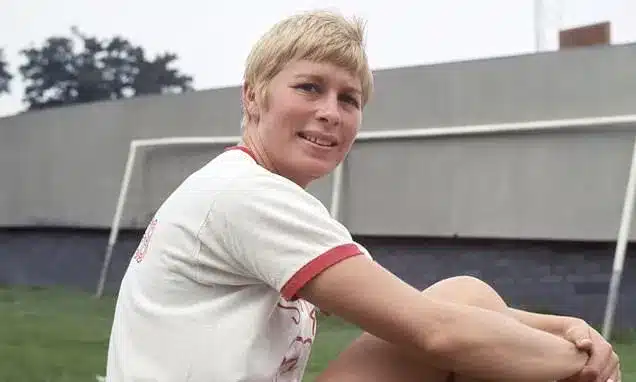
Mary Rand, the pioneering force in British women’s athletics and the nation’s first track-and-field Olympic gold medalist, passed away on Friday at age 86 in Lake Tahoe, Nevada. She spent her final years in Incline Village on the lake’s shores with her daughter Sarah, cherishing time with her grandsons and beloved dachshunds.
Athletic Achievements and Historic 1964 Tokyo Olympics
Hailing from Wells in Somerset, Rand showcased extraordinary natural talent. At the 1964 Tokyo Olympics, she secured gold in the long jump, becoming the first British woman to claim Olympic track-and-field gold. A mother to two-year-old Alison at the time, she also earned silver in the pentathlon and bronze in the women’s 4x100m relay.
Rand stands alone as the only British athlete to win three medals at a single Olympics and ranks among just 10 British women with track-and-field Olympic gold. She journeyed to Tokyo alongside stars Mary Peters and Ann Packer, yet Rand stole the spotlight, dominating the competition and earning BBC Sports Personality of the Year honors.
“She worked hard and played hard,” Peters shared in a tribute. “She was the most gifted athlete I ever saw.”
Public Adoration and Personal Life
Rand captivated the British public and media, with one outlet dubbing her “Marilyn Monroe on spikes.” Even Rolling Stones frontman Mick Jagger named her his ideal date.
Her personal journey included leaving her first husband, British rower Sid Rand, to marry American decathlete Bill Toomey, father to daughters Samantha and Sarah. Later, a blind date led to her third marriage with John. “A friend told me he had a truck and a Harley,” Rand recalled from her Nevada home ahead of the 2020 Tokyo Games, “and I said ‘a truck and a Harley are all I need.’ John was the best thing that ever happened to me.”
During conversations at Lake Tahoe, the then-80-year-old Rand reflected on her fast-paced youth with humor. “I did all sorts of crazy stuff back then,” she said. “I guess I was a little impetuous.”
Family First and Lasting Legacy
Family remained Rand’s greatest pride. “My children are my finest achievement,” she affirmed. She enjoyed eight surviving grandchildren across the U.S. When joining Sarah’s household, grandsons Tommy, 13, and Ryan, 12, eagerly shared a room to give her space. Her dachshunds, Clyde and Daisy, stayed close by her side.
Her home held no trophies or photos of past glories; she rejected turning her life into a shrine to events over 50 years old. Grandsons knew her story—Tommy noted, “We’re lucky that she’s our grandma”—but it rarely dominated talks.
Rand recognized her inspirational role: “I was the first one in the British team to win a gold medal in Tokyo and people said it inspired everybody. I didn’t realise that but I think some people thought: ‘Mary can do it so we can do it.'”
She recounted a Buckingham Palace visit, medals clinking as she walked a soldier-lined hall: “I was the last one… and this one soldier started smiling. I thought: ‘I got him.'”
Rand visited the UK sparingly after settling in the U.S. Before the 2012 London Olympics, Wells officials planned a parade; she hesitated, doubting recognition after decades. “What I did in Tokyo was so long ago,” she said. Ultimately, hundreds attended, granting her the freedom of the city—a highlight of her life.
