

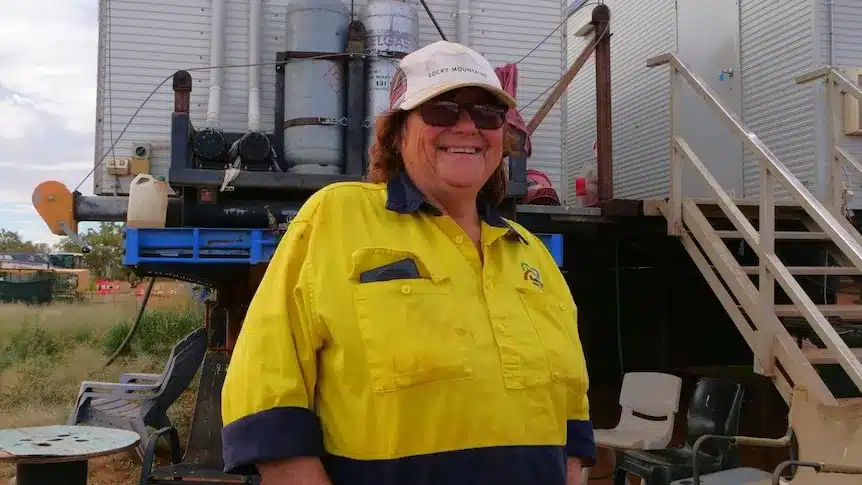
Remote Australian communities are tackling critical worker shortages by upgrading accommodation for tradespeople, moving from basic swags to sophisticated, mobile ‘dongas’ on wheels. The Barcoo Shire in Queensland has pioneered this approach, deploying triple-trailer road train accommodation that is entirely off-grid, allowing it to be set up in any location across the vast state. This initiative aims to attract and retain skilled trades, particularly road construction workers, in the face of intense competition from industries like mining.
From Basic Camps to Comfortable Living Quarters
For decades, workers in remote areas often endured rudimentary camps, sometimes little more than swags in the bush. Dolly Thompson, an experienced road worker in the Barcoo Shire, recalls spending weeks or even months in such conditions. “I’m used to that kind of life, it doesn’t worry me,” Thompson stated. “You’re better off being out in the camp than what you are in town.” However, even for those accustomed to remote living, the shift in accommodation standards represents a significant improvement.
The Barcoo Shire, with a population of around 360, has moved beyond the rough-and-ready camps of the past. Their modern mobile camps are a far cry from earlier setups. Jason Beilby, construction supervisor with the Barcoo Shire Council, has witnessed this evolution firsthand over his 20 years in the industry. “Ten years ago we were very rough camps,” Beilby explained. “We were living in the bush… and we found that to employ people we just had to upgrade, and that’s fair enough.”
State-of-the-Art Mobile Accommodation
Today’s road train accommodation units are designed for comfort and self-sufficiency. Each mobile unit is equipped with:
- Private bedrooms
- Ensuite bathrooms
- Fully functional kitchens
- Communal dining areas
- Laundry facilities
- Access to streaming services via personal and shared televisions
“They’ve got every little mod con that you can find,” Beilby remarked, highlighting the comprehensive amenities. These modern facilities have proven instrumental in attracting new workers and, crucially, retaining existing staff for longer periods.
Boosting Retention and Attracting Talent
The improved living conditions are seen as a vital recruitment tool. “We’ve got to employ people so we’ve got to give them good, comfortable accommodation,” Beilby emphasized. “Twelve hours out in the sun [and] you do want to come home to comfort, and that’s a good sales point for employees to get them to come here and work.” This focus on employee well-being directly addresses the challenges of maintaining a stable workforce in isolated regions.
The mobility of these units is another key advantage. Designed to be transported on triple trailers, they can be quickly dismantled and relocated to new work sites. “We back the trucks underneath, they’re all on cables. They just lift all the verandahs up, and we move. It’s very simple,” Beilby described. This flexibility is essential for projects that span vast distances, often placing work crews hundreds of kilometers from the nearest town.
Community-Driven Innovation in Remote Areas
Securing and retaining skilled labor in remote Australia presents unique hurdles due to the sheer distances involved and higher operational costs. Jill Karena, head of grants at the Foundation for Rural and Regional Renewal (FRRR), noted that remote communities often lead the way in innovative problem-solving. “Remote communities are not short of imagination and innovation,” Karena said. “The distances are greater, the costs are higher, skilled workers can be much harder to access and keep, and the services often travel in-and-out.”
Karena added that while local ingenuity is the driving force, external support, particularly through funding, can be crucial in bringing these ideas to fruition. The Barcoo Shire Council confirmed that its investment in mobile workers’ accommodation, initiated in 2022, has significantly improved staff retention. Remarkably, all roadside workers housed in the main camp have remained with the council for over five years, with some, like Dolly Thompson, having dedicated more than a decade to the region.
A Culture of Support and Camaraderie
Thompson attributes her long tenure not only to the improved living conditions but also to the strong sense of community and positive work culture. “When I first come out I came out with my husband and learnt how to drive machinery and that,” she recalled. Reflecting on her colleagues, she added, “They’re fun to be with. They all help out.” This blend of modern amenities and a supportive environment appears to be a winning formula for keeping essential workers in the bush.
The Future of Remote Workforce Accommodation
The success of the Barcoo Shire’s initiative suggests a potential model for other remote local governments. Beilby believes that similar upgrades could benefit many shires, though he acknowledges that implementation depends on individual council structures and resources. “I think all shires should upgrade, but it depends on their structure. [Our shire] is the size of Tasmania,” he noted, underscoring the scale of their operational area and the need for adaptable solutions.
As industries continue to expand into remote regions, the demand for comfortable, self-sufficient, and mobile accommodation is likely to grow. This innovative approach by the Barcoo Shire demonstrates a commitment to supporting the vital workforce that keeps remote infrastructure projects moving, ensuring that skilled trades can thrive in the Australian outback.
