

A groundbreaking study reexamines the Monte Verde site in Chile, long considered key evidence of human presence in the Americas around 14,500 years ago. Researchers now propose the artifacts and wooden remains date to no earlier than 8,200 years before present, reshaping understandings of early migration.
Monte Verde’s Role in Migration Theories
Monte Verde has provided compelling signs of ancient habitation, including footprints, wooden tools, structural foundations, and fire pit remnants. Sediments and artifacts previously aligned with a 14,500-year timeline.
Key Findings from Sediment Analysis
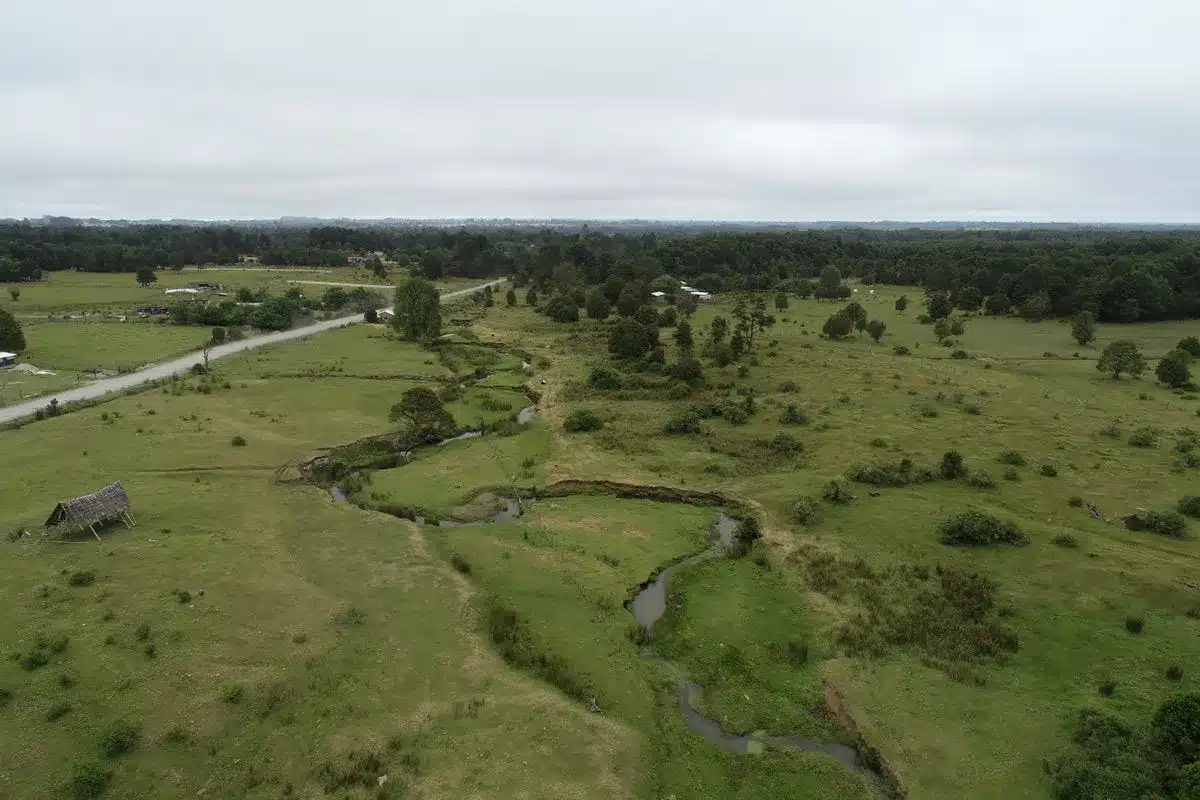
Scientists analyzed sediments from nine locations along Chinchihuapi Creek near the site, tracking landscape evolution over millennia. They identified volcanic ash from an eruption about 11,000 years ago. Materials above this layer, such as Monte Verde’s wood and tools, must postdate it.
“We reinterpreted the site’s geology and conclude Monte Verde cannot exceed 8,200 years old,” states Claudio Latorre of the Pontifical Catholic University of Chile.
Landscape shifts, like stream erosion blending old and new layers, likely misled prior datings, the team argues. Results appear in the journal Science.
Debate Among Experts
Not all researchers accept these conclusions. Michael Waters of Texas A&M University calls it “a working hypothesis unsupported by the data.”
Critics note samples come from surrounding areas with differing geology and question if ash blanketed the entire site. They highlight directly dated artifacts—like a mastodon tusk tool, wooden lance, and burned digging stick—at 14,500 years.
“This ignores substantial well-dated cultural evidence,” emails Tom Dillehay of Vanderbilt University, who directed initial digs.
Study authors counter by sampling within, upstream, and downstream of Monte Verde. Co-author Todd Surovell of the University of Wyoming questions the artifacts’ confirmed antiquity.
Implications for Peopling the Americas
Monte Verde challenged the Clovis-first model of 13,000-year arrivals with stone-tipped tools. Newer North American sites like Cooper’s Ferry in Idaho and Debra L. Friedkin in Texas predate Clovis.
A younger Monte Verde date revives questions on migration routes from Asia past Canadian ice sheets—via ice-free corridor, coastal boats, or hybrid paths.
“A revised date reopens route discussions,” Surovell notes. Ongoing analyses at early sites promise clearer insights. “Science self-corrects over time to uncover truth,” he adds.
