

The age-old debate of whether books are inherently superior to their film adaptations often concludes with the familiar sentiment, “The book was better.” However, there are instances where the cinematic medium not only captures the essence of a story but, according to many, elevates it. A recent online discussion highlighted numerous films that audiences believe surpass their literary origins, with some authors even concurring. Here are 14 compelling examples where movies arguably outshone the books they were based on.
Forrest Gump: A More Accessible Narrative
Winston Groom’s novelization of Forrest Gump presents a character significantly different from the beloved portrayal by Tom Hanks. In the book, Forrest is a towering savant with an IQ of 160, excelling in advanced mathematics and chess. His life takes a bizarre turn, involving professional wrestling as “The Dunce,” a stint as a Hollywood stuntman, recruitment by NASA for a space mission with an orangutan, a subsequent crash, and years spent among cannibals. The novel also includes explicit and unusual details about Forrest’s anatomy. Many find the film’s adaptation, which softens these eccentricities and focuses on a more universally relatable, albeit intellectually challenged, protagonist, to be far more charming and coherent than the book’s wilder, “WTF”-inducing plot points.
The Hunger Games: Expanding the World Beyond One Perspective
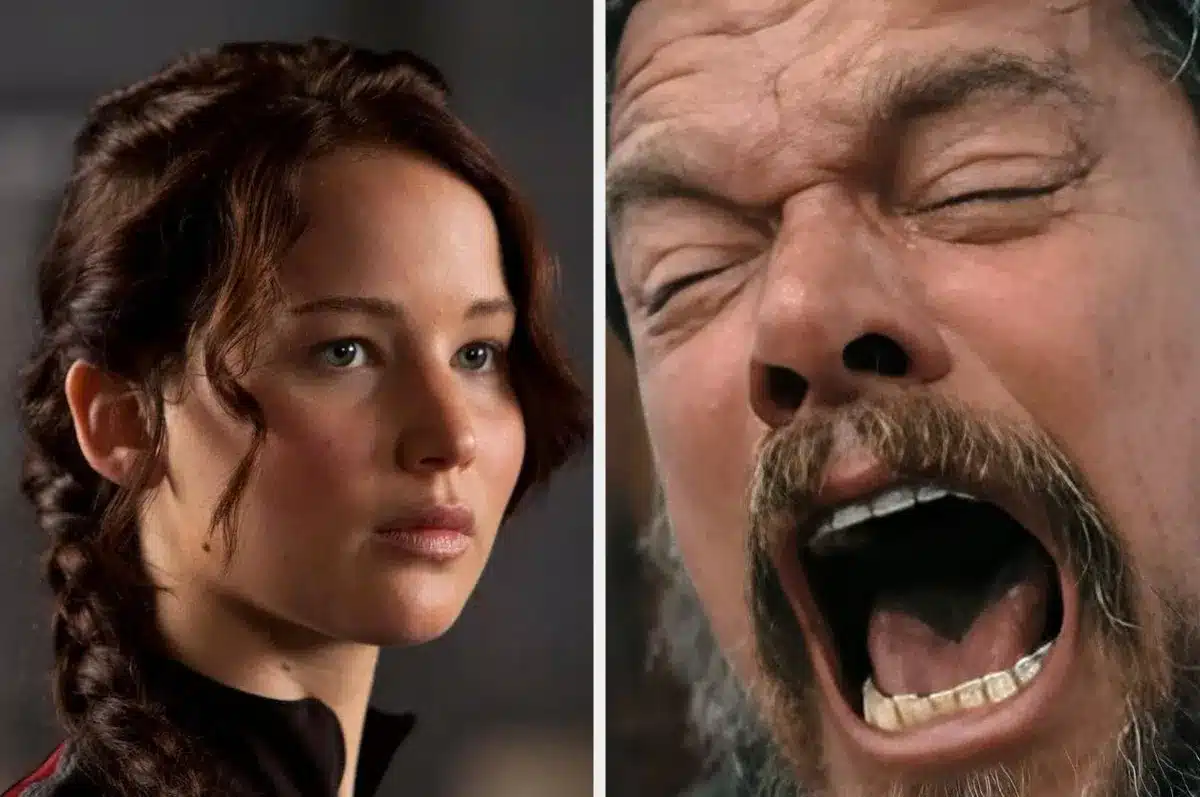
While Suzanne Collins’ The Hunger Games novel is a celebrated work, fans often point to the film adaptation for its ability to broaden the narrative scope. The book is strictly confined to Katniss Everdeen’s first-person perspective, limiting the audience’s understanding to her immediate experiences and knowledge. The movie, conversely, intersperses Katniss’s journey with scenes featuring President Snow, Seneca Crane, the Gamemakers in the control room, and Haymitch strategizing with sponsors. This allows for a more comprehensive and immersive view of the dystopian world and the machinations behind the Games. Furthermore, Jennifer Lawrence’s performance is frequently cited for conveying Katniss’s complex emotions—fear, calculation, and vulnerability—with a subtlety that internal narration cannot always achieve.
Jaws: Streamlining for Cinematic Impact
Peter Benchley’s novel Jaws laid the groundwork for the iconic thriller, but the film adaptation is often preferred for its focused tension and pacing. While the book provides more intricate character backstories and subplots, the movie distills the narrative to its core elements: the escalating threat of the shark and the hunt to stop it. Critics of the novel sometimes point to dated or awkward depictions of female characters, a critique that doesn’t carry over to the film’s streamlined, action-oriented approach. The cinematic experience, with its masterful direction and suspenseful score, is widely considered a more effective and visceral horror experience.
The Devil Wears Prada: Adding Nuance Through Performance
Author Lauren Weisberger has acknowledged that the film adaptation of The Devil Wears Prada imbues the character of Miranda Priestly with a depth that her book counterpart lacked. In the novel, Miranda is depicted as largely one-dimensional—tough, cold, and impeccably competent. Meryl Streep’s portrayal, however, brought layers of complexity, vulnerability, and even subtle humanity to the fashion editor. Online discussions frequently highlight how the film’s cast, including Anne Hathaway and Emily Blunt, breathed life into characters that felt somewhat dry on paper. Many viewers felt the movie achieved a more nuanced understanding of the characters and provided the protagonist with a more satisfying growth arc than the book.
Fight Club: A Tighter, More Effective Narrative Structure
Chuck Palahniuk’s Fight Club is a cult classic, but director David Fincher’s film adaptation is often praised for refining the narrative. While largely faithful to the source material’s plot, the movie streamlines the structure and enhances thematic connections. Palahniuk himself has expressed admiration for the film, noting how it made certain narrative links, such as the commentary on consumerism and franchising, more explicit and impactful than he had originally conceived. The film’s altered ending, while controversial, is widely regarded as a powerful and fitting conclusion that amplifies the novel’s core ideas.
The Wizard of Oz: Visual Spectacle and Musical Magic
L. Frank Baum’s The Wonderful Wizard of Oz is a beloved children’s classic, but the 1939 film adaptation is frequently cited as a superior experience. The movie’s transition from sepia tones to vibrant Technicolor was revolutionary and remains visually stunning. Judy Garland’s rendition of “Over the Rainbow” has become an iconic song, adding an emotional depth and musical richness that enhances the fantastical journey. The film’s visual translation of Baum’s imaginative world, combined with its musical numbers, creates a more immersive and magical experience for many viewers than the original text.
Harry Potter and the Order of the Phoenix: Pacing and Focus
The fifth installment in the Harry Potter series, Harry Potter and the Order of the Phoenix, is the longest book in the saga. While the novel delves deeply into Harry’s adolescent angst and the political machinations within the wizarding world, the film adaptation’s condensed runtime is often seen as a benefit. By trimming extraneous subplots and focusing more tightly on Harry’s emotional arc and key events like the formation of Dumbledore’s Army and the battle at the Ministry of Magic, the movie offers a more focused and dynamic viewing experience. Imelda Staunton’s chilling performance as Dolores Umbridge is also a standout element that many find more viscerally impactful on screen.
Die Hard: Character Development and Emotional Resonance
The 1979 novel Nothing Lasts Forever by Roderick Thorp, which served as the basis for Die Hard, contains many of the film’s core elements, including a cop trapped in a skyscraper during a terrorist takeover. However, the film adaptation significantly enhances the protagonist. John McClane, as portrayed by Bruce Willis, is a younger, more relatable, and often humorous character compared to the book’s Joe Leland, an older, world-weary former detective. McClane’s desperate attempts to save his wife and their marriage provide a stronger emotional engine for the action, and Bruce Willis’s charismatic performance elevates the character into an enduring action hero.
The Princess Bride: Streamlined Wit and Charm
William Goldman, who penned both the novel The Princess Bride and its screenplay, is credited with expertly adapting his own work for the screen. The film, directed by Rob Reiner, retains the story’s beloved characters, witty dialogue, and fairy-tale parody elements while streamlining the narrative for a more cohesive cinematic adventure. The performances from the ensemble cast, including Cary Elwes, Robin Wright, Mandy Patinkin, and André the Giant, are widely celebrated for bringing Goldman’s characters to vibrant life, making the movie a timeless romantic comedy and adventure.
Total Recall: Expanding a Short Story’s Potential
Philip K. Dick’s short story “We Can Remember It for You Wholesale” provided the high-concept premise for Total Recall: a man purchases artificial memories of a trip to Mars, only to discover they might be real. Director Paul Verhoeven significantly expanded upon this foundation, fleshing out the world of Mars, introducing complex political intrigue, mutant characters, and corporate exploitation. Crucially, the film masterfully preserves the ambiguity of the protagonist’s reality, leaving the audience questioning whether his experiences are genuine or part of the memory implant. This expansion of Dick’s concise concept results in a richer, more visually spectacular, and thematically complex film.
The Firm: A More Compelling Climax and Pacing
John Grisham’s legal thriller The Firm was a bestseller, but director Sydney Pollack’s film adaptation is often favored for its tighter pacing and altered ending. While the book meticulously details the inner workings of a sinister law firm, the movie streamlines the plot and culminates in a more suspenseful and satisfying climax. Online commentary frequently praises the film’s revised conclusion as more clever and effective than the novel’s. Tom Cruise’s energetic performance and Dave Grusin’s evocative piano score also contribute to the film’s enduring appeal.
One Flew Over the Cuckoo’s Nest: Shifting Focus for Performance
The film adaptation of Ken Kesey’s One Flew Over the Cuckoo’s Nest is a landmark cinematic achievement, though it notably shifts the narrative focus. While the novel is primarily told from the perspective of Chief Bromden, offering a surreal and paranoid view of the oppressive psychiatric hospital, the film centers on Randle McMurphy, brought to life by Jack Nicholson’s iconic performance. This shift allows for an intense exploration of the power struggle between McMurphy and Nurse Ratched, portrayed by Louise Fletcher. Although some argue this sacrifices the novel’s unique narrative voice, the film’s powerful performances and dramatic confrontations are undeniable.
Slumdog Millionaire: A More Engaging Cinematic Journey
Vikas Swarup’s novel Q&A, the basis for Slumdog Millionaire, tells the story of a young man who becomes a quiz show contestant and recounts his life experiences to explain how he knows the answers. The film adaptation, directed by Danny Boyle, is widely praised for its vibrant energy, kinetic direction, and compelling narrative structure. Author Vikas Swarup himself approved of changes, including the film’s title and a revised ending where the protagonist is arrested before winning, a decision Swarup found successful. The movie transforms the novel’s premise into a dynamic and emotionally resonant cinematic experience.
The Odyssey: A Different Medium, A Different Impact
Comparing Homer’s epic poem The Odyssey to modern film adaptations is a challenging endeavor, given the vast differences in medium and historical context. While numerous cinematic interpretations exist, the original poem’s enduring power lies in its poetic language, rich mythology, and profound exploration of the human condition over millennia. Modern films, while offering visual spectacle, often simplify or alter the complex narrative and thematic depth of the ancient epic. It’s a testament to the poem’s timeless quality that it continues to inspire and resonate, even when compared to contemporary storytelling mediums.
These examples illustrate that while literature often provides a rich foundation, film can sometimes harness the power of visual storytelling, performance, and pacing to create an equally compelling, or even superior, artistic experience.
