

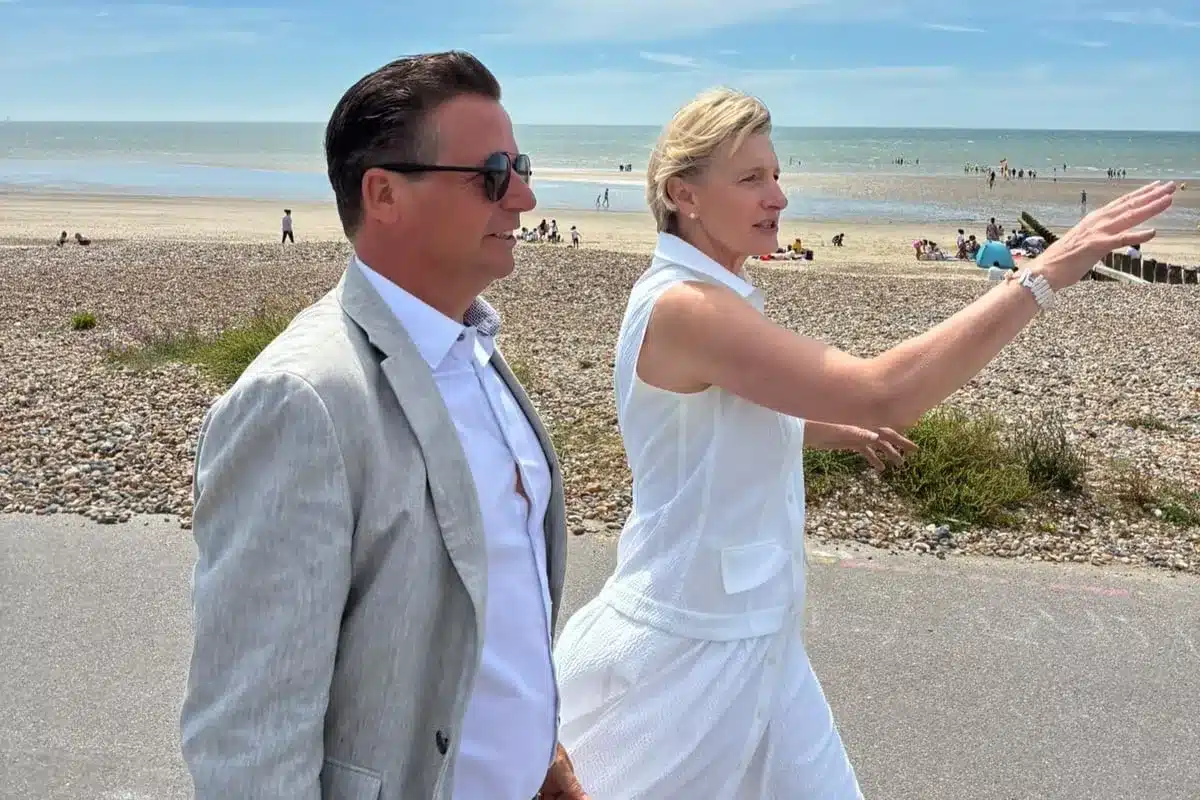
Member of Parliament Alison Griffiths has voiced strong opposition to a proposed “Overnight Visitor Levy,” which she has termed a “holiday tax,” arguing it would harm coastal economies. The levy, proposed by the Labour party, would allow strategic authorities to impose a percentage charge on overnight stays, impacting a wide range of accommodation providers.
Concerns Over Impact on Local Businesses
Griffiths highlighted the concerns of tourism businesses in Bognor Regis and Littlehampton, whom she met with earlier in the summer. These businesses are already grappling with increased operational costs, including rising business rates and employment expenses. The introduction of an additional tax on overnight stays, according to Griffiths, would further exacerbate these challenges, making it more difficult for businesses to operate, hire staff, and invest in their establishments.
The proposed levy would apply to various types of accommodation, from large hotels and holiday resorts to smaller establishments like bed and breakfasts and guest houses. A significant concern raised is that the rate of the charge and the number of nights it could be applied to would be uncapped. Furthermore, accommodation providers would be responsible for collecting the tax and managing the associated administrative burden.
Economic Ripple Effects Feared
Beyond the direct impact on accommodation providers, Griffiths expressed apprehension about the broader economic consequences. She argued that if visitors face higher costs for their overnight stays, they will inevitably have less disposable income to spend on other local amenities. This could negatively affect cafes, pubs, shops, and attractions that rely on tourist spending.
Griffiths drew a parallel with the recent opening of a new Premier Inn in Bognor Regis, which she saw as a positive indicator of confidence in the town’s tourism potential. She believes that Labour’s proposed tax sends a contrary message, potentially deterring visitors rather than encouraging them.
Mandatory Inclusion and Opposition
A key point of contention for Griffiths is that the levy, if implemented by a strategic authority, could not be restricted to a single area like Brighton. This means that if the Mayor of Sussex and Brighton were to introduce the tax, towns like Bognor Regis and Littlehampton would be compelled to participate, regardless of their specific economic circumstances or the wishes of local businesses.
Griffiths noted that while the government had consulted on whether the tax should be capped, with 58% of respondents favouring a cap, Labour has rejected this suggestion. She stated that the Conservative party, under Kemi Badenoch, opposes the tax, and she personally intends to vote against any legislation implementing it in Parliament.
Call to Mayoral Candidates
In light of the potential ramifications, Griffiths is directly challenging all candidates vying for the position of Mayor of Sussex and Brighton. She is posing a direct question: will they commit to ruling out the implementation of this Overnight Visitor Levy in their area? Griffiths emphasized the importance of attracting visitors who choose to stay longer and spend locally, asserting that the new Mayor should focus on facilitating a welcoming environment for tourists, not on increasing the cost of their visits.
The core argument against the proposed levy is that it undermines the goal of strengthening visitor economies by making them more expensive. Griffiths’ stance underscores a belief that sustainable tourism growth is achieved through enhancing the visitor experience and supporting local businesses, rather than through additional taxation that could deter potential visitors and reduce local spending.
