

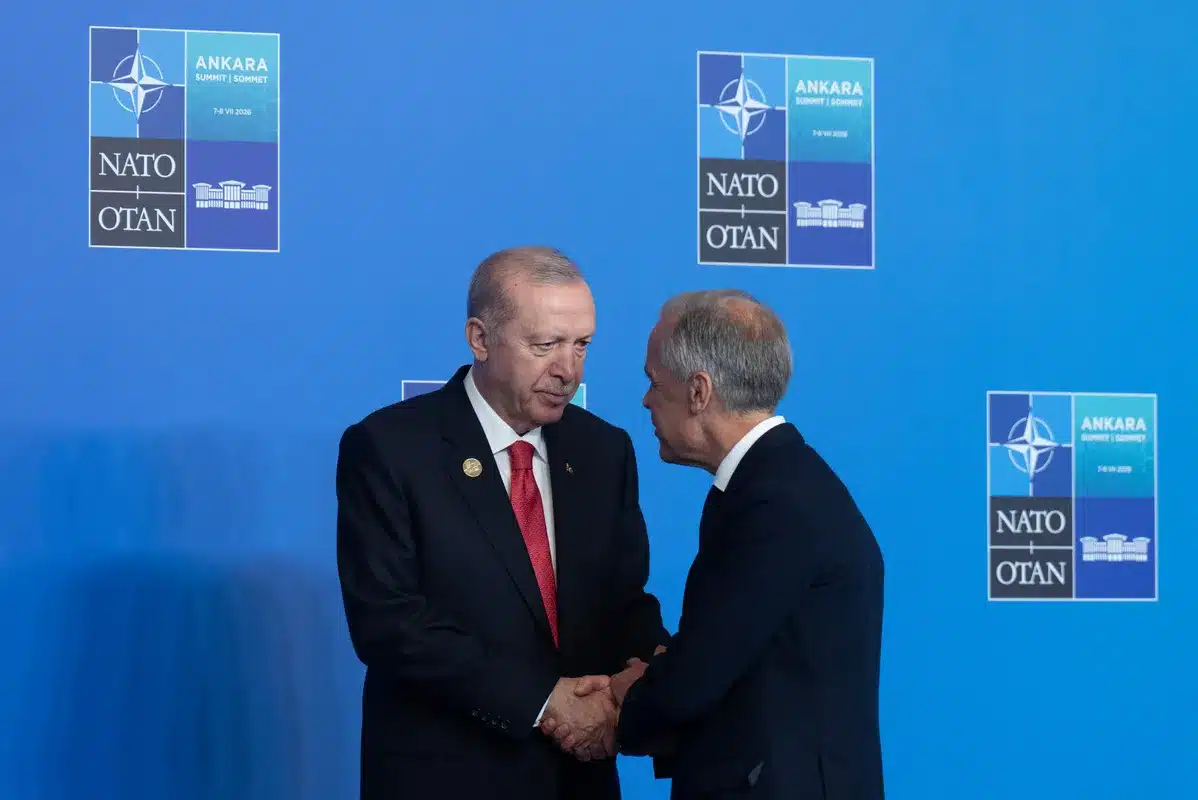
Gifts of personalized, engraved pistols and live ammunition presented to NATO leaders by Turkish President Recep Tayyip Erdogan have been turned over to the Royal Canadian Mounted Police (RCMP) for decommissioning. The unusual diplomatic gesture occurred as leaders departed the NATO summit in Ankara, Turkiye, on Tuesday.
An Unusual Diplomatic Gift
The Prime Minister’s Office confirmed that all leaders attending the summit received the engraved firearms from President Erdogan. While the exact nature of the inscription varied, it is understood that each pistol was personalized with the recipient’s name. Accompanying the gift was a box of live ammunition.
Global Affairs Canada issued a statement to reporters accompanying Prime Minister Mark Carney, clarifying the handling of the presents. According to the statement, the firearms were transferred to the RCMP for the purpose of decommissioning, meaning they will be rendered inoperable and safely stored or disposed of. Notably, the ammunition was left behind in Turkiye and did not accompany the weapons to Canada.
The government emphasized that all official gifts received by Canadian officials are managed strictly in accordance with Canadian laws, stringent security protocols, and established government policies. This ensures that any potential risks are mitigated and that the acceptance and handling of such items align with national regulations.
International Handling of the Gifts
Reports from other participating nations indicate a similar process. United Kingdom Prime Minister Keir Starmer, speaking to journalists on his return flight, confirmed that he also received an engraved pistol with his name and a box of ammunition. However, Starmer stated that he was unable to bring his gift back to the United Kingdom.
Importing such a firearm into the UK would be illegal, despite a letter from President Erdogan reportedly attempting to lift export controls on the weapons. This highlights the complex legal and regulatory frameworks that govern the international exchange of gifts, particularly those involving items that could be considered weapons.
The decision by leaders to leave the firearms in Turkiye or to have them handled by their respective national police forces underscores the sensitivity surrounding such gifts. While intended as a gesture of goodwill and a symbol of shared security interests within the NATO alliance, the practicalities of international law and domestic regulations necessitate careful management.
Potential Future of the Decommissioned Firearms
A senior government source, speaking on condition of anonymity, indicated that the decommissioned firearms might not simply be destroyed. Following consultation with Canadian authorities and adherence to all legal and policy guidelines, the government intends to explore options for the appropriate placement of these unique gifts.
One possibility being considered is the donation of the firearms to a museum. Such a move would allow these historically significant items, representing a moment in diplomatic relations between Turkiye and NATO member states, to be preserved and potentially displayed. This would serve as a tangible reminder of the summit and the diplomatic interactions that took place.
Context of Diplomatic Gift-Giving
The practice of heads of state and government exchanging gifts is a long-standing tradition in international diplomacy. These gifts often serve as symbols of friendship, respect, and the strengthening of bilateral or multilateral relationships. They can range from traditional crafts and artworks to more modern technological items or, as in this case, items of symbolic significance.
However, the nature of these gifts can sometimes present challenges. Items that are valuable, culturally sensitive, or potentially dangerous require careful consideration by the receiving government. Strict protocols are typically in place to declare, value, and manage such gifts, ensuring transparency and adherence to ethical standards.
In the context of a high-level security alliance like NATO, where member states collaborate on defense and security matters, the exchange of symbolic items, even those with security implications, can be seen as reinforcing the bonds between nations. The personalized nature of the pistols gifted by President Erdogan likely aimed to underscore a sense of individual recognition and respect for each leader.
Conclusion
The decision by the Canadian government, and reportedly by other NATO leaders as well, to hand over the engraved pistols to national police forces for decommissioning reflects a commitment to upholding legal standards and security protocols. While the gesture from President Erdogan was likely intended to foster goodwill, the practicalities of international law necessitated a measured approach to the acceptance and handling of the firearms. The potential for these decommissioned items to find a future home in a museum offers a way to preserve their historical context while ensuring they are managed responsibly.
