

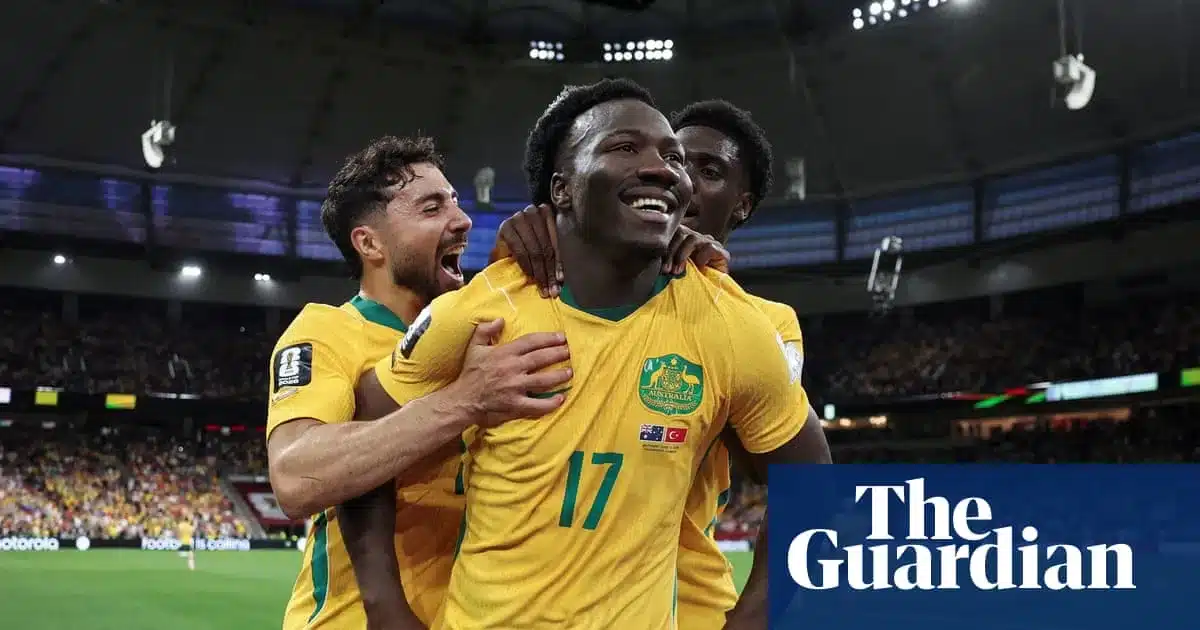
Nestory Irankunda, a prominent forward for the Australian national men’s football team, the Socceroos, has revealed that comments made by politician Pauline Hanson regarding the team’s representation of Australia caused significant anger among players. Hanson, leader of the One Nation party, had stated that the Socceroos embodied her vision of a “monocultural Australia,” a sentiment that players found deeply upsetting, according to Irankunda.
Player Reactions to Monoculturalism Claims
The controversy arose following comments made by Pauline Hanson, who asserted that Australia should not be a multicultural society but rather a “monocultural society.” She specifically linked the Socceroos to this vision, stating, “The Socceroos represent my vision of a monocultural Australia.” These remarks came shortly after the team’s World Cup victory against Turkey in their opening group stage match, held in North America.
Irankunda, who scored Australia’s first goal in that tournament match in Vancouver, shared his and his teammates’ reactions in an interview with ABC radio. “It did make a lot of us boys angry – I won’t lie,” he stated. “I felt a bit emotional but then tried to forget about it.” He emphasized the personal impact of such comments, particularly for players who, like himself, have diverse backgrounds and serve as role models for younger generations.
“I always tell people I’m Australian, and it really did upset me, and it upset a lot of the other boys to see things and hear things like that, especially because there’s so many young blokes that look up to us,” Irankunda explained. The 20-year-old forward, who has since transferred to Portuguese champions Sporting CP for a substantial fee, was born in a refugee camp in Tanzania to Burundian parents. His personal journey highlights the multicultural reality that Hanson’s comments seemed to disregard.
The Socceroos as a Reflection of Modern Australia
The Socceroos team has long been recognized for its diverse composition, reflecting the multicultural fabric of contemporary Australia. Another key player, Awer Mabil, also has a background rooted in refugee experiences, having been born in a Kenyan refugee camp to South Sudanese parents. Mabil was recognized for his contributions and story by being named Young Australian of the Year in 2023.
Mabil himself had previously responded forcefully to Hanson’s assertions about Australian society. After the team’s exit from the World Cup, he dismissed her claims as “bullshit,” directly challenging the notion that Australia is not a multicultural nation.
Earlier in the tournament, the Socceroos actively embraced their diverse heritage. The players released a video highlighting their migrant backgrounds, with midfielder Jackson Irvine articulating the team’s role as a symbol of the nation’s evolving identity. “The Socceroos aren’t just a team, we are a reflection of modern Australia,” Irvine stated in the video.
Irankunda echoed this sentiment, drawing a distinction between the positive contributions of players from diverse backgrounds and negative actions sometimes associated with certain groups. “There’s people like me and Awer, Mohamed Touré that go out there… and try to do the right thing, and we do, do the right thing,” he said. “I don’t like how they try and put us in the whole same category as the other people that do bad.” This sentiment underscores the frustration felt by players when their efforts and identities are potentially mischaracterized or grouped with negative stereotypes.
Player’s Stance on Future Engagement
When questioned about the possibility of engaging directly with Pauline Hanson, Irankunda expressed a degree of reluctance, stemming from the lingering impact of her past statements. “I’m still upset about some of the things she said in the past,” he admitted.
While not eager to involve himself in political controversies, Irankunda left the door slightly ajar for future dialogue. “I’m not someone who likes to jump into controversial things or political stuff, but you never know – one day I could be on the phone with her or sitting in an office chatting,” he mused. This suggests a complex position where personal feelings of hurt coexist with a potential openness to understanding or discussion, albeit on his own terms.
The Socceroos’ Diverse Identity
The Socceroos have consistently demonstrated a commitment to representing the multicultural reality of Australia. Players from various ethnic, cultural, and national backgrounds form the core of the team, embodying the nation’s inclusive spirit. This diversity is not merely a demographic fact but a source of strength and identity for the squad.
The team’s journey in international competitions often serves as a powerful narrative of integration and national pride. Players like Irankunda and Mabil, whose personal stories involve overcoming significant challenges and finding a home in Australia, represent the aspirations and successes that can arise from a welcoming society. Their on-field performances are often viewed through the lens of their broader impact as symbols of a modern, diverse Australia.
The debate ignited by Hanson’s comments highlights a broader societal conversation about national identity and multiculturalism. The Socceroos, through their actions and the voices of players like Irankunda, have actively pushed back against narrow definitions of Australian identity, advocating for a more inclusive and representative vision.
Ultimately, the strong reactions from the Socceroos players underscore the deep personal connection they feel to their Australian identity and their role as ambassadors for a diverse nation. Their willingness to speak out, even when it involves confronting political figures, demonstrates a commitment to challenging exclusionary narratives and championing the inclusive values they believe define modern Australia.
