

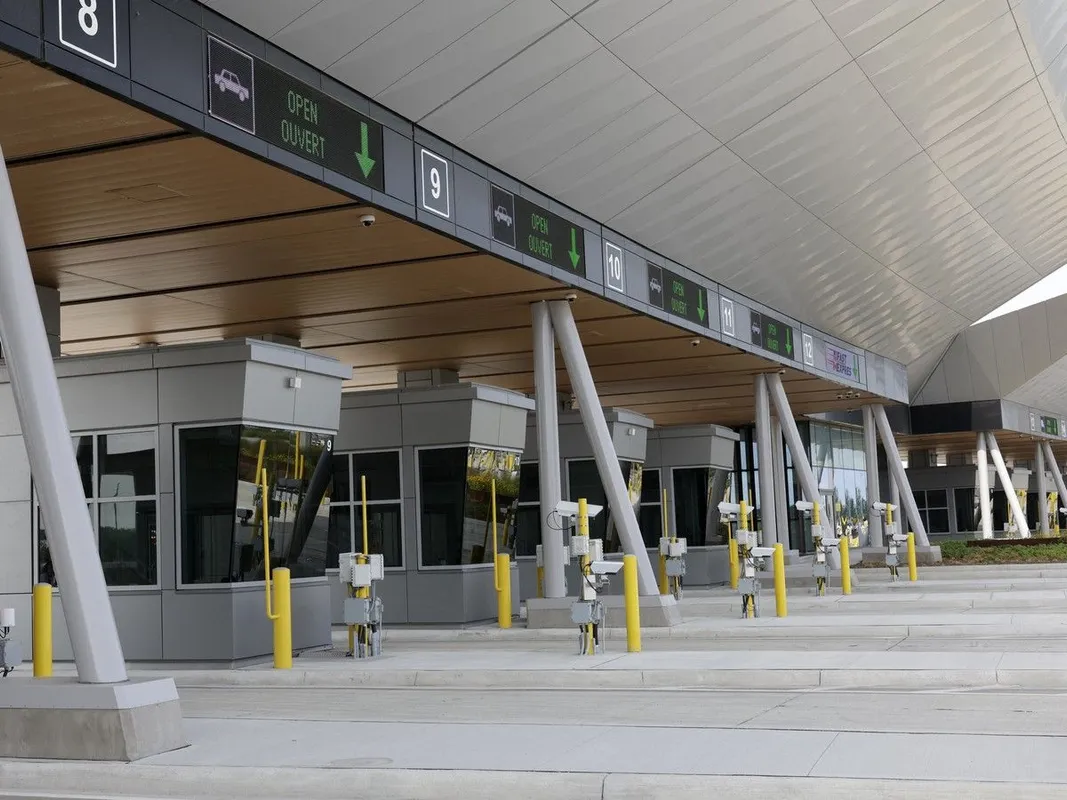
Canadian exporters face potential disruptions and increased costs as new U.S. customs regulations, signed into effect by President Donald Trump, aim to tighten enforcement against trade fraud and shell importers. While not explicitly targeting Canada, the directive’s broad scope could significantly impact Canadian businesses with substantial trade ties to the United States, particularly those operating as non-resident importers.
Stricter Importer Regime Introduced
Effective August 19, the U.S. government is set to implement Section 338 tariffs, potentially imposing duties as high as 50% on hundreds of products. Beyond these tariffs, a more pervasive change stems from an executive order signed on June 3, which mandates a stricter importer regime. This order directs U.S. authorities to enhance importer registration, bonding, disclosure, vetting, and overall enforcement. Martha Goncalves, a partner specializing in tax, customs, and international trade at PwC Canada, explained that the U.S. is “raising the bar on who can import and how much information that they must provide.”
While the U.S. administration states its goal is to combat global trade fraud and illicit activities, the proximity and volume of Canadian exports mean that Canadian businesses are likely to feel the impact most acutely. “The U.S. administration is trying to change the global trading system, and this is just part of their playbook,” Goncalves noted. “Unfortunately, Canada being just directly to the north, we get hit hardest because we have such a big footprint of Canadian exports going to the U.S.”
Defining Importer of Record (IOR)
A key element of the new directive involves a clearer definition of “U.S.” and “foreign” importers of record (IOR). The Department of Homeland Security (DHS) is tasked with adopting more stringent entry requirements, particularly for foreign IORs. Carrie Owens, an international trade lawyer and former director at U.S. Customs and Border Protection (CBP), expressed concern that Canadian firms operating as non-resident importers or through U.S. entities with limited capital could be reclassified as foreign IORs if they do not meet new asset or ownership thresholds.
Furthermore, the order prohibits foreign IORs from filing informal entries, a streamlined customs process typically used for lower-value shipments. Owens highlighted that companies could be deemed foreign IORs “even though they are organized under the laws of the United States. They have been here for decades.” This fundamental shift in import procedures could lead to significant trade disruptions if legitimate companies are unprepared.
Potential Trade Disruptions and Increased Costs
Experts fear that the breadth of these new regulations, coupled with a lack of widespread awareness among affected businesses, could lead to considerable disruptions in the flow of goods. “The tariffs are a cost of doing business,” Owens stated, “Potentially, the actions that are happening could disrupt the flow of goods.”
While the full guidance and implementing rules are still under development, with key reforms expected within 180 days of the order, companies are advised to prepare immediately. Goncalves emphasized that “It’s a readiness issue for most companies.” Businesses that act as their own IOR, rather than relying on a U.S. buyer or related entity, may face the most significant operational and cash-flow challenges, especially if they lack a substantial U.S. presence.
Key Preparatory Steps for Exporters:
- Determine the Importer of Record: Companies must first establish who will serve as the IOR for each shipment – the Canadian seller, a U.S. buyer, or a related U.S. entity.
- Assess Bond Needs: Review and potentially increase customs bond coverage, which guarantees duty and fee payments. Higher tariffs increase the U.S. government’s exposure, necessitating stronger guarantees.
- Evaluate Broker Arrangements: Ensure customs brokers are CTPAT-validated (Customs Trade Partnership Against Terrorism) or that the company itself is validated, especially if classified as a foreign IOR.
- Verify Data Accuracy: Ensure customs entries accurately reflect tariff classification, origin, and valuation.
Impact on Continuous Bonds and Penalties
Another area of concern is the potential impact on continuous bonds, which allow traders to ship multiple goods under a single bond. The new directive suggests that foreign IORs may not be able to rely on continuous bonds for formal entries unless CBP is assured that U.S. revenue is protected and compliance is maintained. This could necessitate single-entry bonds for each shipment, increasing administrative burdens and costs.
Moreover, the order mandates a penalty floor of at least 50% of the assessed amount for violations, with limited exceptions. Repeat offenders will no longer have penalties mitigated. Amy Magnus, director of customs affairs and compliance for U.S. Customs broker A.N. Deringer, Inc., warned, “They are saying that they will not mitigate (fines) beyond 50 per cent. So if you get a $1 million fine… you’re still looking at a lot of money.”
Ramping Enforcement and Legal Advice
Enforcement of trade fraud regulations is already intensifying. Magnus pointed to increased trade-fraud enforcement activities and a new joint Department of Justice–DHS resource guide indicating a greater use of both criminal and civil tools. “When the Department of Justice is involved with trade fraud enforcement,” she observed, “it starts to take on a… different tone.”
Given the complexity and potential ramifications, experts strongly advise Canadian companies to consult with legal counsel, particularly those with expertise in U.S. trade law, and their customs brokers. “If you want to continue doing business in the United States,” Magnus urged, “make sure your compliance is meeting these new demands.” Proactive preparation and understanding of the evolving regulatory landscape are crucial for Canadian exporters to navigate these changes successfully and avoid costly disruptions.
