

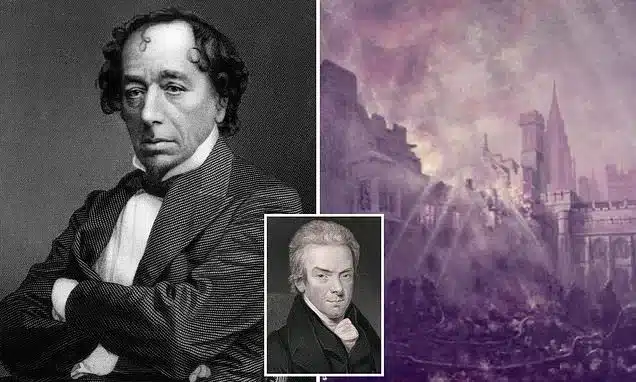
More than 65 artworks, including portraits of significant historical figures and contemporary political cartoons, are currently unaccounted for within the Houses of Parliament. This revelation follows a Freedom of Information request that sought to ascertain the whereabouts of various pieces within the parliamentary collection. The missing items range from historical photographs and 19th-century prints to contemporary satirical drawings.
Key Figures and Pieces Among the Missing
Among the notable missing works is a photograph of Benjamin Disraeli, Queen Victoria’s favored Prime Minister and a pivotal figure in 19th-century British politics. The photograph was taken by John Jabez Edwin Mayall, a renowned photographer who also captured images of Queen Victoria, Prince Albert, Charles Dickens, and Karl Marx. Another significant piece is a 19th-century print depicting William Wilberforce, the prominent leader of the movement to abolish the slave trade. Wilberforce died shortly after slavery was abolished across the British Empire, making his depiction a historically poignant artifact.
The list also includes more contemporary items, such as a photograph of Margaret Beckett, Britain’s first female Secretary of State for Foreign and Commonwealth Affairs. A satirical cartoon featuring Barbara Castle, the formidable deputy to former Prime Minister Harold Wilson, is also among the missing. This cartoon humorously depicted her in the guise of Florence Nightingale.
Further details reveal a satirical cartoon by Martin Rowson, created during the 1995 Conservative Party leadership election. This artwork humorously illustrated then-Prime Minister John Major attempting to address the internal party struggles, with his deputy Michael Heseltine and challenger Michael Portillo observing the scene.
Context of Artworks in Parliament
The Houses of Parliament house an extensive and dynamic collection of artworks. As a working environment, these pieces are frequently moved between various locations for display, conservation, or during renovation and maintenance periods. Parliamentary authorities indicated that the items currently listed as missing have not been definitively lost or ‘written off.’ Instead, they are believed to be temporarily misplaced during these ongoing movements and works across the parliamentary estate.
The number of missing artworks has significantly decreased compared to previous years. In 2018, a similar inquiry reported over 220 artworks as missing. This earlier list included notable pieces such as portraits of William Pitt the Younger and an oil painting by William John MacLeod, which depicted the aftermath of the Houses of Parliament being bombed in 1941 during World War II.
The Nature of Missing Artworks
Satirist Martin Rowson commented on the phenomenon of missing cartoon originals, noting that it is not an uncommon occurrence. He shared an anecdote about a Times cartoon depicting the Foreign Office Christmas party in 2004, which was intended for then-junior minister Denis MacShane but reportedly never reached his department after being sent to reception. Rowson suggested that while unfortunate, the disappearance of such items is not catastrophic, especially for published works like cartoons. He posited that the true lasting impact of a cartoon lies in its published impression, serving as its historical record, rather than the original physical artwork.
“It’s a shame but it’s hardly the crown jewels – and the point about cartoon originals is that they’ve been published already,” Rowson explained. “The artefact is probably the impression in the newspaper, as that’s its ticket to posterity. The original is the modern equivalent to one of Hogarth or Gillray’s copper plates used to create the – reproduced – satirical print.”
Parliament’s Efforts to Locate and Manage Artworks
A parliamentary spokesperson emphasized that the collection is actively managed. “As a working collection, artworks are frequently moved between their recorded locations and are often subsequently found, meaning none of the items currently recorded as missing have been written off or are considered a financial loss,” the spokesperson stated. The authorities are committed to reducing the number of unaccounted-for artworks through continuous auditing processes.
Since the beginning of the current year, an additional five artworks that were previously listed as missing have been successfully located and accounted for, indicating progress in the ongoing efforts to manage and track the parliamentary art collection. The focus remains on ensuring the security and proper documentation of all pieces within the Houses of Parliament.
Notable Missing Pieces and Their Significance
- Benjamin Disraeli Photograph: A portrait of the influential Victorian Prime Minister.
- William Wilberforce Print: Depicting the key abolitionist leader.
- Margaret Beckett Photograph: A contemporary image of a former Foreign Secretary.
- Barbara Castle Cartoon: A satirical depiction of the political figure.
- John Major Leadership Cartoon: A 1995 artwork by Martin Rowson.
- William MacCleod Painting: A depiction of the House of Commons chamber after a 1941 bombing.
Conclusion
The ongoing process of tracking and managing artworks within the Houses of Parliament highlights the challenges of maintaining a large, dynamic collection in a busy, historic building. While the current number of missing items is significantly lower than in recent years, the parliamentary authorities continue their diligent efforts through regular audits and by relocating pieces, aiming to ensure that all artworks are accounted for and preserved for future generations.
