

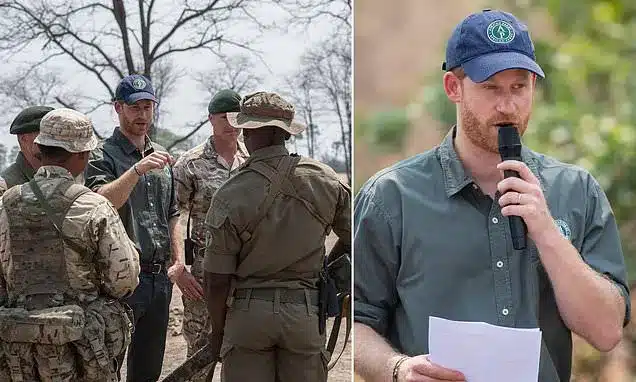
Prince Harry has concluded his decade-long involvement with the conservation charity African Parks, the organization announced. The Duke of Sussex, who served as a trustee and previously as president, is stepping down as part of what the charity described as a “governance refresh.” This departure comes as African Parks has faced serious allegations of human rights abuses by rangers working for the organization.
Prince Harry’s Role with African Parks
For ten years, Prince Harry dedicated his time to African Parks, a non-profit focused on managing and conserving national parks across Africa. He initially served as president for six years before transitioning to the board of directors in 2023. During his tenure, the Duke of Sussex was instrumental in drawing global attention to biodiversity protection and promoting philanthropic support for conservation efforts in Africa. African Parks expressed gratitude for his commitment, stating that he “remained deeply committed” and a “strong supporter” of their mission.
Allegations of Human Rights Abuses
In 2024, an investigation brought to light disturbing claims of intimidation and abuse against indigenous communities, particularly the Baka people, in the Republic of the Congo. Reports detailed alleged beatings, rapes, and other atrocities carried out by guards employed by African Parks. These incidents were reportedly aimed at preventing the Baka people from accessing forests they have historically used for foraging, hunting, and medicinal purposes.
One woman recounted an alleged rape while holding her infant, and a teenage boy claimed he was subjected to sexual grooming by a guard. A community activist also reported that a Baka man died following a beating and subsequent imprisonment without adequate medical treatment for his injuries.
Charity’s Response and Independent Review
Following these revelations, African Parks initiated an independent review conducted by the London law firm Omnia Strategy LLP. The charity later acknowledged that human rights abuses had indeed occurred within the Odzala-Kokoua National Park, admitting to “failures of our systems and processes.” In a statement, African Parks expressed deep regret for the pain and suffering caused to the victims and committed to implementing the recommendations from the review. However, the full results of the probe were not publicly disclosed.
Prince Harry’s Statement on Departure
A spokesperson for Prince Harry stated that the Duke is “proud of his ten years with African Parks” and fully supports the ongoing strengthening of its board. The statement reiterated his continued commitment to conservation in Africa and his ongoing support for the organization’s mission. This departure from African Parks coincides with reports of the Duke and Duchess of Sussex planning a return to the UK with their children, Archie and Lilibet, for the upcoming school year.
Broader Context of Royal Departures and Philanthropy
Prince Harry’s stepping down from African Parks is part of a broader pattern of his evolving role in public life and philanthropy since he and Meghan Markle stepped back as senior members of the Royal Family in 2020. The couple has since established a life in California, focusing on various charitable and media ventures. The Duke’s involvement with conservation has been a significant aspect of his post-royal public profile.
This is not the first time Prince Harry has navigated complex situations with charitable organizations. He previously co-founded Sentebale, a charity supporting young people with HIV and AIDS in Lesotho and Botswana. However, he and fellow founder Prince Seeiso, along with other trustees, resigned from Sentebale in March 2025 following disputes and accusations of “operational disruption and reputational harm” leveled against the Duke by the board chairman, Sophie Chandauka. Prince Harry has rejected these allegations.
Conclusion
Prince Harry’s departure from African Parks marks the end of a significant chapter in his conservation advocacy. While he leaves the board, his commitment to conservation remains, as does the ongoing scrutiny of the organizations he supports. The charity’s acknowledgment of human rights abuses and its subsequent review highlight the complexities of large-scale conservation efforts and the critical importance of accountability and ethical practices in protecting both wildlife and local communities.
