

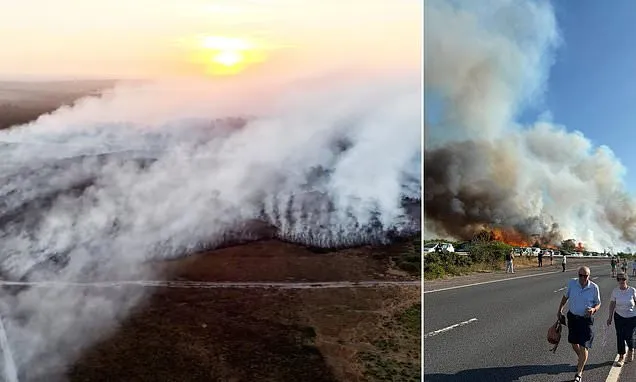
England and Wales have experienced a record number of wildfires this year, with 1,017 infernos already recorded, matching the total for the previous worst year, 2025. As temperatures soar, with forecasts predicting highs of 38C, concerns are mounting that current environmental policies, particularly those related to rewilding, have contributed to the escalating crisis by creating conditions ripe for combustion.
Escalating Wildfire Threat
The alarming increase in wildfires has prompted criticism from various land management and countryside advocacy groups. These organizations argue that recent policy changes, specifically restrictions on controlled burning of heather and grasses, have inadvertently led to a significant accumulation of dry vegetation across the landscape. This dry fuel load, they contend, acts like tinder, making the countryside exceptionally vulnerable during heatwaves.
Traditionally, controlled burns were conducted during cooler months by gamekeepers and farmers. This practice not only managed vegetation levels but also encouraged new growth beneficial for livestock and game birds. However, regulatory changes, including an expansion of rules preventing burning on approximately 1.6 million acres of land, have curtailed these activities. While these measures were ostensibly aimed at improving air quality and protecting peatlands, critics argue they have removed a crucial preventative tool against wildfires.
Criticism of Rewilding Policies
Jonathan Roberts of the Country Land and Business Association highlighted the paradox of making controlled burning more difficult following a record year for wildfires. “Government has in effect banned the single-most important method of preventing wildfires, and we are now living with the consequences,” Roberts stated. He urged an immediate reversal of the policy, emphasizing that land managers are now facing the repercussions of this decision.
The Countryside Alliance echoed these sentiments, labeling the government’s decision as “foolish.” The organization pointed out that the area effectively banned from controlled vegetation burning in upland areas has more than tripled. They have repeatedly warned that ignoring scientific evidence regarding fuel load management significantly heightens the risk of catastrophic wildfires.
Former England cricket captain and vocal critic of rewilding, Lord Botham, has called for decisive action, suggesting that the Department for Environment, Food and Rural Affairs (Defra) be placed under special measures due to “reckless incompetence.” He argued that decades of accumulating vegetation, exacerbated by policy missteps, have created the current “man-made” wildfire crisis. Lord Botham stressed the urgency, stating, “Unless Andy Burnham acts decisively there will be fatalities.” He also noted that the traditional winter burning season, crucial for creating firebreaks, is set to begin soon, and urged the Prime Minister to reinstate these practices by reversing the recent ban.
Alternative Approaches and Official Response
Natural England maintains that burning heather can damage carbon-storing peat and advocates for mechanical cutting as an alternative. However, critics argue that while mechanical cutting reduces fuel load, it leaves behind ignitable material. Andrew Gilruth of the Moorland Association expressed concern that rewilding, without proper vegetation management, leads to an overabundance of fuel, making landscapes prone to devastating fires.
In response to the escalating concerns, Defra defended its policies, describing peatland restoration as a “long-term” solution. A spokesperson explained, “Peatland restoration is the most effective, sustainable, and long-term solution for reducing fuel load on degraded peatlands, as wetter, healthy-functioning peatlands hold more water in the landscape for longer and are more resilient to the impacts of wildfire.”
Current Wildfire Incidents
The debate unfolds against a backdrop of ongoing fire incidents. Over 100 firefighters have been engaged in battling a major blaze in the New Forest that has persisted for four days. This incident saw drivers ordered to abandon their vehicles as the fire spread along the A31. Elsewhere, fire crews in South Wales reported “carnage” while tackling seven separate blazes, with suspicions of arson in some cases. A heathland fire in Suffolk has also burned for over two weeks, necessitating the evacuation of homes and a holiday caravan park. In Romford, east London, a fire destroyed several acres of farmland in late July.
In an effort to mitigate further incidents, Andy Burnham has called for retailers to cease selling disposable barbecues, which he identified as a cause for many recent fires, and has indicated the possibility of a summer ban in the future.
Conclusion
The record-breaking wildfire season in England and Wales has ignited a critical debate about the effectiveness and consequences of rewilding and land management policies. As the country grapples with extreme heat and devastating fires, the tension between conservation goals and practical fire prevention measures remains a central challenge, with land managers, environmental groups, and government bodies offering differing perspectives on the path forward.
