

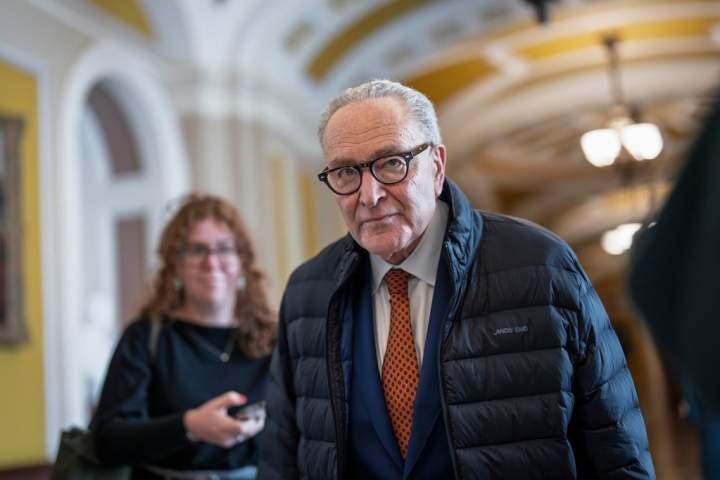
The U.S. Senate approves a funding measure on Friday to sustain most government operations until the end of September, following an agreement between President Donald Trump and Democrats that separates Homeland Security funding for further discussion on restrictions for federal immigration enforcement.
Details of the Bipartisan Agreement
With a potential government shutdown approaching over the weekend, Trump reaches a compromise with Senate Democrats on Thursday, prompted by the recent deaths of two protesters killed by federal agents in Minneapolis. The deal maintains Homeland Security funding at existing levels for the next two weeks, allowing lawmakers to address Democratic proposals for greater transparency and oversight in federal operations.
Key Democratic demands include requiring agents to reveal their identities, obtaining additional warrants for actions, and involving local authorities in investigations of incidents. The Senate passes the bill in a 71-29 vote, sending it to the House of Representatives, which reconvenes on Monday. This timeline raises the possibility of a brief partial shutdown over the weekend until the House acts.
Political Reactions and Tensions
As bipartisan calls grow for probes into the fatal shootings by federal agents, Trump expresses opposition to a shutdown and urges lawmakers from both parties to support the measure with a strong ‘yes’ vote. His accommodations to Democrats draw criticism from some Senate Republicans, which delays final proceedings and foreshadows intense negotiations ahead.
In a passionate address on the Senate floor, Sen. Lindsey Graham of South Carolina, a key Trump supporter, cautions Republicans against yielding too much ground. ‘To the Republican party, where have you been?’ Graham questions, emphasizing that Immigration and Customs Enforcement agents and Border Patrol personnel have faced undue criticism and defamation.
Despite reservations, certain Republicans acknowledge the need for operational adjustments at ICE, though they resist fully endorsing Democratic proposals. ‘I think the last couple of days have been an improvement,’ notes Sen. Rand Paul of Kentucky. ‘I think the rhetoric has been dialed down a little bit, in Minnesota.’
Democratic Stance and Specific Demands
Frustrated Democrats insist they will withhold future support for Department of Homeland Security funding unless Congress imposes stricter limits on ICE and other agencies involved in immigration raids. ‘These are not radical demands,’ declares Senate Democratic Leader Chuck Schumer. ‘They’re basic standards the American people already expect from law enforcement.’
Democrats press the White House to halt ‘roving patrols’ in urban areas, enhance coordination with local police on arrests, and enforce stricter warrant protocols. They also advocate for a binding code of conduct to ensure accountability for rule violations, mandating agents to operate without masks, activate body cameras, and display proper identification—practices standard in many police forces.
Background on the Fatal Incidents
The agreement emerges in the aftermath of two tragic events. Alex Pretti, a 37-year-old ICU nurse, dies at the hands of a Border Patrol agent on January 24. Two weeks earlier, protester Renee Good loses her life to an ICE officer. Administration figures, including Homeland Security Secretary Kristi Noem, initially claim Pretti approached officers aggressively, but several videos disprove this account.
Republican Counterproposals and Additional Disputes
Republicans respond with their own conditions, targeting ‘sanctuary cities’ perceived as lax on immigration enforcement. ‘There’s no way in hell we’re going to let Democrats knee cap law enforcement and stop deportations in exchange for funding DHS,’ states Sen. Eric Schmitt of Missouri before the vote.
Graham delays the spending legislation until Senate Majority Leader John Thune of South Dakota commits to a future vote on his sanctuary cities proposal. Separately, Graham objects to the repeal of a recent law permitting senators to pursue multimillion-dollar lawsuits against the government for unauthorized access to their personal or office data—a situation he and others encountered during the Arctic Frost investigation into the January 6, 2021, Capitol attack by Trump supporters.
The spending package, already approved by the House last week, includes this repeal. However, Graham secures Thune’s pledge to review a different bill enabling ‘groups and private citizens’ impacted by Special Counsel Jack Smith’s inquiry to file suits.
Outlook in the House
This rare collaboration between Trump and Schumer, despite their history of clashes, follows Pretti’s death, which Schumer describes as ‘a moment of truth.’ The impasse risks another shutdown, mere months after Democrats halted a prior spending bill over lapsed federal health care subsidies, leading to a 43-day closure until moderate Democrats negotiated a resolution with Republicans.
Democrats appear more cohesive now, galvanized by the shootings. House Speaker Mike Johnson of Louisiana opposes splitting the funding but warns that if separated, the House must act swiftly to prevent a shutdown. He anticipates challenging choices on recalling members to Washington for approvals.
House Republicans reject alterations to their version, with members of the conservative House Freedom Caucus informing Trump that the package requires full Department of Homeland Security funding. House Democratic Leader Hakeem Jeffries stresses that any modifications to the homeland security provisions must prove ‘meaningful and transformative.’ Without ‘dramatic change,’ he predicts, ‘Republicans will get another shutdown.’
