

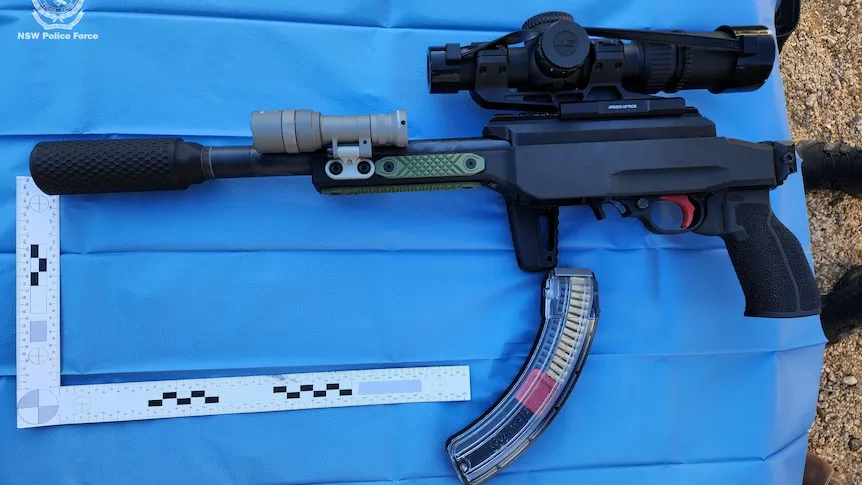
A legal professional from Moree, in northwestern New South Wales, faces serious allegations including the manufacture of prohibited firearms. The 32-year-old solicitor was apprehended following a police operation targeting firearm compliance. The investigation, spearheaded by the State Crime Command’s Drug and Firearm squad under Strike Force Temarang, is examining the broader landscape of 3D-printed and prohibited firearm importation and production.
Allegations and Arrest
The charges against the solicitor stem from a firearm prohibition order compliance check conducted at a residence on Sunnyside Road. During this check, law enforcement officers reportedly discovered and seized a significant cache of items. These alleged seizures included a bolt-action rifle, two pistols, a privately manufactured semi-automatic firearm, a substantial quantity of ammunition, and equipment used for manufacturing ammunition.
Following the initial arrest at the Sunnyside Road property, police executed a search warrant on a second location in Frome Street. This subsequent search reportedly yielded further evidence pertinent to the investigation. Authorities allegedly discovered a 3D printer, detailed blueprints for constructing firearms, and various electronic devices. The solicitor was subsequently charged with 16 offences, encompassing the alleged manufacturing of prohibited firearms.
Strike Force Temarang’s Mandate
Strike Force Temarang was established specifically to address the growing concerns surrounding the illicit trade and creation of firearms, with a particular focus on 3D-printed weapons. The proliferation of 3D-printing technology has raised alarms among law enforcement agencies globally, as it potentially lowers the barrier to entry for individuals seeking to produce untraceable firearms. These weapons, often referred to as ‘ghost guns,’ lack serial numbers, making them exceedingly difficult to track.
The investigation aims to dismantle networks involved in both the importation of components and the domestic manufacturing of such prohibited weapons. The complexity of these operations often involves sophisticated methods to circumvent existing gun control laws. The involvement of a legal professional in such alleged activities, if proven, would represent a significant development in the ongoing efforts to combat illegal firearm manufacturing.
The Technology Behind 3D-Printed Firearms
The manufacturing of firearms using 3D printing technology typically involves digital design files, often referred to as STLs (stereolithography files), which are then processed by specialized software. These files dictate the shape and dimensions of the firearm components. A 3D printer then builds these components layer by layer, using various materials such as polymers or metals. Once the components are printed, they are assembled, often with commercially available parts like springs and firing mechanisms, to create a functional firearm.
The legality of 3D-printed firearms varies significantly by jurisdiction. In many places, including Australia, the manufacture, possession, and sale of firearms, regardless of their manufacturing method, are strictly regulated. The key issue often revolves around whether the firearm meets the definition of a prohibited weapon under existing legislation. The alleged discovery of blueprints further suggests a deliberate intent to produce firearms outside of legal channels.
Legal Ramifications and Court Proceedings
The solicitor is facing 16 charges, indicating the breadth of the alleged illegal activities. These charges will be heard in court, where the prosecution will present evidence gathered by Strike Force Temarang. The defense will have the opportunity to respond to these allegations. The legal proceedings will scrutinize the evidence, including the seized firearms, ammunition, 3D printer, and digital devices, to determine the solicitor’s culpability.
The case highlights the challenges faced by law enforcement in keeping pace with technological advancements that can be exploited for criminal purposes. The ability to manufacture firearms at home using readily available technology, coupled with the potential for anonymity, presents a complex problem for gun control advocates and law enforcement agencies alike.
Community Impact and Future Outlook
News of the arrest and charges has sent ripples through the Moree community and the legal profession. The allegations raise questions about the accessibility of such technology and the potential for its misuse. Law enforcement agencies continue to emphasize the importance of public vigilance and reporting suspicious activities related to firearms.
The outcome of this case will likely have implications for how authorities approach investigations into 3D-printed firearms and the legal responsibilities of individuals involved in their creation. The ongoing work of Strike Force Temarang underscores a commitment to addressing emerging threats in firearm-related crime.
The solicitor was scheduled to appear in court today to face the charges. The investigation by Strike Force Temarang is ongoing, with authorities continuing to explore the full extent of the alleged firearm manufacturing and importation network.
