

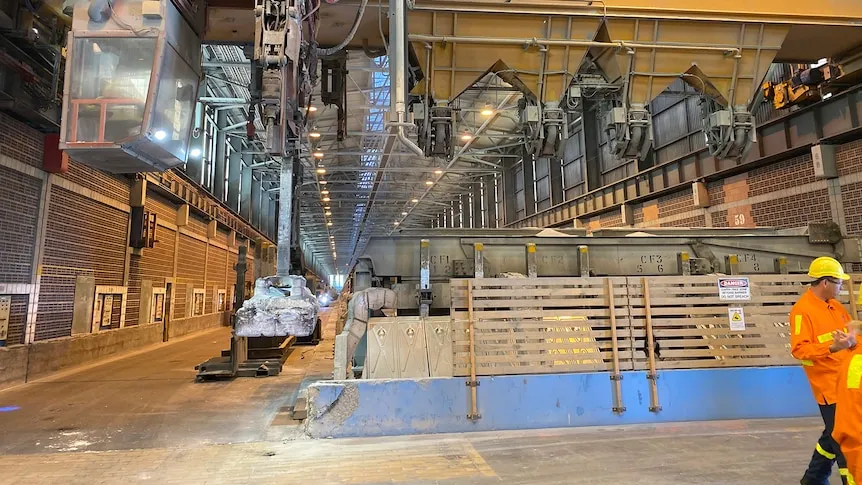
Australia’s largest aluminium smelter, Tomago Aluminium, will continue operations for at least another decade following a significant financial commitment from both the New South Wales and federal governments. The joint funding package, totaling $2.5 billion over 10 years, aims to secure the long-term future of the facility and its workforce, averting a potential closure threatened by escalating energy costs.
Government Bailout to Safeguard Tomago Aluminium
The substantial financial injection will be split evenly between the federal government and the NSW government, with each contributing up to $1.225 billion over the 10-year period, commencing from 2029. This agreement comes after the smelter’s owner, global mining giant Rio Tinto, warned of a possible shutdown from 2028 when its current energy supply contract expires. The escalating costs of both renewable and traditional coal-fired power sources were cited as the primary drivers behind the closure threat.
Tomago Aluminium is a critical piece of industrial infrastructure, recognized as Australia’s largest single consumer of electricity. The smelter accounts for approximately 10% of NSW’s total annual electricity consumption, underscoring its significant impact on the state’s energy grid.
A Renewable Energy Future
A joint statement from the NSW and federal governments highlighted that the funding package is designed to “secure the future of aluminium smelting in the region.” The investment is earmarked for a long-term renewable energy solution for the Tomago facility, intended to ensure commercially sustainable operations beyond 2028. Furthermore, the initiative is expected to accelerate the decarbonisation of over 10% of NSW’s electricity grid.
As part of the agreement, Rio Tinto is committed to investing a minimum of $1.1 billion of its own capital. This investment will focus on reducing the smelter’s energy usage and transitioning its power sources towards renewables. A significant portion of this private investment, $100 million, will be directed towards further decarbonisation efforts at the smelter and the development of an innovative demand-response program designed to support the NSW electricity grid.
This demand-response program aims to position the Tomago smelter as a global leader in electricity demand flexibility services. By actively managing its electricity consumption in response to grid needs, the smelter can provide crucial stability and support to the wider energy network.
Economic and Social Impact
The Tomago Aluminium smelter, located in the NSW Hunter region, has been a cornerstone of local industry since commencing operations in 1983. It provides direct employment for approximately 1,000 workers and operates 24 hours a day, reflecting the continuous nature of its heavy production processes. The threat of closure had cast a long shadow over the workforce, with employees expressing significant anxiety about their job security.
Union representatives welcomed the announcement, noting the prolonged period of uncertainty for the workers. Brad McDougall, a union organiser, conveyed the immense relief the news would bring, stating, “It’s been very difficult for all employees on the site… so this news will be fantastic.” The deal provides much-needed certainty for the employees and their families.
Precedent for Industrial Support
This bailout for Tomago Aluminium follows a pattern of similar support packages offered by the federal government to other large industrial operations facing economic challenges. Notable examples include assistance for Glencore’s Mount Isa Copper smelter and the Nyrstar smelters in Tasmania and South Australia, signaling a broader government strategy to support key heavy industries deemed vital to the national economy.
The path to this agreement was not without its complexities. Initial discussions reportedly involved a desire from the federal government for a 50:50 funding split, mirroring a previous arrangement with the Boyne Aluminium Smelter in Queensland. However, the NSW Premier, Chris Minns, initially pushed back, emphasizing that any state contribution must be in the best interests of NSW taxpayers and that the federal government was leading the initiative.
Leadership Visit and Future Outlook
Prime Minister Anthony Albanese and NSW Premier Chris Minns were scheduled to visit the Tomago smelter on Thursday to officially announce and promote the deal. The Prime Minister had previously expressed optimism about reaching a resolution during an earlier visit to the Hunter site, indicating that discussions were progressing positively.
The financial health of Rio Tinto, the smelter’s owner, has been robust. The company’s latest annual report revealed a significant profit after tax of $10 billion for the 2025 financial year. The valuation of its aluminium and lithium projects also saw an increase, standing at $4.6 billion in 2025, up from $3.6 billion in 2024. This financial strength underpins Rio Tinto’s capacity to contribute substantially to the smelter’s future through its $1.1 billion investment.
The comprehensive package, combining government funding for renewable energy infrastructure and private investment in operational efficiency and decarbonisation, is expected to ensure the viability of Australia’s largest aluminium smelter for years to come. It represents a significant step towards balancing industrial needs with environmental sustainability goals.
