

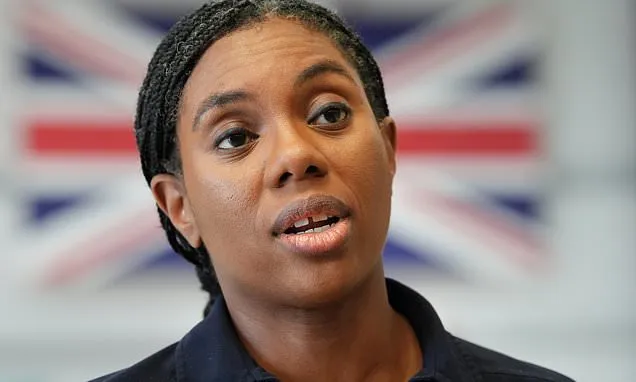
A potential future Conservative government is considering withdrawing the United Kingdom from the jurisdiction of the International Court of Justice (ICJ) due to concerns over potential financial liabilities amounting to trillions of pounds in climate reparations. Kemi Badenoch, a prominent figure within the party, has stated that the UK should not remain subject to the court’s authority if it conflicts with national interests. This strategic review is being spearheaded by Shadow Attorney General Lord Wolfson, who is examining the legal and practical implications of such a departure, mirroring his previous analysis of the UK’s membership in the European Court of Human Rights.
Concerns Over Climate Reparations and Lawsuits
The impetus for this review stems from a recent analysis by the think-tank Policy Exchange. Their research highlights a significant risk stemming from an advisory opinion issued by the ICJ last year. This opinion established that nations bear a responsibility to address climate change. Policy Exchange warns that this ruling could pave the way for extensive legal claims against countries that have historically contributed to greenhouse gas emissions.
The report identifies the UK as a particularly vulnerable target for such claims, given its role as the birthplace of the Industrial Revolution. Estimates suggest that if the UK were deemed responsible for just 3% of global historical emissions, it could face damages claims potentially reaching £4 trillion. Furthermore, the ruling could cast doubt on the legality of domestic activities such as North Sea oil and gas extraction, framing them as violations of environmental obligations.
Badenoch Articulates National Interest Concerns
In public statements, Kemi Badenoch emphasized the need for the UK’s legal and international arrangements to adapt to a changing world. She expressed her belief that continued adherence to the ICJ’s compulsory jurisdiction is untenable if it undermines the nation’s interests. “I do not believe that we should remain within the compulsory jurisdiction of this court if it is not in our national interest to be there. The world has changed. Our approach should evolve with it,” Badenoch stated.
She has formally requested that Shadow Attorney General Lord Wolfson conduct a thorough assessment of the situation and provide recommendations by the autumn. Badenoch articulated a stark warning about the potential consequences of inaction:
- The court’s stance could impede the UK’s ability to exploit its own natural resources, such as North Sea oil and gas.
- The nation could be compelled to pay substantial reparations to developing countries for historical carbon emissions.
- Without prompt ministerial intervention, this ruling poses a threat to economic growth, energy security, and the broader national interest.
Badenoch also called on the incoming Prime Minister to reconsider the positions of political figures who, in her view, prioritize international legal obligations over national priorities. This critique was aimed at individuals perceived as advocating for international legalism at the expense of national interests.
UK’s Previous Stance and Official Response
Earlier this year, the UK government formally endorsed the ICJ’s advisory opinion at the United Nations. A spokesperson for the Foreign Office highlighted the UK’s support for the proceedings and the UN General Assembly resolution, particularly their emphasis on international cooperation and the centrality of the Paris Agreement in climate change mitigation efforts.
The Foreign Office clarified that while neither the ICJ’s advisory opinion nor the UNGA resolution carries legally binding force, they are seen as valuable contributions to the global dialogue on climate action. This official position underscores the government’s commitment to international climate frameworks, even as internal party reviews explore potential re-evaluations of engagement with international legal bodies.
Historical Context and Future Implications
The Industrial Revolution, originating in Britain, marked a pivotal moment in global economic development but also initiated large-scale industrial emissions. This historical context is central to the arguments presented by Policy Exchange and influences the potential liabilities the UK might face under evolving international climate law. The concept of climate reparations, while gaining traction in international discourse, remains a complex and contentious issue, involving questions of historical responsibility, economic capacity, and distributive justice.
The potential withdrawal from the ICJ’s jurisdiction represents a significant policy consideration, reflecting a broader debate about the balance between national sovereignty and international legal commitments. As the review progresses, stakeholders will be closely watching to see how the UK navigates these complex legal, economic, and environmental challenges, and whether it opts to prioritize its perceived national interests by disengaging from international judicial oversight on climate matters.
Conclusion
The prospect of the UK potentially leaving the International Court of Justice signals a critical juncture in the nation’s approach to international law and climate change. Driven by substantial financial concerns related to climate reparations and the potential for disruptive lawsuits, the Conservative party is undertaking a serious review of its commitment to the court’s jurisdiction. The findings of Lord Wolfson’s investigation are expected to shape future policy, potentially leading to a significant shift in the UK’s international legal posture and its engagement with global climate governance frameworks.
