

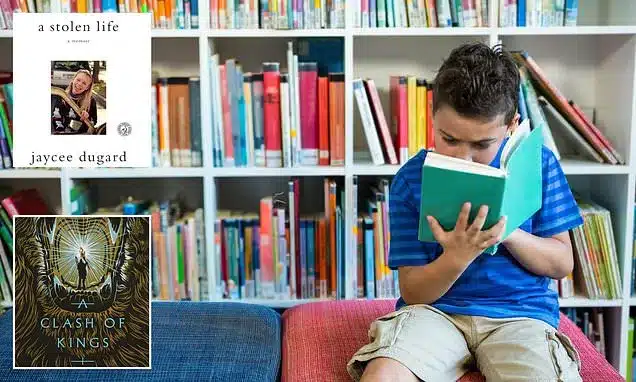
Utah public schools have removed two additional books from their libraries, bringing the statewide total of restricted titles to 34. The latest additions include George R.R. Martin’s A Clash of Kings, the second installment in the A Song of Ice and Fire series that inspired HBO’s Game of Thrones, and Jaycee Dugard’s memoir A Stolen Life, which details her experience as a sexual assault survivor.
State Law Triggers Automatic Removal
The bans took effect after three districts—Alpine, Davis, and Jordan—flagged the books for containing objective sensitive materials, such as explicit sexual acts. Utah law mandates statewide removal of any material reported by three or more districts.
Key Statistics on Bans
- 15 books added to the list since the start of 2026, nearly double the previous two years combined.
- 33 of the 34 restricted titles originated from challenges in the Davis School District.
- Most active districts: Davis, Washington, and Jordan.
Other notable restricted books include Margaret Atwood’s The Handmaid’s Tale, John Green’s Looking for Alaska, Sarah J. Maas’s A Court of Thorns and Roses series, and Toni Morrison’s The Bluest Eye.
Reactions from Authors and Lawmakers
George R.R. Martin, whose series has sold over 100 million copies, has long opposed book restrictions. In a 2012 blog post, he stated: “There’s nothing I hate more than banning books. Free speech is one of the cornerstones of our democracy, yet somehow it is always under attack. The world is full of people who think they know better, and want to tell you what you should read.” Jaycee Dugard has not issued a public response.
State Representative John Arthur, a former Utah Teacher of the Year, criticizes the law for concentrating power in few districts. “It’s giving an outsized amount of power to a really small number of districts that are making decisions on behalf of all of us,” he said. Arthur advocates for local control, noting that “different communities carry different values” and that school libraries serve as vital access points for many students.
Online Debate and Ban Process
Social media users largely support the restrictions, arguing they protect children from adult content in school settings. One commenter wrote: “Restricting adult material from children at a school library is not banning a book.” Others noted the books remain available for purchase outside schools and compared the policy to excluding inappropriate media like pornographic films.
Davina Sauthoff, library media specialist for the Utah Department of Education, explains the process begins locally. Parents, teachers, or community members can challenge books, which undergo review at the district level. “Once a book has been challenged and gone through the entire process at the LEA level, the law requires that districts and charter schools report any sensitive materials challenged to the state Board of Education,” she said. Her professional profile emphasizes: “Better to lose a library book than a reader!”
