

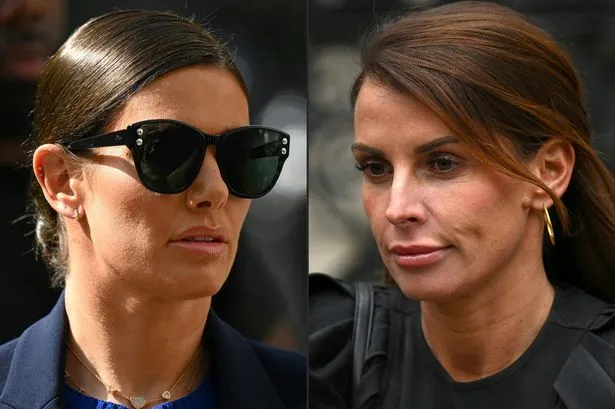
Four years after a High Court judge ruled in favor of Coleen Rooney, the “Wagatha Christie” libel case continues to be remembered for its extraordinary twists and turns. What began as a dispute over alleged Instagram leaks evolved into one of Britain’s most talked-about celebrity legal battles, captivating the public with its dramatic courtroom revelations and viral moments.
The Genesis of the Saga: Coleen Rooney’s Instagram Investigation
The foundation of the entire legal saga was laid by Coleen Rooney’s meticulous social media investigation. In 2019, Rooney, suspecting her private Instagram Stories were being leaked to the press, began a painstaking sting operation. She gradually restricted access to her account, allowing only a select few to view her posts. She then posted a series of fabricated stories designed to be misleading. When these false narratives subsequently appeared in The Sun newspaper, Rooney dramatically revealed her findings to her followers: “It’s……… Rebekah Vardy’s account.” This public accusation set the stage for the libel proceedings initiated by Rebekah Vardy.
Key Moments and Revelations from the High Court Trial
The 2022 High Court trial, presided over by Mrs Justice Steyn, was a spectacle of celebrity drama and legal contention. Several moments stood out, cementing the case’s place in public memory:
- The Missing Phone: Perhaps the most bizarre incident involved the disappearance of Caroline Watt’s mobile phone, Rebekah Vardy’s agent. Watt claimed the phone had accidentally fallen into the North Sea after a boat encountered a large wave. This occurred shortly after the phone had been requested by Rooney’s legal team for examination as part of the proceedings. While Vardy’s side maintained it was an unfortunate accident, Rooney’s lawyers questioned the circumstances surrounding the phone’s submersion.
- Disputed WhatsApp Messages: The trial also focused heavily on missing WhatsApp communications between Rebekah Vardy and Caroline Watt. Rooney’s legal team argued that crucial messages had been deliberately deleted to conceal evidence. Conversely, Vardy’s representatives disputed any suggestion of intentional wrongdoing, attributing the issues to difficulties in exporting chat histories. The absence of these messages became a significant point of contention throughout the legal proceedings.
- The Peter Andre Interview: An unexpectedly awkward moment arose when Rooney’s barrister read aloud excerpts from a years-old newspaper interview in which Rebekah Vardy had made highly critical personal remarks about singer Peter Andre. Vardy later expressed deep regret over giving the interview, while Andre publicly stated he had spent years trying to move past her comments. The court heard this exchange as a surreal interlude in the otherwise focused legal arguments.
- Wayne Rooney’s Testimony: Football icon Wayne Rooney, Coleen Rooney’s husband, also took the stand to give evidence. He corroborated his wife’s account of events and answered questions regarding conversations he had about stories allegedly leaking from his wife’s private life. His appearance added further star power to an already high-profile celebrity trial.
The Verdict and Financial Ramifications
Despite the intense media scrutiny and the celebrity nature of the case, it was a civil libel action, not a criminal trial. Rebekah Vardy, 44, sued Coleen Rooney, 40, for libel following Rooney’s public accusation that “Rebekah Vardy’s account” was responsible for leaking private information. In her judgment, Mrs Justice Steyn found that the allegation made by Coleen Rooney was “substantially true,” thereby dismissing Vardy’s libel claim.
The judge’s written ruling was damning, stating that she found significant portions of Rebekah Vardy’s evidence lacked credibility. Mrs Justice Steyn concluded that Caroline Watt had indeed leaked information from Rooney’s private Instagram account to The Sun newspaper, and crucially, that Vardy was aware of, condoned, and actively participated in this process. These findings were pivotal in determining the outcome of the case.
The financial consequences for Rebekah Vardy were substantial. Following the judgment, she was ordered to pay 90% of Coleen Rooney’s considerable legal costs, in addition to her own extensive legal fees. The total cost of the entire saga was reported to exceed £1.4 million, with the dispute over costs continuing long after the main judgment was delivered.
Cultural Impact and Lasting Legacy
The “Wagatha Christie” saga transcended the courtroom, generating a vast amount of public interest and spawning countless memes. From the initial Instagram reveal and the courtroom sketches to the now-infamous “phone in the sea” incident, every development became viral fodder, solidifying the feud as one of Britain’s most memorable celebrity disputes. The case’s cultural impact led to numerous spin-offs, including documentaries, books, and stage adaptations, ensuring its place in contemporary British pop culture.
Four years on, the “Wagatha Christie” trial remains a benchmark for high-profile celebrity legal battles, remembered for its unique blend of personal drama, investigative intrigue, and public fascination. The case highlighted the intense scrutiny faced by public figures and the complex intersection of social media, privacy, and legal recourse.
