

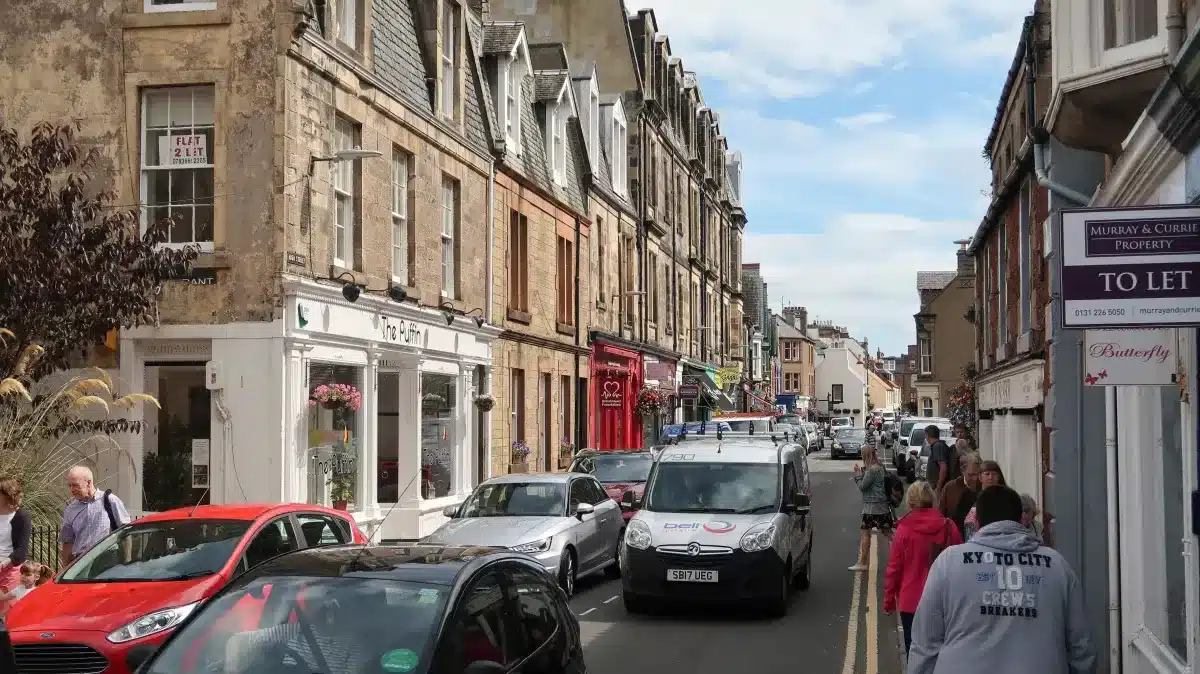
Residents across Scotland, from Paisley Town Hall in the west to Dunbar’s clifftops in the east and Inverurie on the River Don in the north, express growing concerns that council-imposed parking charges will devastate their local economies. Petitions with thousands of signatures, heated public meetings, and consultant reports have failed to halt the increases.
Vandalism and Public Backlash
In affluent North Berwick, around 30 new parking meters recently fell victim to glue and protest stickers, yet charges persist. Research reveals that 17 local authorities have raised parking fees over the past four years, with at least six introducing new ones since 2022-23.
Garry Clark, development manager for East, Mid, and South Scotland at the Federation of Small Businesses (FSB), attended a meeting on fees in Haddington’s town center near Edinburgh. “There was a real sense of anger in the room,” he said. “People felt their concerns were not being listened to. Evidence was provided to the council and it was all pooh-poohed.”
Record Profits from Parking Enforcement
The 22 councils managing their own parking restrictions generated £76.9 million in surplus in 2024-25, up from £47.5 million in 2022-23, according to Transport Scotland data. Legally, these funds must support transport projects, not schools or social care. Details on surplus spending remain limited.
East Lothian Council reported £325,099 in parking profit for 2024-25, a 68 percent jump from the prior year, allocated to coastal car park facilities like toilets. The council now advances charges in Haddington, North Berwick, and Dunbar despite retailer campaigns featuring Monopoly’s free parking imagery.
Business Owners Sound the Alarm
Helen Muir, manager of Crunchy Carrot greengrocers in Dunbar, described public meetings as a “foregone conclusion.” With fees at £1 after 45 minutes and £2 for 90 minutes, she predicts shoppers will flock to free supermarket parking. “They are not going to pay to come here to get their kimchee which they cannot get at the supermarket,” she said. “It will totally destroy the high street … it’s just so short-sighted.”
In Falkirk, Edward McMaster of Fork and Mustard cafe notes a customer decline tied to parking costs. “It’s killing the town,” he said. “I’ve found a decline in customers, and it’s solely down to parking charges.” His wife Louise, at 4 Coo Wynd nearby, reports illegal parking blocking ambulances. Doris Lenaghen, owner of gift shops The Lonely Broomstick and Whimsic Alley, likens enforcement to a “hunt” with six wardens patrolling.
Paisley’s retailers fume after a three-hour free scheme ended. Justin Milgrove-Mackay of Summits Outdoors said wardens target 60-minute overstays, with two hours costing £4. Paisley First’s consultant report showed March 2024 footfall at 64 percent of 2023 levels post-fees, plus up to 12 business closures or relocations. It highlighted burdens on women juggling school runs and work, plus delays in charity support.
Elaine Templeton, chair of Paisley First Business Improvement District, stated: “We submitted this report almost eight months ago and we’re still waiting for meaningful and productive discussions with the council … we urgently need a review of parking charges in Paisley town centre before any further economic damage is done.”
Contrasting Council Approaches
Inverurie saw car parks empty after 116 spaces turned pay-and-display in January. Meanwhile, Johnstone in Renfrewshire and East Renfrewshire keep parking free, and Angus scrapped £1 hourly fees after low revenue. Edinburgh’s £33.9 million surplus strains residents like window cleaners and dog walkers unable to afford permits. Glasgow eyes expanding charges to neighborhoods like Shawlands, projecting £8 million to promote sustainable transport.
Councils cite budget shortfalls, with a £1 billion gap projected by the Accounts Commission amid rising costs. A Cosla spokesperson noted: “As budgets continue to deteriorate year on year, the only way to avoid more harmful cuts is to take difficult decisions to increase income through the limited means councils have.”
Council Defenses and Future Plans
East Lothian Council aims to boost space turnover and footfall in North Berwick. Proposals for Dunbar, Haddington, Tranent, and Musselburgh advance through consultation via Traffic Regulation Orders.
Falkirk Council held short-stay town center fees steady this year, with minor long-stay hikes. Its ten-year strategy balances economy, accessibility, and sustainability, benchmarking against peers. Officials emphasize parking as one footfall factor and commit to ongoing business engagement.
