

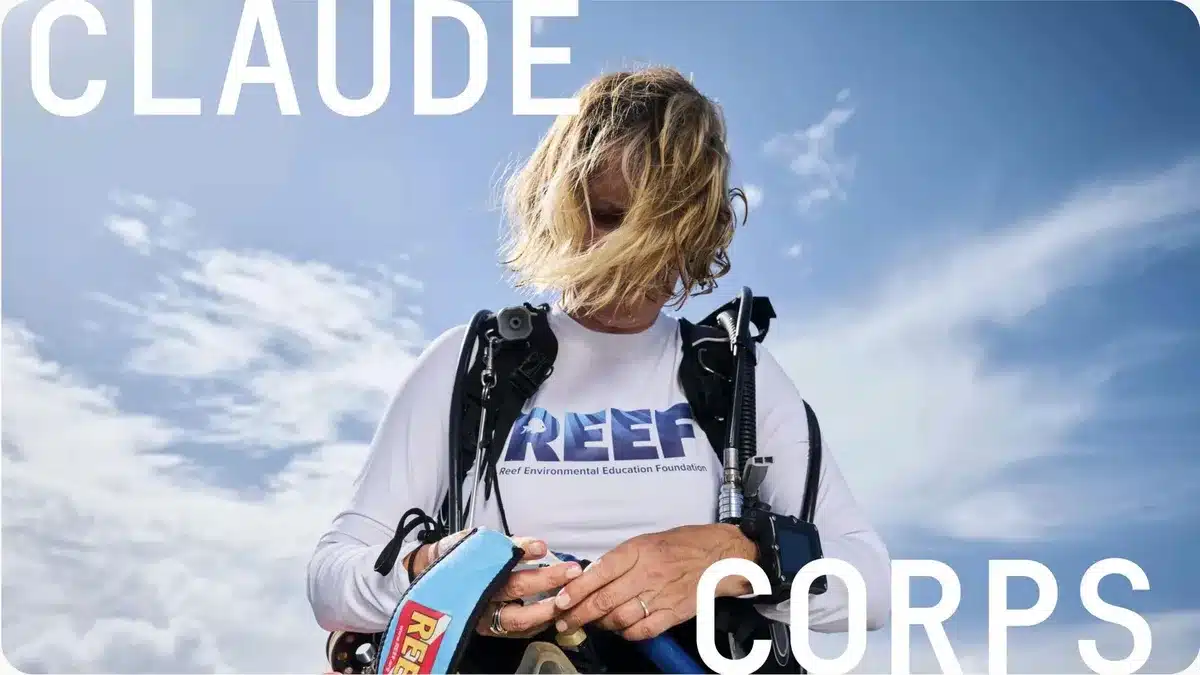
AI Fellowship Offers 1,000 Paid Roles at Nonprofits
A significant national fellowship program, Claude Corps, has launched with the aim of placing 1,000 early-career Americans in nonprofit organizations across the United States. This $150 million initiative, funded entirely by Anthropic, is designed to help these organizations leverage artificial intelligence. Each fellow will receive an annual salary of $85,000, along with comprehensive benefits, with all program costs covered by Anthropic.
The application window for the initial cohort of 100 fellows is closing on July 17, 2026, with placements scheduled to begin on October 19, 2026. Eligibility is open to individuals over 18 years old with less than two years of full-time work experience and U.S. work authorization. Notably, a college degree or prior experience in artificial intelligence is not a requirement.
Benefits for Participating Nonprofits
Nonprofit organizations interested in hosting a fellow are presented with a compelling offer. They will receive a fully subsidized, full-time employee for a 12-month period. Additionally, host organizations will be provided with a one-time $10,000 implementation grant and up to $2,500 in Claude credits per fellow. A prerequisite for participation is that host organizations must already be customers of Claude for Nonprofits Team or Enterprise.
This program emerges at a time when federal support structures for connecting young professionals with nonprofit work have diminished. Following substantial cuts to AmeriCorps funding in April 2025, many nonprofits lost vital placement support. Claude Corps aims to fill this void, utilizing private funding and its proprietary AI product.
Program Structure and Operations
The fellowship operates through a three-way partnership. Anthropic spearheads the initiative and provides expertise in Claude AI. CodePath, a prominent provider of collegiate computer science education, acts as the employer of record, managing payroll, benefits, and all training aspects. Social Finance, a registered nonprofit investment advisor, oversees philanthropic capital and leads outcome measurement and evaluation.
Each fellow will be assigned to a single nonprofit for the entire 12-month duration. The expectation is for fellows to work full-time, in-person, developing tools and workflows that integrate AI into the organization’s operations and mission delivery. The role is operational, focusing on embedding AI rather than academic research. Fellows will receive five hours of structured weekly training and have direct access to Anthropic engineers for technical support.
Cohort Details and Future Plans
The first cohort, commencing October 19, 2026, will place approximately 100 fellows. Two subsequent cohorts, intended to accommodate the remaining 900 fellows across at least 400 host organizations, are slated to begin in January and August 2027. Applications for these later cohorts will be accepted on a rolling basis.
Host Organization Commitments and Contributions
Eligible host organizations must be U.S.-based 501(c)(3) entities and existing Claude for Nonprofits customers. For the initial October cohort, hosts must offer an in-person or hybrid work environment where fellows can regularly interact with staff; fully remote organizations will be considered for 2027 cohorts.
Host organizations are required to designate a senior sponsor and a day-to-day supervisor who will direct the fellow’s work and provide necessary access to internal systems and data. In return, they gain a full-time employee for a year at no salary cost, along with the implementation grant and Claude platform access.
Confirmed host organizations include the International Rescue Committee, RAINN, Goodwill Industries International, Code for America, Year Up United, and the YMCA of Greater Charlotte. The program’s overarching goal is to support at least 400 nonprofits through its three cohorts.
Commercial Implications of Claude Corps
While presented as a philanthropic effort, Claude Corps also serves as a strategic market development initiative. Nonprofits hosting fellows will integrate Claude into their operations, with the implementation grant and credits covering initial setup and usage. Upon completion of the fellowship, the organizations retain the developed workflows and automations, all operating on Anthropic’s platform. This process can lead to vendor lock-in, as switching AI providers would involve significant effort and cost.
The 400 target nonprofits represent organizations that have historically been challenging for enterprise sales teams to reach. These entities, often described as “traditional late adopters,” require direct human engagement to adopt new technologies. Bella DeVaan, director of the Charity Reform Initiative at the Institute for Policy Studies, expresses concern about the dual purpose, stating that regulatory oversight should not be left solely to the companies involved.
Critics have raised questions about the scale of Anthropic’s social commitment relative to the potential impact of AI on jobs. The company’s total pledge of $350 million for Claude Corps and a separate research fund represents a small fraction of its reported valuation. Without government regulation mandating contributions to relief funds for job displacement, voluntary corporate pledges may not adequately address the labor-market effects of AI.
Regulatory Landscape and Strategic Positioning
Claude Corps is launching amidst a high-profile dispute between Anthropic and the U.S. Commerce Department regarding AI export controls. The department issued a directive suspending access to Anthropic’s most advanced models for foreign nationals, leading the company to disable them globally for all customers. This action followed a separate dispute where the Pentagon designated Anthropic a “supply chain risk” due to the company’s refusal to waive restrictions on using Claude for mass domestic surveillance and autonomous weapons systems.
In contrast, Claude Corps positions Anthropic domestically, framing AI access as a public good and presenting the company as a steward of responsible AI deployment. The effectiveness and sincerity of this positioning will be assessed through outcome data expected in late 2027.
Anthropic President Daniela Amodei stated that the company hopes Claude Corps will become a cornerstone of its strategy to maximize AI’s benefits while managing its risks. The program will undergo a rigorous evaluation after its first year before any decisions are made regarding its expansion.
Application Process and Fellowship Outcomes
For prospective fellows, Claude Corps offers a tangible opportunity for paid experience, access to cutting-edge AI tools, and the chance to contribute to meaningful work in the nonprofit sector. The fellowship does not guarantee employment with Anthropic or the host organization afterward.
Applications are submitted through the Claude Corps website and include a personal form, two AI training modules (AI Fluency and Claude 101), and short-answer questions. Shortlisted candidates will undergo a take-home assessment, an interview, and a two-stage selection process. Selected fellows will then interview with potential host organizations.
Decisions for the first cohort are anticipated in mid-August 2026. The July 17 deadline is for Cohort 1 only. Later cohorts will accept applications on a rolling basis, with approximate deadlines in mid-October 2026 for a January 2027 start and mid-May 2027 for an August 2027 start. Host organization applications are also currently open.
Frequently Asked Questions
What is Claude Corps and who is it for?
Claude Corps is a 12-month, fully funded fellowship paying early-career Americans $85,000 annually plus benefits to develop AI tools for nonprofits using Anthropic’s Claude platform. It is open to individuals 18 and older with U.S. work authorization and under two years of full-time work experience, who are comfortable using Claude. No college degree is required. The program targets those who have already engaged in independent AI projects and seek paid, practical experience in public-interest AI work.
Are there hidden costs for nonprofits hosting Claude Corps fellows?
Direct costs for hosts are minimal, primarily involving the designation of staff supervisors and prior adoption of Claude for Nonprofits. The less visible cost is the potential for vendor lock-in, as nonprofits will build systems around Claude, making a future switch to another AI provider more complex and costly. Staff will also gain expertise in Claude, influencing future technology choices.
Does Anthropic’s $350 million commitment adequately address AI job displacement?
The total $350 million commitment from Anthropic is considered by some critics to be insufficient in relation to the potential scale of AI-driven job displacement. Without government-mandated contributions or regulatory oversight, the proportionality of voluntary pledges to the economic impacts of AI remains a concern.
What happens to nonprofits after the fellowship year ends?
Host organizations will retain the AI tools, systems, and workflows developed by fellows, along with the internal knowledge base built around them. The program’s success in helping organizations advance their missions and the durability of fellows’ AI skills will be evaluated to inform potential scaling of the initiative. Anthropic plans to open-source some core program technologies to facilitate similar initiatives elsewhere.
