

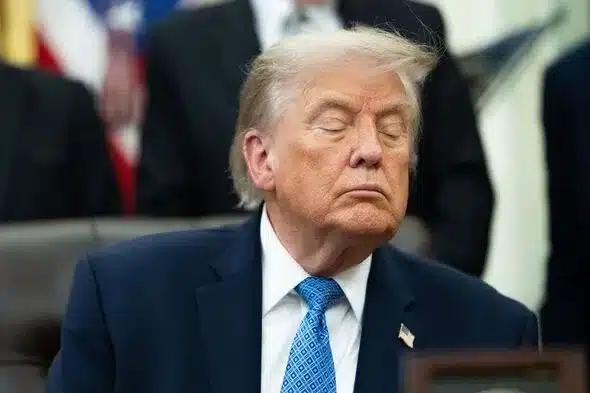
During a recent press conference held in the Oval Office, an 80-year-old former president Donald Trump appeared to fall asleep while seated at his desk. The incident occurred during a policy meeting where individuals behind him were delivering speeches.
Viewers observing the broadcast noted that Trump’s eyes appeared closed for extended periods. The entire meeting, which lasted approximately 22 minutes, saw the former president struggling to remain alert. At several points, he was observed blinking himself awake, and his hands were reportedly hidden beneath the desk.
Public Reaction and Health Concerns
Online observers ed significant concern regarding his apparent fatigue. Comments on social media platforms ranged from criticism of his ability to stay awake to direct observations about his health. One user remarked, “This is pathetic, 30 minutes and Trump can’t stay awake.” Another commented, “The naps he took were so frequent, and he looked so comfortable in his dream world that I felt rested just watching him count sheep.” A third individual stated, “His health is declining so very rapidly.” A different perspective offered, “Give the man a break, sheeeesh. The amount of LIES he tells per day is draining! Sometimes I fall asleep just listening to his lies.”
Previous Health Observations
This instance follows previous public observations about his health. Last week, concerns were raised regarding his “swollen ankles.” Additionally, insights from the book “Regime Change: Inside the Imperial Presidency of Donald Trump” by Maggie Haberman and Jonathan Swan shed light on past logistical considerations for presidential addresses.
Oval Office Briefings and Hearing Difficulties
According to the authors, joint press conferences with world leaders were sometimes held in the Oval Office rather than the East Room for acoustic advantages and to alleviate the need for prolonged standing. The book also noted that the former president had experienced difficulties hearing, leading him to ask for questions to be repeated immediately after they were asked.
