

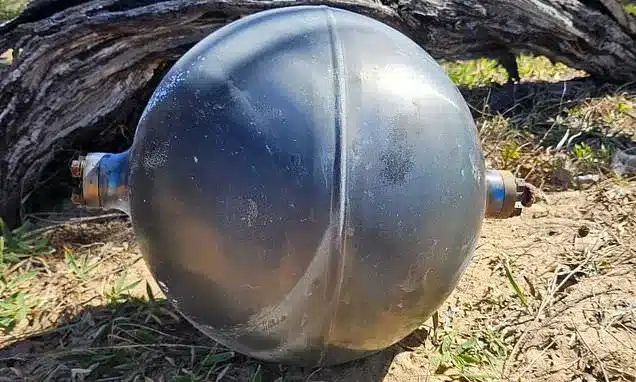
Authorities in Far North Queensland are investigating a series of unusual objects that have washed ashore on local beaches, prompting a public warning. The discoveries, primarily occurring north of Townsville over the weekend, have led to the establishment of an exclusion zone and ongoing scientific assessment.
Unidentified Debris Appears on North Queensland Coast
The Queensland Fire Department issued a public advisory on Sunday afternoon following the appearance of several unidentified objects on beaches, particularly in the area north of Townsville. Rescue crews have been working alongside partner agencies to manage the situation, which began over the weekend.
In a statement, the Queensland Fire and Rescue (QFR) highlighted the ongoing efforts of specialist scientific teams. “Specialist QFR Scientific teams have safely secured a number of the items throughout the weekend and remain on scene continuing their work,” the department reported. A 50-meter exclusion zone has been implemented around the affected areas to ensure public safety.
Description of the Objects
Photographs released depict the objects as large, circular, and grey in color, featuring prominent pipes extending from both the top and bottom surfaces. At least four such items have been discovered so far. The exact nature and origin of this debris remain under active investigation by the authorities.
Public Safety Advisory Issued
Beachgoers in the vicinity have been strongly advised to exercise caution and avoid contact with any unfamiliar items. The QFR emphasized the importance of immediate reporting for any suspicious discoveries. “If you come across any suspicious objects in the area, do not touch them. Move away and call Triple Zero (000) immediately,” the department urged.
The fire department has not yet disclosed any specific suspicions regarding the identity or potential hazards associated with the objects. However, public speculation has emerged, with some commenters suggesting the items could be hydrazine propellant bladder tanks. These specialized tanks are designed for the transportation of highly toxic hydrazine fuel, commonly used in spacecraft and satellite propulsion systems.
Hydrazine Tanks: A Potential Explanation?
Hydrazine is a powerful chemical compound known for its use as a rocket propellant due to its high energy density. Its properties make it effective for spacecraft maneuvering and orbital adjustments. However, hydrazine is also extremely toxic and corrosive, requiring stringent safety protocols for handling and storage. Tanks designed to contain such a substance would typically be robust and engineered to prevent leaks under various conditions.
The appearance of such tanks on a public beach, if indeed that is what they are, would raise significant questions about their origin and how they came to be in the ocean. Potential scenarios could include accidental loss during transport, a maritime incident, or even debris from space-related activities. The toxic nature of hydrazine means that any potential leakage would pose a serious environmental and health risk.
Ongoing Investigation and Scientific Response
The presence of specialist scientific teams on-site underscores the seriousness with which the authorities are treating the situation. These teams are equipped to handle potentially hazardous materials and are likely conducting analyses to determine the composition and origin of the objects. Their work is crucial in assessing any risks to the public and the environment.
The exclusion zone serves as a vital measure to prevent accidental exposure while the investigation proceeds. Authorities are likely coordinating with various agencies, including maritime authorities and potentially space or defense organizations, depending on the emerging evidence. The complexity of identifying and managing such debris can be substantial, often requiring inter-agency cooperation.
What Happens Next?
The immediate priority for investigators will be to definitively identify the objects and ascertain their origin. This will likely involve detailed examination, possibly including material analysis and consultation with experts in aerospace or chemical engineering. Once identified, authorities can better assess any associated risks and determine the appropriate course of action for disposal or further containment.
The public will be kept informed as the investigation progresses, with further advisories issued if necessary. The incident serves as a reminder of the unpredictable nature of marine debris and the importance of heeding official safety warnings when encountering unfamiliar objects on the coast.
The Queensland Fire Department’s swift response and clear communication have been instrumental in managing the situation and ensuring that the public remains aware and protected. The ongoing scientific assessment is expected to shed light on this puzzling discovery along the North Queensland coastline.
