

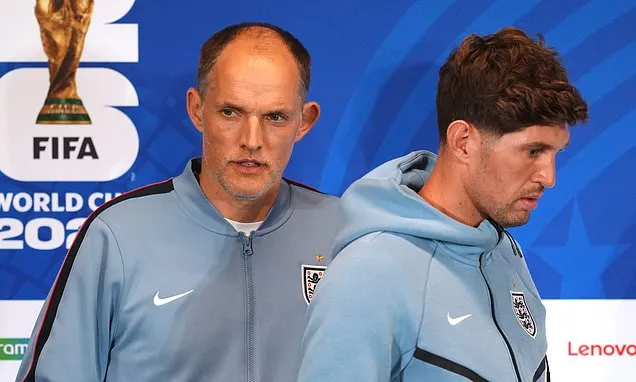
Manager Thomas Tuchel remains resolute in his position despite facing significant criticism following England’s World Cup semi-final defeat. Admitting that a “gap” exists between England and the sport’s elite nations, Tuchel asserted that external voices will not sway his commitment to leading the team, particularly with the 2028 European Championship on home soil in his sights. His focus, he stated, is on elevating the team’s performance in high-pressure moments to compete with the very best.
Addressing the World Cup Defeat and Future Goals
The German coach acknowledged the profound pain of the 2-1 semi-final loss to Argentina, describing it as a “scar” that the team and he must carry. “This is my pain, the players’ pain,” Tuchel remarked ahead of the third-place play-off match. “It is our scar that we carry. It’s a very painful defeat and we have to live with it. Not the critics, the experts, not our families.” He expressed confidence in the team’s ability to overcome this setback, emphasizing their genuine belief in their potential.
Tuchel identified France, Spain, and Argentina as nations that consistently expect to win major tournaments, indicating that England has not yet reached that level. “We are not there yet,” he stated. “There is still a gap to close. This is what we will do, starting tomorrow. We have to play better football under pressure. We still have another level to reach. From there we go.” He attributed this gap not to a lack of effort but to the sustained success and established pedigree of these footballing powerhouses, built over many years.
Commitment Amidst Criticism
Despite calls for his dismissal following the semi-final loss, Tuchel remains steadfast. “We will not stop hunting and chasing. We have things to improve. There is not a lot of room for drama,” he said, choosing not to engage with what he termed the “blame game.” He expressed a desire to form his own assessment rather than be swayed by what he perceives as strong opinions from a segment of the public.
When questioned about fan criticism, Tuchel stated, “I would like to make my own picture. It’s a strong opinion you give, to be an advocate for half the country being against me. Let’s wait for that.” He reiterated his intention to continue in his role, noting the shared pain felt by his players, exemplified by a visibly crestfallen John Stones, who sat beside him. “After a shock in the beginning it’s becoming more and more painful,” Tuchel added.
Factors Influencing Performance and Tactical Decisions
Tuchel also pointed to external factors that may have impacted England’s performance, including the challenging conditions faced in previous matches against Mexico and Norway. He suggested that playing with ten men in Mexico, coupled with altitude and a disrupted sleep schedule, may have had a greater toll than initially anticipated. “Even if we don’t want to admit it because it feels like an excuse, the game with 10 men in Mexico, the altitude, losing the complete night of sleep and then Norway, it cost us more than we maybe thought,” he explained.
He defended the team’s unity, stating, “The togetherness built over these six weeks is not to be questioned.” However, he conceded difficulties in maintaining possession and winning duels against Argentina. “We could not get hold of the ball against Argentina. We couldn’t fight duels anymore.”
Defending In-Game Decisions
Addressing specific tactical choices made during the match, Tuchel stood by his decisions, even if they did not yield the desired result. “If you ask me if I regret my decisions then no, I don’t,” he asserted. “I felt we became too passive, I felt the momentum switched in the match and I tried to help and support.” He emphasized that his actions were based on instinct, intuition, and experience in a high-stress, live-game coaching environment.
“I took several decisions trusting my instinct, intuition and experience. We didn’t get the result so I take responsibility. The decisions are made under stress. This is live, in-game coaching. I would regret it if I didn’t react,” Tuchel concluded, highlighting the inherent risks and pressures of managing at the highest level.
Looking Ahead: Improvement and Development
Tuchel’s comments underscore a commitment to long-term development rather than succumbing to short-term pressures. The focus remains on identifying areas for improvement and systematically working towards closing the gap with the world’s leading football nations. The experience of the World Cup, though painful, is intended to serve as a catalyst for growth and a foundation for future success, particularly in preparation for the upcoming European Championship.
