

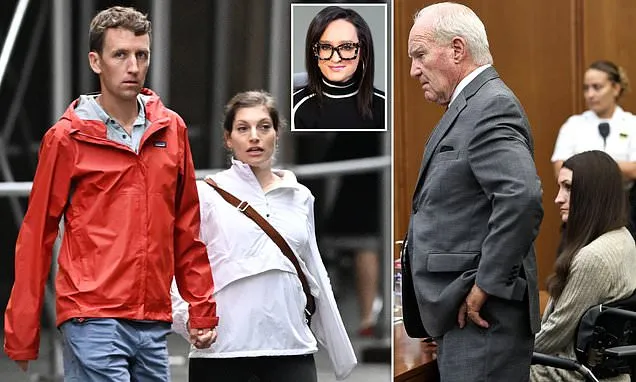
The recent mistrial in the Lindsay Clancy case has brought intense scrutiny not only to the legal proceedings but also to the conduct of her defense attorney, Kevin Reddington. Following the judge’s declaration of a mistrial, Reddington made several public statements and appearances that have drawn considerable attention and criticism, particularly regarding his approach to the case and his comments about Clancy’s husband, Patrick.
Defense Attorney’s Post-Mistrial Statements
Immediately after the mistrial was declared, Reddington addressed the media outside the Massachusetts courthouse. He expressed satisfaction with the proceedings, stating he had “crushed the prosecution.” This assertion was met with skepticism by some observers, who pointed out that a mistrial does not equate to an acquittal for Lindsay Clancy, who faced charges related to the deaths of her three young children. The case is expected to return to court unless a plea agreement is reached with District Attorney Tim Cruz.
Reddington’s public relations strategy took a surprising turn when he appeared on “Good Morning America.” In a notable appeal, he addressed President Joe Biden, requesting consideration for a pardon for his client. This move was widely seen as legally misguided, as presidential pardons are applicable only to federal crimes, while Clancy’s charges were state-level offenses. Furthermore, the appeal seemed to contradict the administration’s stated goals of encouraging higher birth rates.
Questioning Attorney’s Tactics
Critics have questioned Reddington’s methods, with some suggesting his actions border on unethical legal advocacy. His public comments, particularly those directed at a lone juror who reportedly held out against a guilty verdict, have been a focal point of concern. Reddington suggested this juror “stole” weeks of the other jurors’ time and acted on a personal agenda. This characterization has been seen by some as an attempt to intimidate or discredit jurors, potentially influencing future proceedings.
Following Reddington’s remarks, three jurors spoke to NBC Boston, corroborating the account of a contentious jury deliberation. They described the holdout juror as arrogant and unwilling to engage with their perspectives. However, another juror, identified only as Juror No. Five, anonymously defended the holdout, suggesting that other “big personalities” in the room also struggled to move past their convictions and that the issue was a broader “inability to move past your convictions” rather than a single individual’s obstruction.
Concerns have been raised about the potential chilling effect Reddington’s public statements could have on future juries in high-profile or controversial cases. The fear is that potential jurors might be deterred from voting against the majority if they believe they could face public backlash or smear campaigns orchestrated by defense attorneys or their supporters.
Comments Regarding Patrick Clancy
A particularly contentious aspect of Reddington’s post-mistrial commentary involved his remarks about Patrick Clancy, the husband of Lindsay Clancy. Online speculation and conspiracy theories had emerged, implicating Patrick in the deaths of his children. When questioned by reporters about these theories, Reddington’s responses were perceived by many as insufficient or even encouraging of such speculation.
When asked if Patrick Clancy bore any responsibility, Reddington stated, “I don’t know what is in Patrick’s mind.” He added that the jury had evaluated Patrick’s testimony. Pressed further on the internet conspiracies, Reddington notably said, “I certainly don’t dismiss them… It’s amazing how they’re able to ferret out facts and they do investigations. It’s truly just amazing this whole concept of the internet.” These comments were interpreted by some as lending credence to the baseless accusations against Patrick Clancy.
Patrick Clancy’s Lawyer Responds
Howard Cooper, Patrick Clancy’s attorney, issued a strong statement condemning the harassment of his client and threatening legal action against those continuing to spread “vile” conspiracy theories. Cooper emphasized that Patrick Clancy had cooperated fully with authorities and had testified in his wife’s trial.
In subsequent appearances, Reddington appeared to moderate his stance on Patrick Clancy. He told a local Boston reporter that Patrick “has been through hell and back” and “still stands by her by way of his testimony.” Later, in an interview with Gayle King on CBS, Reddington addressed the criticism directly. He stated, “The man ought to be able to move on with his life and stop with the speculation and horrific conspiracy allegations that he was involved with some massive conspiracy to kill his children.”
Conclusion: The Lingering Questions
The aftermath of the Lindsay Clancy mistrial has highlighted complex issues surrounding legal defense strategies, media engagement, and the impact of public statements on ongoing legal processes and the individuals involved. While Reddington’s role as a defense attorney is to advocate vigorously for his client, his public actions and statements, particularly concerning the jury and Patrick Clancy, have sparked significant debate about the boundaries of effective legal representation and ethical conduct in the public eye. The “Kevin Show,” as it has been termed, continues to be a subject of discussion, with many hoping for a more restrained and focused approach as the legal saga surrounding Lindsay Clancy progresses.
