

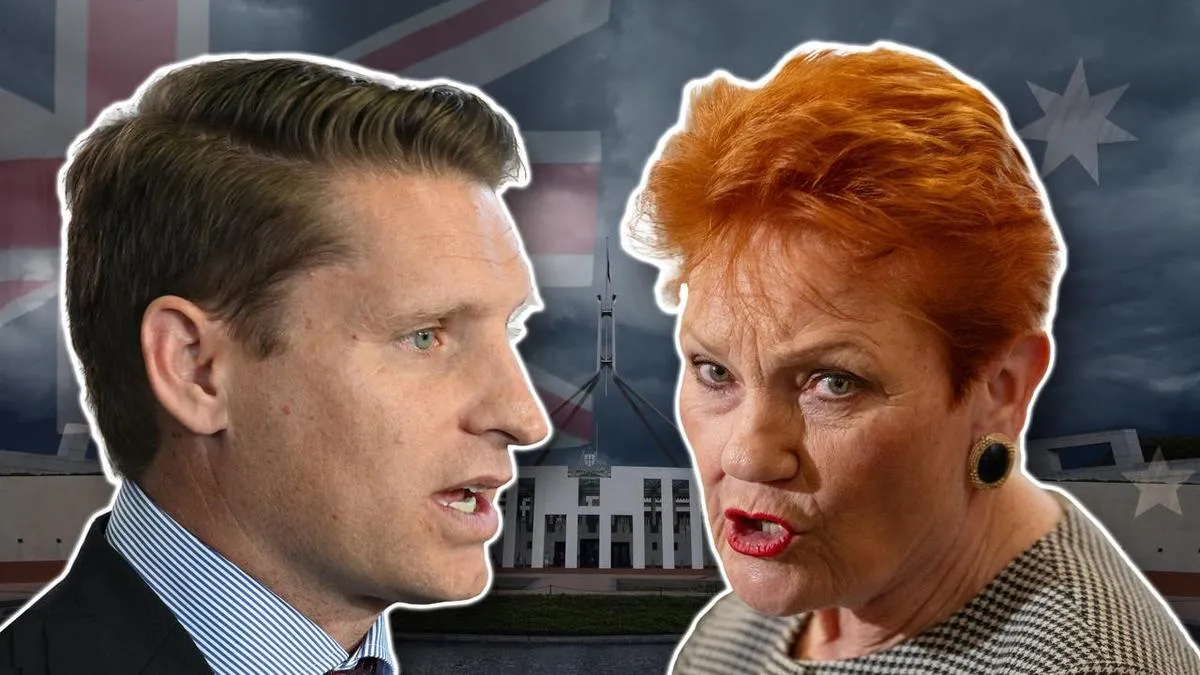
Liberal frontbencher Andrew Hastie has publicly stated that Pauline Hanson is not fit to hold the office of Prime Minister, escalating a dispute between the two politicians. The West Australian MP, a former special forces soldier, criticized the One Nation leader for her handling of a controversial cartoon that depicted him as a traitor. Hastie accused Senator Hanson of evading accountability and resorting to what he described as “childish” tactics.
Deepening Political Feud
The exchange highlights a growing rift between Andrew Hastie and Pauline Hanson, particularly concerning comments made during the defamation trial of Ben Roberts-Smith, an accused war criminal with whom Hastie served in the elite Special Air Service Regiment in Afghanistan. Hastie, a recipient of the Victoria Cross, has faced criticism from One Nation supporters following his testimony in the trial. Roberts-Smith denies allegations of unlawful killings of unarmed detainees during his deployment between 2009 and 2012.
Speaking on Sunday, Mr. Hastie expressed his doubts about Senator Hanson’s leadership capabilities. “She’s revealed in the last week that she doesn’t have what it takes to be prime minister of this country,” Hastie stated. He elaborated that when confronted about the “traitor” cartoon, Senator Hanson appeared “rattled.” He questioned her potential approach to political opposition if she were Prime Minister, asking, “If she were to be prime minister, is she going to run cartoons about all her political opponents? How is she going to devote her time?” Hastie further posed broader questions about her seriousness and the clarity of her global perspective, suggesting these are critical considerations for voters evaluating One Nation.
Controversial Cartoon and Battlefield Conduct
Senator Hanson has largely dismissed the criticism surrounding the cartoon, suggesting it should not be taken too seriously, despite drawing condemnation from various political factions. Mr. Hastie, however, has pressed Senator Hanson for clarity on her stance regarding battlefield conduct. He referenced a historical image of an Australian prisoner of war being beheaded by Japanese forces during World War II to illustrate the gravity of the issue. Hastie demanded that Senator Hanson clarify whether she believed executing prisoners was acceptable, stating, “She’s got to come out and make her position very clear. What’s her standard for battlefield conduct?”
Criticism of Prime Minister’s Mother
The dispute also encompasses recent remarks attributed to Senator Hanson, where she reportedly criticized Prime Minister Anthony Albanese’s late mother for residing in public housing for an extended period. When questioned about these comments, Mr. Hastie urged a focus away from personal attacks, saying, “Let’s leave mums out of it.” He reiterated his view that such comments demonstrate Senator Hanson’s unsuitability for the nation’s highest political office. “This is another indicator with the Australian people that she’s not fit to be prime minister,” he asserted.
Broader Political Reactions
Trade Minister Don Farrell described Senator Hanson’s comments regarding the Prime Minister’s mother as “appalling.” He characterized the approach taken by One Nation as embodying a “certain bitterness” that he found “quite un-Australian.” Minister Farrell called for an apology from Senator Hanson, emphasizing the importance of mutual respect in parliamentary discourse. “She wants dignity and respect from her fellow parliamentarians. Attacking the prime minister’s mother like this is not a way to get respect and dignity from your colleagues,” he commented.
Conclusion
The escalating public disagreement between Andrew Hastie and Pauline Hanson underscores significant concerns regarding leadership, political conduct, and the tone of public debate in Australia. Hastie’s direct challenge to Hanson’s fitness for the prime ministership, fueled by her response to a controversial cartoon and her remarks on sensitive personal matters, has drawn attention to the standards expected of national leaders and the broader implications for political discourse.
